
The Varna necropolis holds at least two …
Years: 4365BCE - 4222BCE
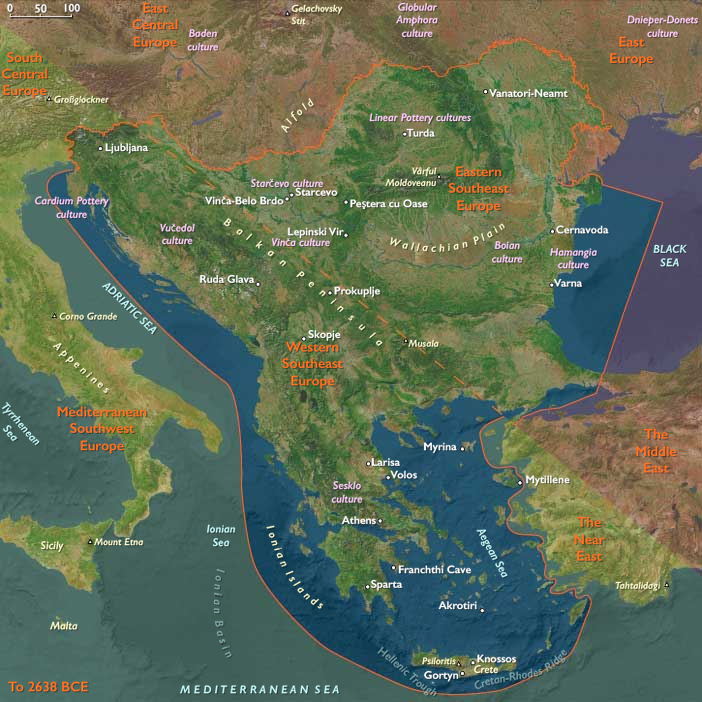
The Varna necropolis holds at least two hundred and ninety-four graves, many containing sophisticated examples of metallurgy (gold and copper), pottery (about six hundred pieces, including gold-painted ones), high-quality flint and obsidian blades, beads, and shells.
The graves have been dated to 4700-4200 BCE (radiocarbon dating, 2004) and belong to the Eneolithic Varna culture, which is the local variant of the KGKVI.
There are crouched and extended inhumations.
Some graves do not contain a skeleton, but grave gifts (cenotaphs).
The symbolic (empty) graves are the richest in gold artifacts.
Three thousand gold artifacts were found, with a weight of approximately six kilograms.
Grave 43 contained more gold than has been found in the entire rest of the world for this epoch.
Three symbolic graves contained masks of unfired clay.
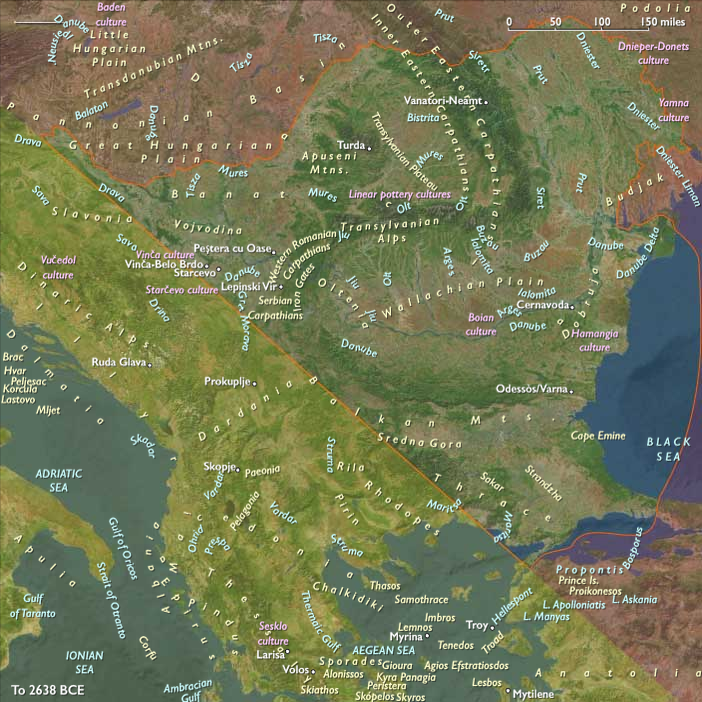
The findings showed that the Varna culture had trade relations with distant lands (possibly including the lower Volga and the Cyclades), perhaps exporting metal goods and salt from the Provadiya rock salt mine.
The copper ore used in the artifacts originated from a Sredna Gora mine near Stara Zagora, and Mediterranean Spondylus shells found in the graves may have served as primitive currency.
The culture had sophisticated religious beliefs about afterlife and developed hierarchal status differences: it offers the oldest known burial evidence of an elite male (the end of the fifth millennium BCE is the time that Marija Gimbutas, originator of the Kurgan hypothesis, claims the transition to male dominance began in Europe).
The high status male buried with the most remarkable amount of gold held a war adze or mace and wore a gold penis sheath.
The bull-shaped gold platelets perhaps also venerated virility, instinct, and warfare.
Gimbutas holds that the artifacts were made largely by local craftspeople.
Locations
Groups
Topics
Commodoties
Subjects
- Commerce
- Environment
- Fashion
- Decorative arts
- Faith
- Government
- Custom and Law
- Technology
- Metallurgy
- Anthropology
- Archaeology
- Chemistry
Regions
Subregions
Years: 4365BCE - 4222BCE
Locations
Groups
Topics
Commodoties
Subjects
- Commerce
- Environment
- Fashion
- Decorative arts
- Faith
- Government
- Custom and Law
- Technology
- Metallurgy
- Anthropology
- Archaeology
- Chemistry
Regions
Subregions