
Filters:
Twenty-one Lithuanian dukes had signed a peace …
Years: 1236 - 1236
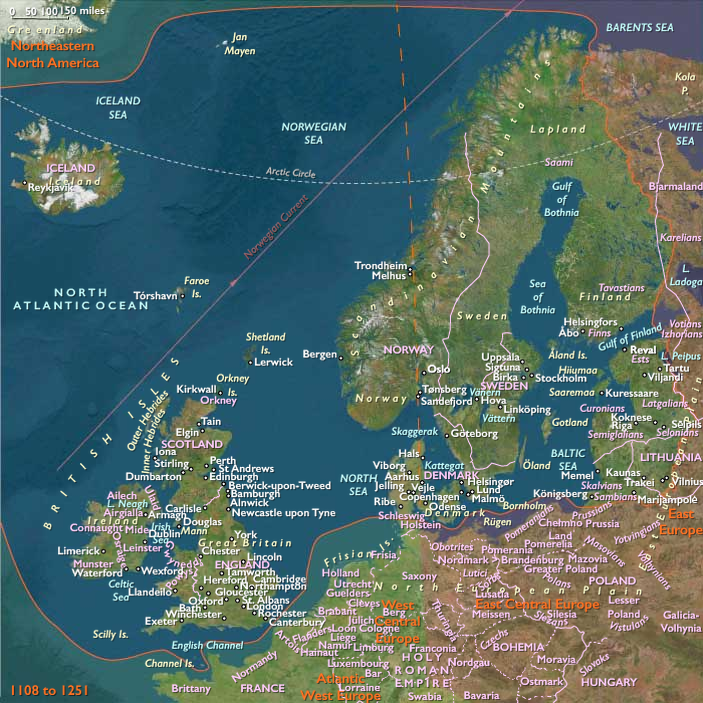
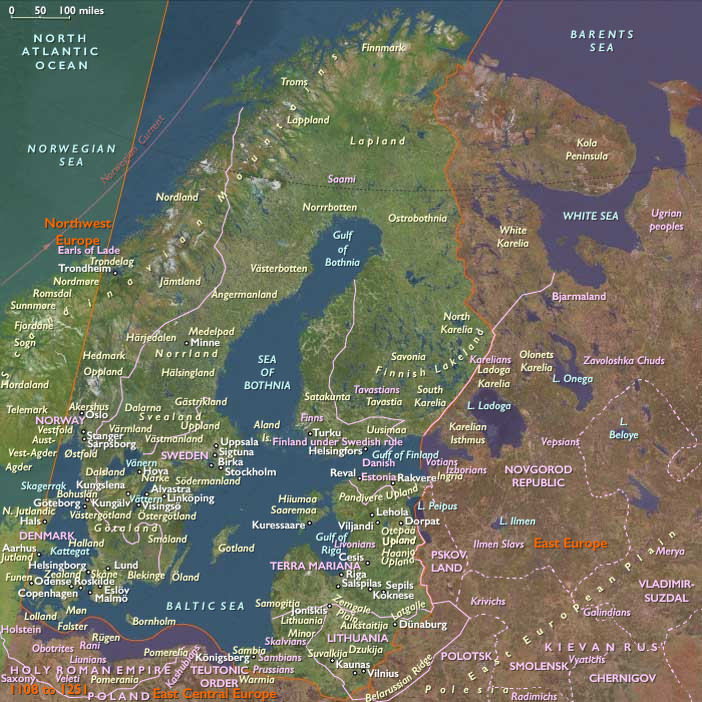
Twenty-one Lithuanian dukes had signed a peace treaty with Galicia–Volhynia, in 1219, an event today widely accepted as the first proof that the Baltic tribes were uniting and consolidating.
Two German religious orders, the Teutonic Knights and the Livonian Brothers of the Sword, have in the early thirteenth century conquered much of the area that is now Estonia and Latvia, in addition to parts of Lithuania.
In response, a number of small Baltic tribal groups unite under the rule of Mindaugas, who is referred to as the ruler of all Lithuania in the Livonian Rhymed Chronicle in 1236.
Locations
People
Groups
- Polytheism (“paganism”)
- Balts
- Lithuanians (Eastern Balts)
- Slavs, East
- Christians, Roman Catholic
- Teutonic Knights of Acre (House of the Hospitalers of Saint Mary of the Teutons in Jerusalem)
- Galicia–Volhynia, Principality of
- Knights of the Sword (Order of the Livonian Brothers of the Sword, or Livonian Knights)
- Terra Mariana (Livonian Confederation)
Topics
Commodoties
Subjects
Regions
Subregions
Years: 1236 - 1236
Locations
People
Groups
- Polytheism (“paganism”)
- Balts
- Lithuanians (Eastern Balts)
- Slavs, East
- Christians, Roman Catholic
- Teutonic Knights of Acre (House of the Hospitalers of Saint Mary of the Teutons in Jerusalem)
- Galicia–Volhynia, Principality of
- Knights of the Sword (Order of the Livonian Brothers of the Sword, or Livonian Knights)
- Terra Mariana (Livonian Confederation)
Topics
Commodoties
Subjects
Regions
Subregions