
Tunis had gained importance with the rise …
Years: 1159 - 1159
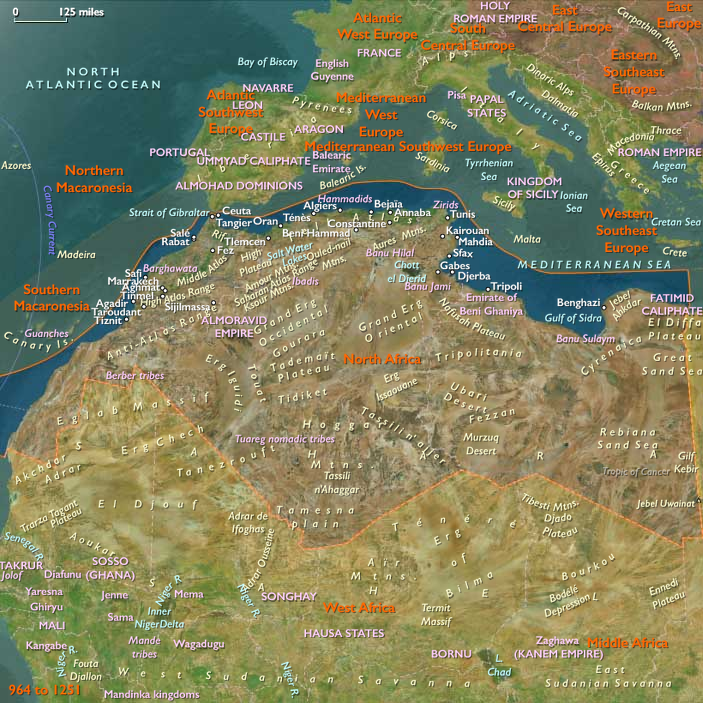
Tunis had gained importance with the rise of the Zirid dynasty in the late tenth century, but the Sunni population had tolerated Shi'ite rule less and less, and had carried out massacres against the Shi'ite community.
In 1048, the Zirid ruler Al-Muizz ibn Badis had rejected his city's obedience to the Fatimids and reestablished Sunni rites throughout all of Ifriqiya.
This decision had infuriated the Shi'ite Fatimid caliph Al-Mustansir Billah.
To punish the Zirids, he unleashed the Banu Hilal Arab tribe on Ifriqaya; a large part of the country was put to fire, the Zirid capital Kairouan was razed in 1057, and only a few coastal towns, including Tunis and Mahdia, had escaped destruction.
Exposed to violence from the hostile tribes that had settled around the city, the population of Tunis had repudiated the authority of the Zirids and had sworn allegiance to the Hammadid prince El Nacer ibn Alennas, who was based in Béjaïa, in 1059.
The governor appointed by Béjaïa, having reestablished order in the country, had not hesitated to free himself from the Hammadids to found the Khourassanid dynasty with Tunis as its capital.
This small independent kingdom has picked up the threads of trade and commerce with other nations, and brought the region back to peace and prosperity.
The Almohad 'Abd al-Mumin takes Tunis in 1159, overthrows the last Khourassanid leader and installs a new government in the kasbah of Tunis.
The Almohad conquest marks the beginning of the dominance of the city in Tunisia.
Having previously played a minor role behind Kairouan and Mahdia, Tunis is promoted to the rank of provincial capital.
Locations
People
Groups
- Arab people
- Berber people (also called Amazigh people or Imazighen, "free men", singular Amazigh)
- Muslims, Sunni
- Banu Hilal
- Muslims, Shi'a
- Fatimid Caliphate
- Christians, Roman Catholic
- Almohad Caliphate
Topics
Commodoties
Subjects
Regions
Subregions

Years: 1159 - 1159
Locations
People
Groups
- Arab people
- Berber people (also called Amazigh people or Imazighen, "free men", singular Amazigh)
- Muslims, Sunni
- Banu Hilal
- Muslims, Shi'a
- Fatimid Caliphate
- Christians, Roman Catholic
- Almohad Caliphate
Topics
Commodoties
Subjects
Regions
Subregions