
The true power behind the Polish throne …
Years: 1768 - 1768
February
The true power behind the Polish throne is the Russian ambassador Nicholas Repnin and the Russian army, with King Stanislaus Augustus Poniatowski being a former favorite of the Russian Empress.
In order to further Russian goals, Repnin had encouraged the formation of two Protestant konfederacjas of Słuck and Toruń and later, Catholic (Radom Confederation, led by Karol Stanisław "Panie Kochanku" Radziwiłł).
The first act of the Radom Confederation had been to send a delegation to Saint Petersburg, petitioning Catherine to guarantee the liberties of the Republic, and allow the proper legislation to be settled by the Russian ambassador at Warsaw.
With Russian troops sent to "protect" the various pro-Russian factions and this carte blanche in his pocket, Repnin had proceeded to treat the deputies of the Sejm as if they were already servants of the Russian empress.
The opposition was headed by four bishops: Bishop of Lviv Wacław Hieronim Sierakowski (1699–1784), Bishop of Chełm Feliks Turski (1729–1800), Bishop of Cracow Kajetan Sołtyk (1715–1788), and Bishop of Kiev Józef Andrzej Załuski (1702–1774).
To break the opposition, Repnin, in the very Polish capital, had ordered the arrest of four vocal opponents of his policies, namely bishops Józef Andrzej Załuski and Kajetan Sołtyk and hetman Wacław Rzewuski with his son Seweryn.
All of them members of Senate of Poland, they had been arrested by Russian troops on October 13, 1767[9] and imprisoned in Kaluga, where they will remain for for five years.
Through the Polish nobles that Repnin bribed (like Gabriel Podoski, Primate of Poland) or threatened by the presence of over ten thousand Russian soldiers in Warsaw and even in the very chambers of the parliament, Repnin, despite some misgivings about the methods he was ordered to employ, had de facto dictated the terms of that Sejm.
The intimidated Sejm, which had met in October 1767 and adjourned until February 1768, has appointed a commission (the so-called Delegated Sejm) which drafts a Polish–Russian treaty, approved in a "silent session" (without debate) on February 27, 1768.
The legislation undoes some of the reforms of 1764 under King Poniatowski and pushesd through legislation that ensures that the political system of the Commonwealth will be ineffective and easily controlled by its foreign neighbors.
The liberum veto, wolna elekcja (free election), neminem captivabimus, rights to form the confederation and rokosz—in other words, all the important privileges of the Golden Liberty, which makes the Commonwealth so ungovernable—are guaranteed as unalterable parts in the Cardinal Laws.
The Sejm, however, also passes some more beneficial reforms.
Russia, which has used the pretext of increased religious freedoms for the Protestant and Orthodox Christians to destabilize the Commonwealth in the first place, now had to push those reforms through the Sejm to save face.
Thus the legislation of the Sejm grants those religious minorities the same status as that of the previously dominant Roman Catholics, and some privileges of the Catholic clergy are limited.
In addition, the penalty for killing a peasant is increased from a fine to death, liberum veto is abolished on sejmiks (local parliaments), and a mint is created.
All these reforms are guaranteed by the Russian Empress, Catherine II.
The Perpetual Treaty of 1768 between Poland and Russia is highly contradictory to the well-being of Poland and leads to massive revolts by nobility, church, and peasants.
The resulting reaction among Poland's Roman Catholic leadership to the laws granting privileges to the Protestants, as well as the deep resentment of Russia's meddling in the Commonwealth's domestic affairs, leads to the War of the Bar Confederation (1768–1772), directed against Poniatowski and Russia, which will end with Russian victory and the First Partition of Poland.
Locations
People
Groups
- Poles (West Slavs)
- Christians, Roman Catholic
- Christians, Eastern Orthodox
- Ottoman Empire
- Protestantism
- Polish-Lithuanian Commonwealth (Commonwealth of the Two Nations)
- Russian Empire
- Bar Confederation
Topics
Subjects
Regions
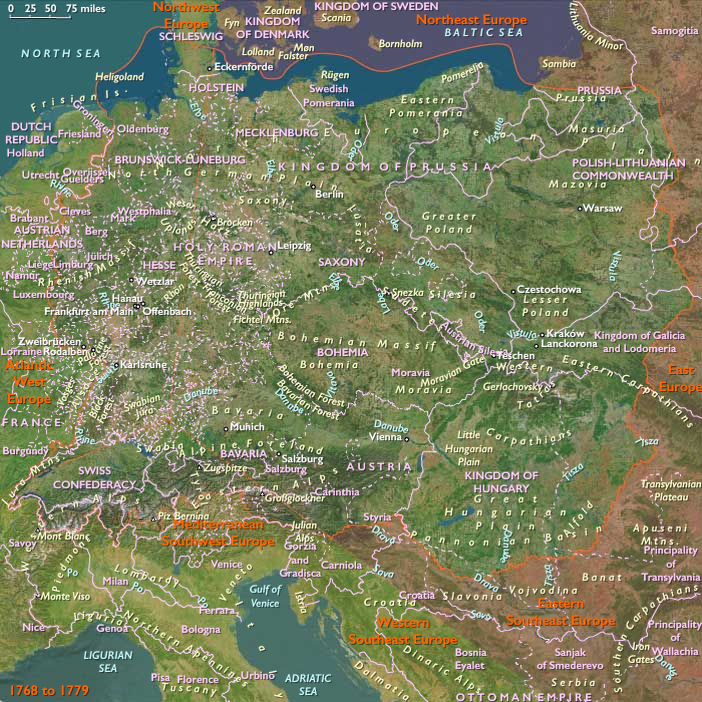
Subregions
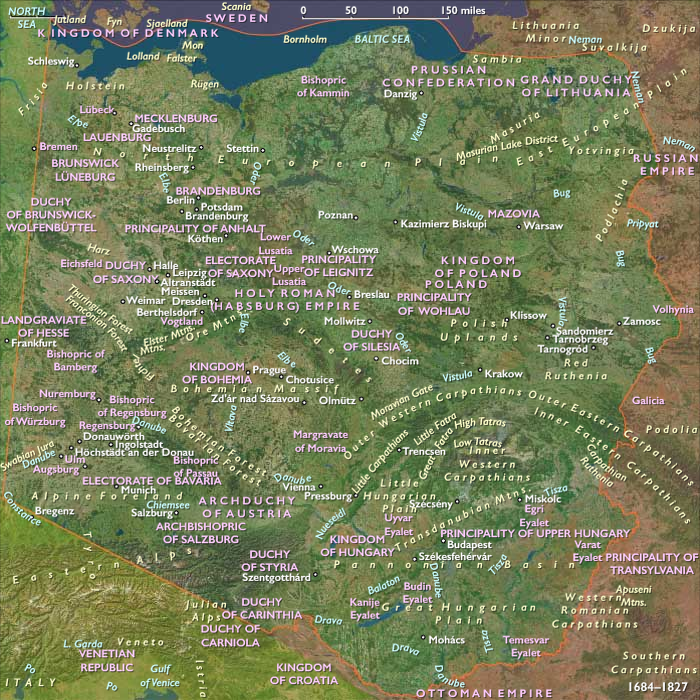
Years: 1768 - 1768
February
Locations
People
Groups
- Poles (West Slavs)
- Christians, Roman Catholic
- Christians, Eastern Orthodox
- Ottoman Empire
- Protestantism
- Polish-Lithuanian Commonwealth (Commonwealth of the Two Nations)
- Russian Empire
- Bar Confederation
Topics
Subjects
Regions
Subregions