
Southern Africa (1828–1971 CE) Mineral Revolutions, …
Years: 1828 - 1971
Southern Africa (1828–1971 CE)
Mineral Revolutions, Migrant Labor, and Struggles for Sovereignty
Geography & Environmental Context
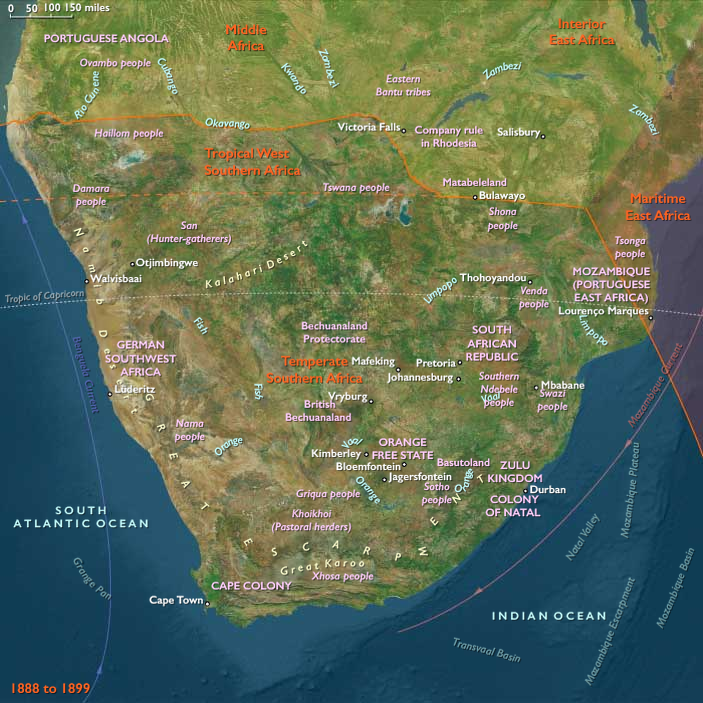
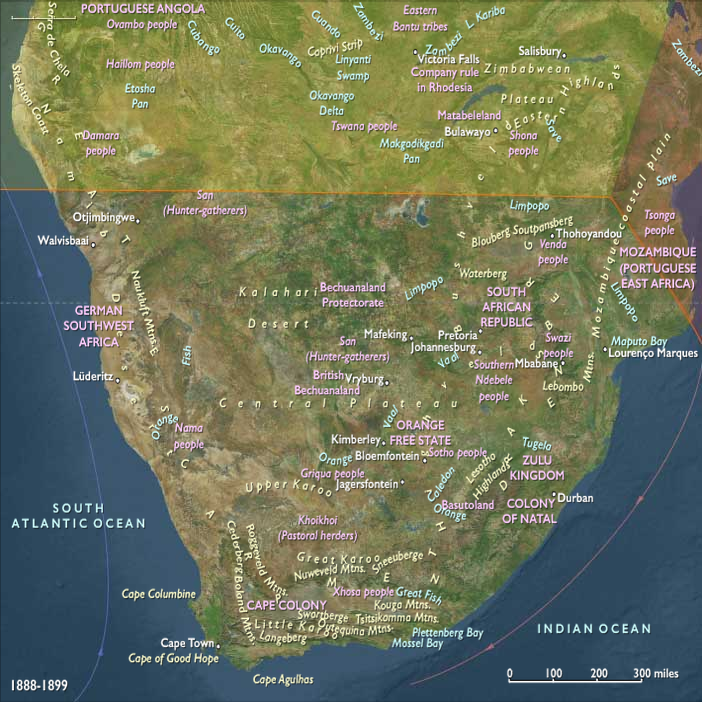
Southern Africa comprises two fixed subregions:
-
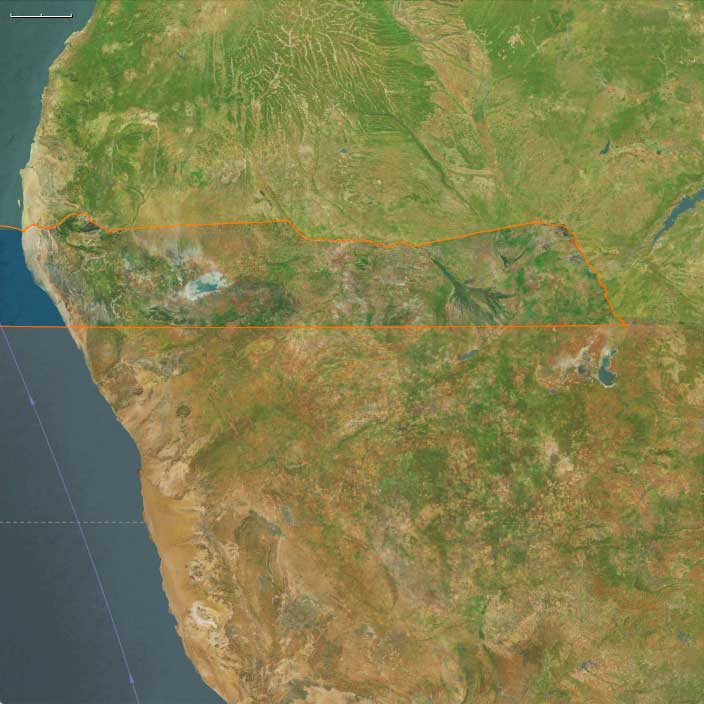
Tropical Southwest Africa — northern Namibia and northern Botswana, including the Etosha Salt Pan, the Skeleton Coast, the Okavango Delta, the Caprivi Strip (Bwabwata National Park), and the Chobe River basin.
-
Temperate Southern Africa — all of South Africa, Lesotho, and Eswatini; the southern halves of Namibia, Botswana, and Zimbabwe (south of approximately 19.47°S); and southwestern Mozambique.
Anchors include the Drakensberg, Kalahari, Highveld and Lowveld grasslands, and major river systems such as the Zambezi, Limpopo, Okavango, and Orange. This vast region spans coastal deserts and fog plains in the west, savannas and deltas in the north, and temperate uplands and fertile river valleys in the south—its environments repeatedly restructured by drought, migration, and industrial expansion.
Climate & Environmental Shifts
The end of the Little Ice Age gave way to alternating drought and flood. The rinderpest pandemic (1896–97) wiped out livestock and game, reshaping pastoral economies. Twentieth-century irrigation and dam projects—most notably Kariba Dam (1959) on the Zambezi—transformed watersheds and displaced communities. Soil exhaustion and erosion followed overgrazing and plough expansion in the Highveld and Shire Highlands, while the Okavango Delta’s flood pulse and the fog-fed Skeleton Coast sustained unique microclimates within arid belts.
Subsistence & Settlement
-
Tropical Southwest Africa: Ovambo, Herero, and San communities maintained mixed economies of millet, sorghum, and pastoral herding. Seasonal migration, fishing, and trade along the Okavango and Chobe floodplains balanced subsistence and exchange. German and later South African colonial regimes imposed labor recruitment, taxation, and territorial segregation but left subsistence cycles tied to delta hydrology.
-
Temperate Southern Africa: European expansion intensified after 1828. Trekboer migrations (the Great Trek, 1830s) spread pastoral and settler agriculture inland. The discovery of diamonds (1867) and gold (1886)transformed the interior into an industrial hub, drawing African labor from across the region. Indigenous farmers were confined to reserves or incorporated into cash economies as migrant workers. Urbanization accelerated around Johannesburg, Kimberley, Pretoria, Cape Town, and Durban.
Technology & Material Culture
Railways and telegraphs connected mines to coasts: the Cape–Kimberley line, the Beira and Benguela corridors, and inland extensions to the Zambian Copperbelt. Compound housing and deep-level mining shafts defined industrial life. Mission presses and schools expanded literacy, while iron-smelting, beadwork, and woodcarving endured as living arts. Twentieth-century cities introduced electricity, automobiles, and modern architecture—often segregated under racial zoning.
Movement & Interaction Corridors
-
Migrant labor formed the backbone of the economy: recruiting networks drew men from Lesotho, Botswana, Mozambique, and Namibia to South African mines and farms.
-
Caravan and river trade linked interior settlements to coastal ports until displaced by rail.
-
Mission and education networks circulated teachers, clergy, and ideas, fostering early nationalist consciousness.
-
Wildlife and conservation corridors evolved from colonial game preserves to national parks such as Etosha (1907) and Kruger (1926).
Cultural & Symbolic Expressions
Christian missions spread schooling and print culture, but African Independent Churches and prophetic movements (Zionist, Apostolic, and Ethiopian) localized theology and healing. Oral praise poetry (izibongo), initiation songs, drumming, and bead artistry persisted. Urban centers fostered jazz, marabi, mine-dance (ingoma), and protest music. In floodplain and desert communities, rainmaking and cattle rituals linked ecology to spirituality, while liberation hymns emerged from mission choirs and trade-union halls.
Environmental Adaptation & Resilience
Communities diversified crops and livestock to hedge against drought. In Tropical Southwest Africa, seasonal herding and fishing exploited the Okavango’s variable floods. Flood-recession agriculture, granaries, and kinship redistribution sustained resilience. In the south, irrigation cooperatives and state water schemes mitigated drought but deepened inequality under apartheid land laws. Veterinary control campaigns (dipping tanks, anti-tsetse measures) altered wildlife migration patterns.
Political & Military Shocks
-
Colonial conquest and resistance: The Herero and Nama genocide (1904–07) in German South-West Africaepitomized settler brutality. British and Portuguese forces subdued African polities from the Ndebele and Zulu to the Gaza state.
-
Boer and British conflicts: The Anglo-Zulu War (1879) and Anglo-Boer Wars (1880–81, 1899–1902)reshaped sovereignty, culminating in the Union of South Africa (1910).
-
Apartheid consolidation: The Natives Land Act (1913) and, after 1948, apartheid legislation institutionalized racial segregation; mass resistance grew, marked by events such as Sharpeville (1960).
-
Portuguese colonial wars: Revolts in Angola (1961) and Mozambique (1964) destabilized borders, with liberation movements crossing the Caprivi and Okavango corridors.
-
Independence wave: Malawi and Zambia (1964), Botswana and Lesotho (1966), and Eswatini (1968) achieved sovereignty. Namibia remained under South African mandate; Mozambique and Zimbabwe remained colonial territories until the mid-1970s.
Transition
Between 1828 and 1971, Southern Africa was transformed by mining, migration, and empire into a landscape of industrial cores and dependent peripheries. Tropical Southwest Africa preserved its floodplain economies under mounting labor demands; Temperate Southern Africa became a crucible of industrial capitalism and racial rule. Railways and mines tied deserts, deltas, and mountains to global markets; missions and schools seeded resistance; conservation and apartheid both fenced landscapes and people. By 1971, the region stood divided between apartheid’s strongholds and newly independent states—its people poised between dispossession and renewal, and its ecosystems marked by both enduring adaptation and environmental strain.
Groups
- Bantu peoples
- San (Bushmen)
- Ovambo people
- Herero people
- German Empire (“Second Reich”)
- German Southwest Africa
- Southwest Africa, German
- German Southwest Africa
- South Africa, Union of (British Dominion)
- South West Africa
- South Africa, Republic of
- SWAPO (South West African People's Organisation )
- Botswana, Republic of
- South West Africa (Namibia)
Topics
- Colonization of Africa, German
- Herero Resistance
- German Colonial Wars in Africa
- World War, First (World War I)
Commodoties
- Fish and game
- Water
- Hides and feathers
- Gem materials
- Domestic animals
- Grains and produce
- Ceramics
- Strategic metals
Subjects
Regions
Subregions
Related Events
Showing 10 events out of 19829 total
Years: 1828 - 1971
Groups
- Bantu peoples
- San (Bushmen)
- Ovambo people
- Herero people
- German Empire (“Second Reich”)
- German Southwest Africa
- Southwest Africa, German
- German Southwest Africa
- South Africa, Union of (British Dominion)
- South West Africa
- South Africa, Republic of
- SWAPO (South West African People's Organisation )
- Botswana, Republic of
- South West Africa (Namibia)
Topics
- Colonization of Africa, German
- Herero Resistance
- German Colonial Wars in Africa
- World War, First (World War I)
Commodoties
- Fish and game
- Water
- Hides and feathers
- Gem materials
- Domestic animals
- Grains and produce
- Ceramics
- Strategic metals
Subjects
Regions
Subregions