
Tropical West Southern Africa (7,821 – …
Years: 7821BCE - 6094BCE
Tropical West Southern Africa (7,821 – 6,094 BCE) Early Holocene — Flood-Pulse Villages and Rift-to-Delta Circuits
Geographic and Environmental Context:
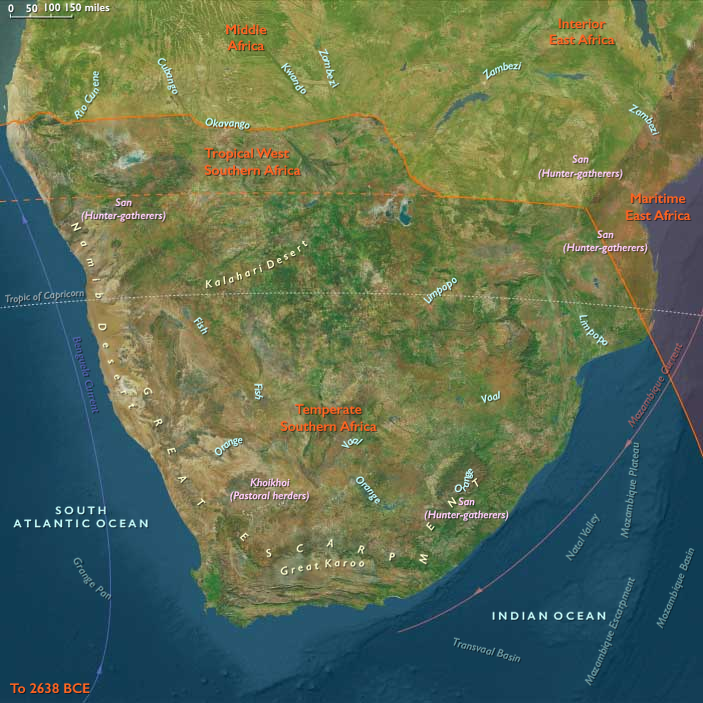
Tropical West Southern Africa includes the far-northern zones of Botswana and Namibia, including the Okavango Delta, the Zambezi–Chobe–Caprivi Strip wetlands, the Etosha Pan basin and surrounding thornveld, and the Namib’s Skeleton Coast fringe.
Anchors: Okavango Delta (Boro–Thamalakane–Khwai distributaries), Zambezi–Chobe–Cuando/ Kwando–Linyanti–Caprivi channels and floodplains, Etosha Pan (Oshigambo–Oshivelo margins, Ekuma–Omuramba inlets), Owambo/ Cuvelai seasonal rivers, and the Skeleton Coast (surf-battered gravel plains, fog-fed lichen fields, seal rookeries).
-
Okavango approached highstand hydrology with extensive papyrus/hippo channels; Caprivi distributaries broadened; Etosha alternated between shallow water and saline playa with wooded margins.
Climate & Environmental Shifts
-
Holocene thermal optimum: stronger summer rainfall, predictable flood pulses; inland droughts mild and short.
Subsistence & Settlement
-
Seasonal semi-sedentary hamlets on Okavango levees: fish weirs/ traps, floodplain antelope drives, waterfowl netting, reed rhizome/ water-lily harvest;
-
Etosha/ Owambo: persistent spring-edge camps; small-game/ antelope hunting, seed/ tuber collecting;
-
Caprivi: wet-season congregation on high levees, dry-season dispersion to pans/ springs.
Technology & Material Culture
-
Microlithic composites on reed/wood shafts; nets, basketry fish traps; grindstones; OES flasks and beads; early pottery at fringes unlikely yet.
Movement & Interaction Corridors
-
Flood-ridge “causeways” among palm islands; Zambezi–Chobe canoe drifts; Omuramba paths around Etosha.
Cultural & Symbolic Expressions
-
Structured hearths and bead caches at “home” levees; healing/ rain-making rites at pans and spring mounds; trance dance traditions deepen.
Environmental Adaptation & Resilience
-
Storage (smoked fish, dried meat, roasted seeds) + island refugia sustained wet/dry seasonal security.
Transition
By 6,094 BCE, floodplain–pan communities had settlement memory — places ritually and practically central to subsistence.
Groups
Topics
Commodoties
Subjects
Regions
Subregions
Years: 7821BCE - 6094BCE
Groups
Topics
Commodoties
Subjects
Regions
Subregions