
Eastern East Antarctica (28557 – 7822 BCE): …
Years: 28577BCE - 7822BCE
Eastern East Antarctica (28557 – 7822 BCE): The Polar Plateau’s Eastern Expanse
Geographic and Environmental Context
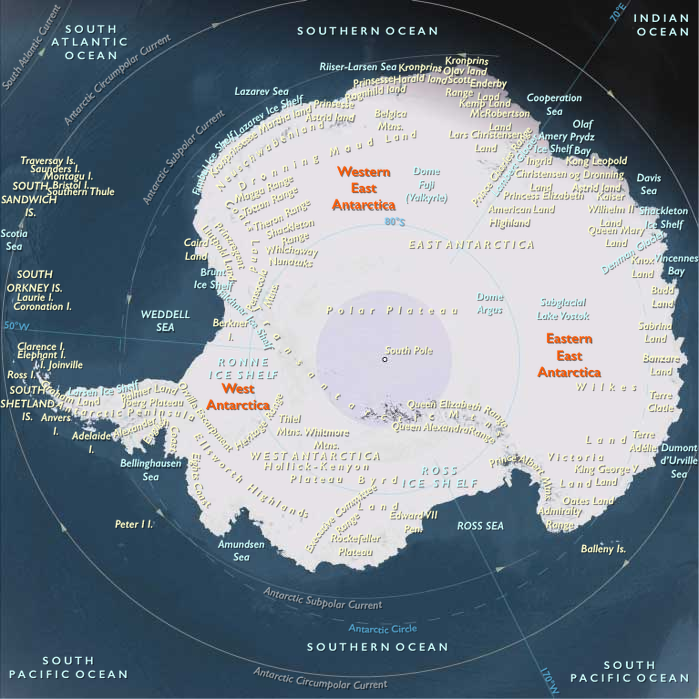
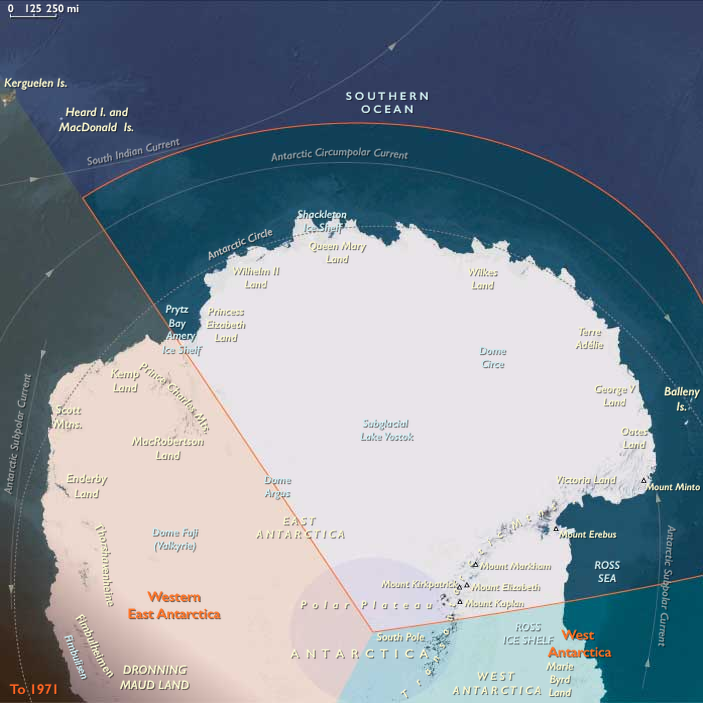
Eastern East Antarctica—stretching from the Ross Sea sector eastward past the Amery Ice Shelf toward the Australian Antarctic Territory—is dominated by the East Antarctic Ice Sheet, the largest single ice mass on Earth.
-
The interior rises over 3,000 meters above sea level, with ice thickness reaching up to 4 km.
-
Coastal margins are fringed by floating ice shelves, ice cliffs, and occasional rocky nunataks.
-
Katabatic winds sweep from the polar plateau toward the coast, scouring snow and creating vast sastrugi fields.
Climate and Environmental Shifts
-
Last Glacial Maximum (c. 26,500 – 19,000 BCE): Already the coldest region on Earth, Eastern East Antarctica experienced intensified cold, reduced snowfall, and ice sheet expansion along some coastal fringes. The interior remained a hyper-arid polar desert.
-
Bølling–Allerød (c. 14,700 – 12,900 BCE): Global warming was detectable only at the coastal periphery—slight retreat of sea ice in summer months, but the interior climate remained well below freezing year-round.
-
Younger Dryas (c. 12,900 – 11,700 BCE): No significant interior change, but seasonal sea ice extended slightly further offshore in winter.
-
Early Holocene (after c. 11,700 BCE): Some coastal ice shelves experienced minor retreat, and limited ice-free ground expanded in rare Antarctic oases and rocky headlands, briefly supporting mosses, lichens, and microbial mats.
Flora, Fauna, and Ecology
Life was almost entirely restricted to the coastal margins and offshore waters:
-
Adélie penguins and early forms of Emperor penguins bred on rocky beaches and stable fast ice.
-
Seals—Weddell, leopard, and crabeater—hauled out on ice edges for breeding and resting.
-
Seasonal phytoplankton blooms in surrounding waters supported krill, fish, and seabirds such as petrels and skuas.
-
On the few exposed rocky oases, microbial mats, mosses, and lichens persisted in summer.
Human Presence
-
During this epoch, no humans had reached Eastern East Antarctica. Extreme cold, remoteness, and pack ice barriers kept the continent far beyond the reach of late Pleistocene maritime technology.
-
The region existed entirely outside human conceptual geography and oral tradition at the time.
Environmental Dynamics
-
Ice movement flowed from the high polar plateau toward the coast, feeding ice shelves like the Amery and Shackleton.
-
Coastal polynyas—areas of open water in sea ice—were crucial wintering and feeding zones for marine mammals and birds.
-
Occasional katabatic wind storms sculpted ice surfaces and redistributed snow.
Symbolic and Conceptual Role
For human societies of this period, this land was an unknown polar void—geographically real but unimagined in any cultural mapping of the world.
Transition Toward the Holocene
By 7822 BCE, Eastern East Antarctica’s vast ice sheet remained largely unchanged in extent from the LGM, though subtle coastal retreats and seasonal productivity increases in the surrounding Southern Ocean were underway. It would remain unvisited by humans for many thousands of years.
Topics
Subjects
Regions
Subregions
Years: 28577BCE - 7822BCE
Topics
Subjects
Regions
Subregions