
The Revolt of Ghent and the Battle …
Years: 1453 - 1453
The Revolt of Ghent and the Battle of Gavere: Philip the Good’s Decisive Victory (1453)
During the winter of 1452–1453, forces from rebellious Ghent rampaged across the Flemish countryside, pillaging Burgundian territories without significant resistance from Philip the Good, Duke of Burgundy. In one particularly audacious operation, Ghent’s troops nearly destroyed the entire Burgundian winter gunpowder supply at Lille, prevented only by the vigilance of an alert guard who extinguished a fuse moments before disaster.
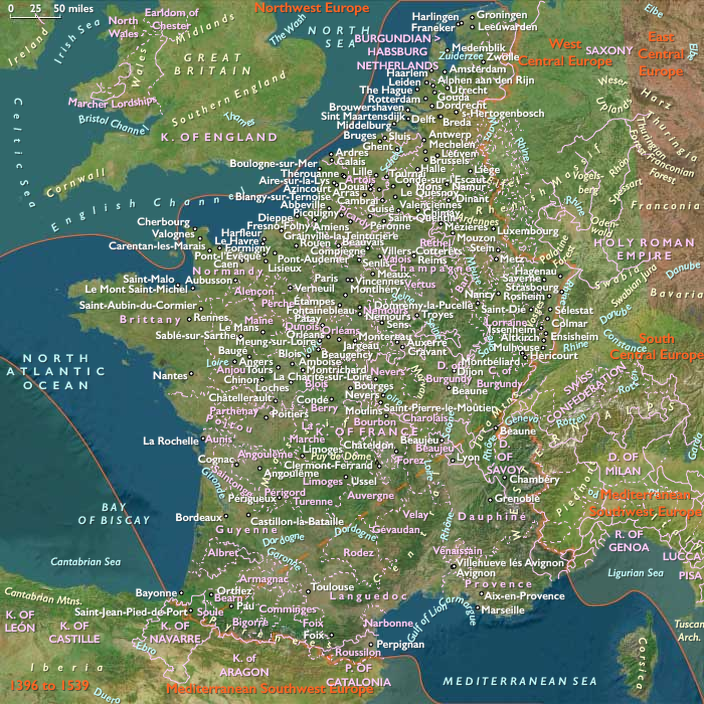
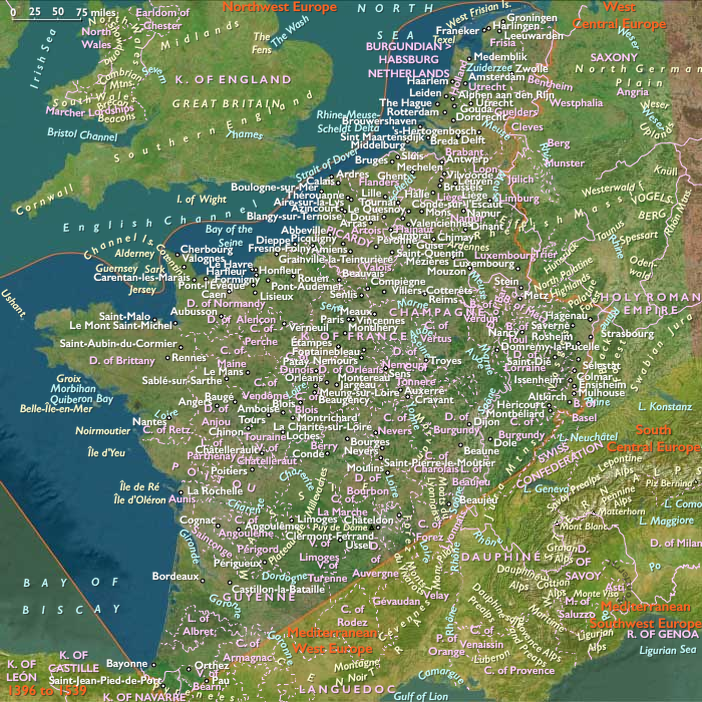
Seeking to preserve the economic value of prosperous Ghent, Philip initially pursued negotiations, which the city adamantly refused. In response, Philip resolved on a decisive military campaign, launching it officially on June 18, 1453. Coordinated Burgundian forces advanced strategically toward Ghent: a fleet navigated up the Scheldt from Sluis and Antwerp, while Philip marched from Lille, systematically capturing Ghent’s outlying strongholds.
Philip’s campaign opened with the rapid and brutal capture of Schendelbeke on June 27, following two days of intensive artillery bombardment. Subsequently, between July 2 and July 5, Burgundian guns reduced Poeke Castle to rubble, although this victory came at the cost of the life of Burgundian hero and Knight of the Golden Fleece, Jacques de Lalaing. Philip displayed ruthless discipline: Ghent’s captured defenders were hanged after each victory, with 104 executed in Schendelbeke alone.
On July 18, 1453, Burgundian forces reached Gavere Castle, the final barrier before Ghent itself. After five days of relentless artillery bombardment, the English mercenary captain John Fox, commanding Ghent's defenses at Gavere, escaped to Ghent by deceiving Burgundian guards with stolen uniforms and knowledge of the Burgundian password. His unexpected arrival in Ghent early on July 23 caused widespread panic, leading city authorities to compel around 25,000 residents—under threat of execution—to launch an ill-prepared relief expedition.
The Burgundians, anticipating such an attempt, had carefully selected terrain between Semmerzake and Gavere, positioning their troops strategically along the wooded banks of the Leebeek valley. When Ghent’s relief force confronted the Burgundians, they watched as John Fox and his mercenaries dramatically defected back to Philip’s side. Already shaken by this betrayal, the Ghent militia collapsed in panic after an accidental explosion among their own artillery. The battle quickly descended into slaughter, with Ghent losing between 16,000 and 20,000 men. Only the desperate, final resistance of about a thousand Ghent militia prevented an immediate Burgundian march into the defenseless city. Notably, during these closing stages of combat, Philip himself entered the fray and was wounded by one of the last Ghent defenders.
Following this devastating defeat, Ghent swiftly surrendered, culminating in the humiliating Peace of Gavere. This treaty decisively ended Ghent’s revolt and significantly advanced Philip the Good’s centralization of Burgundian power at the expense of urban autonomy. Moreover, Philip’s victorious campaign reinforced the transformative impact of modern gunpowder artillery on late medieval warfare, marking a critical step toward centralized royal authority and the definitive weakening of civic independence in Atlantic West Europe.
Locations
People
Groups
Topics
Commodoties
Subjects
Regions
Subregions
Years: 1453 - 1453
Locations
People
Groups
Topics
Commodoties
Subjects
Regions
Subregions