
Filters:
Nubia's indigenous people absorb Arab migrants who …
Years: 1252 - 1395
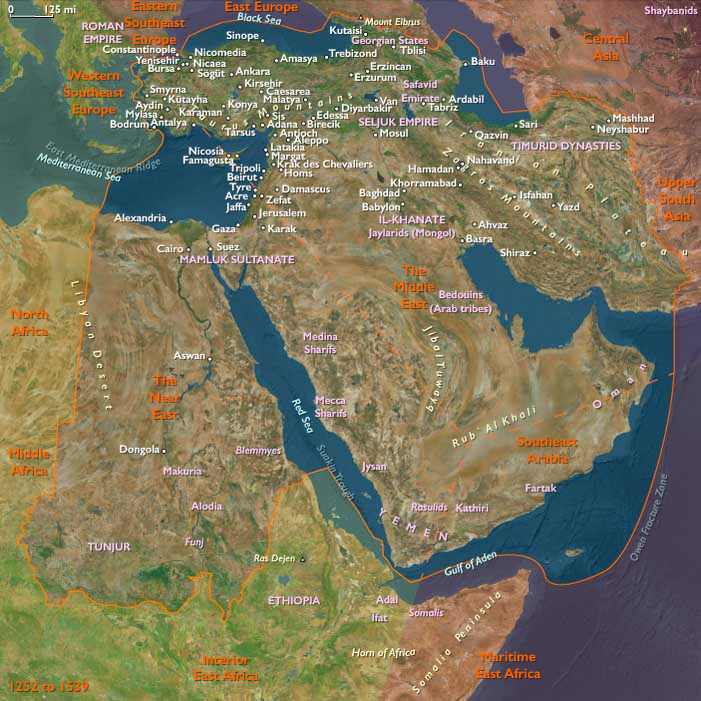
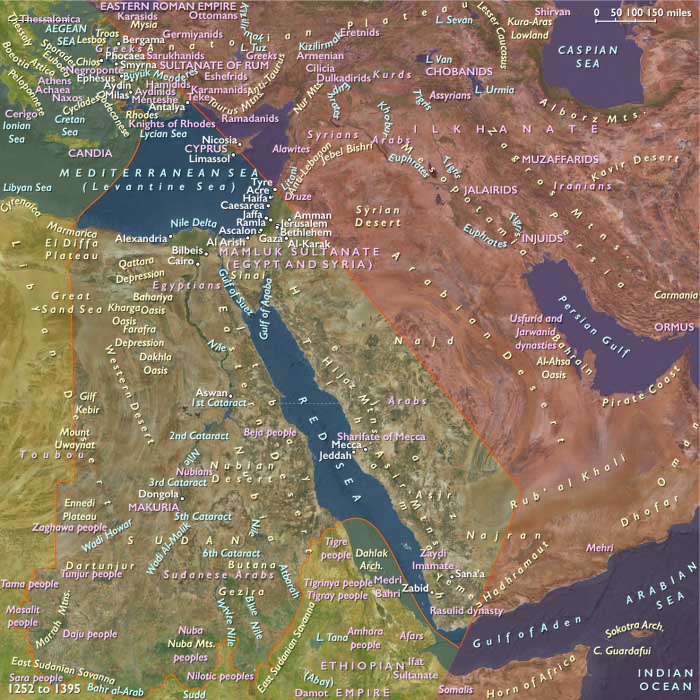
Nubia's indigenous people absorb Arab migrants who settle among them in some instances, as among the Beja.
Beja ruling families will later derive their legitimacy from their claims of Arab ancestry.
Although not all Muslims in the region are Arabic-speaking, acceptance of Islam facilitates the arabizing process.
There is no policy of proselytism, however, and forced conversion is rare.
Islam penetrates the area over a long period of time through intermarriage and contacts with Arab merchants and settlers.
Exemption from taxation in regions under Muslim rule also proves a powerful incentive to conversion.
Beja ruling families will later derive their legitimacy from their claims of Arab ancestry.
Although not all Muslims in the region are Arabic-speaking, acceptance of Islam facilitates the arabizing process.
There is no policy of proselytism, however, and forced conversion is rare.
Islam penetrates the area over a long period of time through intermarriage and contacts with Arab merchants and settlers.
Exemption from taxation in regions under Muslim rule also proves a powerful incentive to conversion.
Locations
Groups
- Nubians
- Blemmyes
- Aksum (or Axum), Kingdom of
- Ja'alin tribe
- Beja people
- Juhaynah
- Makuria, Kingdom of
- Christians, Monophysite
- Christianity, Chalcedonian
- Coptic Orthodox Church of Alexandria
- Alodia, or Alwa (Subah, or Soba), Kingdom of
- Abbasid Caliphate (Baghdad)
- Egypt and Syria, Mamluk Bahri Sultanate of
- Egypt and Syria, Mamluk Burji Sultanate of
Subjects
Regions
Subregions
Years: 1252 - 1395
Locations
Groups
- Nubians
- Blemmyes
- Aksum (or Axum), Kingdom of
- Ja'alin tribe
- Beja people
- Juhaynah
- Makuria, Kingdom of
- Christians, Monophysite
- Christianity, Chalcedonian
- Coptic Orthodox Church of Alexandria
- Alodia, or Alwa (Subah, or Soba), Kingdom of
- Abbasid Caliphate (Baghdad)
- Egypt and Syria, Mamluk Bahri Sultanate of
- Egypt and Syria, Mamluk Burji Sultanate of
Subjects
Regions
Subregions