
Toward the end of the Cucuteni-Trypillian culture's …
Years: 2925BCE - 2782BCE
Toward the end of the Cucuteni-Trypillian culture's existence (from roughly 3000 BCE to 2750 BCE), copper traded from other societies (notably, from the Balkans) begins to appear throughout the region, and members of the Cucuteni-Trypillian culture begin to acquire skills necessary to use it to create various items.
Along with the raw copper ore, finished copper tools, hunting weapons and other artifacts are also brought in from other cultures.
This marks the transition from the Neolithic to the Eneolithic, also known as the Chalcolithic or Copper Age.
Bronze artifacts begin to show up in archaeological sites toward the very end of the culture.
The more complex trade network of the Proto-Indo-European culture, which would eventually replace the Cucuteni-Trypillian culture, supplanted the primitive trade network of this society, which had been slowly growing more complex.
The late period of the Cucuteni-Trypillian culture has witnessed a very dramatic shift in world climate.
For the entire duration of this culture's history, the earth has been going through what paleoclimatologists have called the Holocene climatic optimum, which lasted from 7000 to 3200 BCE.
During this time, the earth was both warmer and wetter than it has been at any time since the end of the last Ice Age, making conditions optimal for growing crops.
However, beginning around 3200 BCE, the Earth's climate began to become significantly more arid and cool.
This results in the Sub-Boreal phase, which creates the worst and longest drought in Europe since the end of the last Ice Age.
It also is the point when the region in North Africa that had been a land of forests and grassy plains is turned into the largest desert in the world.
This must have had a tremendous effect on the Cucuteni-Trypillian culture, which relies entirely on subsistence farming to feed the enormous populations in their massive settlements.
Without resources to feed their people, this culture would most certainly collapse, and there is much speculation among scholars that if this was not the most significant factor in this culture's demise, that it played an absolutely critical role in bringing it about.
Groups
Topics
- Piora Oscillation ending the Neolithic Subpluvial
- Early Bronze Age II (Near and Middle East)
- Subboreal Period
Commodoties
Subjects
Regions
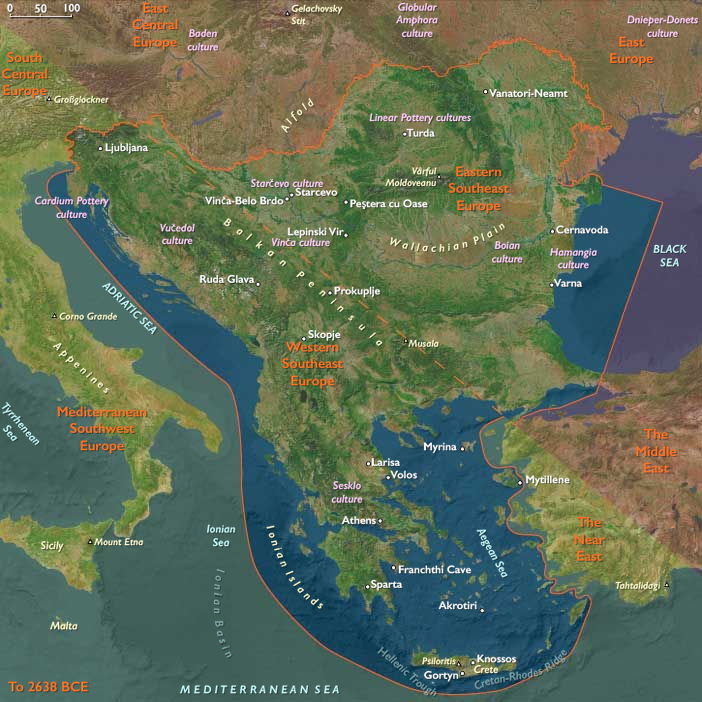
Subregions
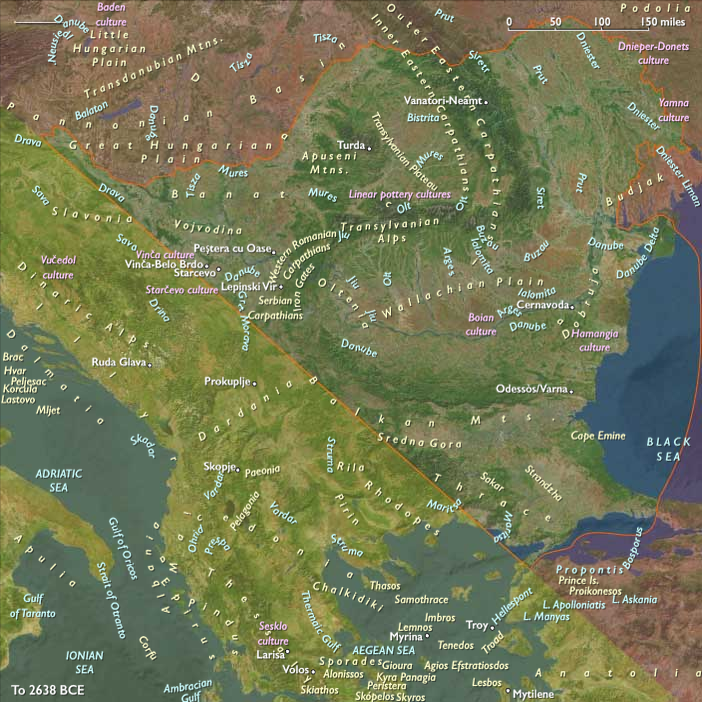
Years: 2925BCE - 2782BCE
Groups
Topics
- Piora Oscillation ending the Neolithic Subpluvial
- Early Bronze Age II (Near and Middle East)
- Subboreal Period
Commodoties
Subjects
Regions
Subregions