
Tiglath-Pileser III has inaugurated the last and …
Years: 729BCE - 718BCE
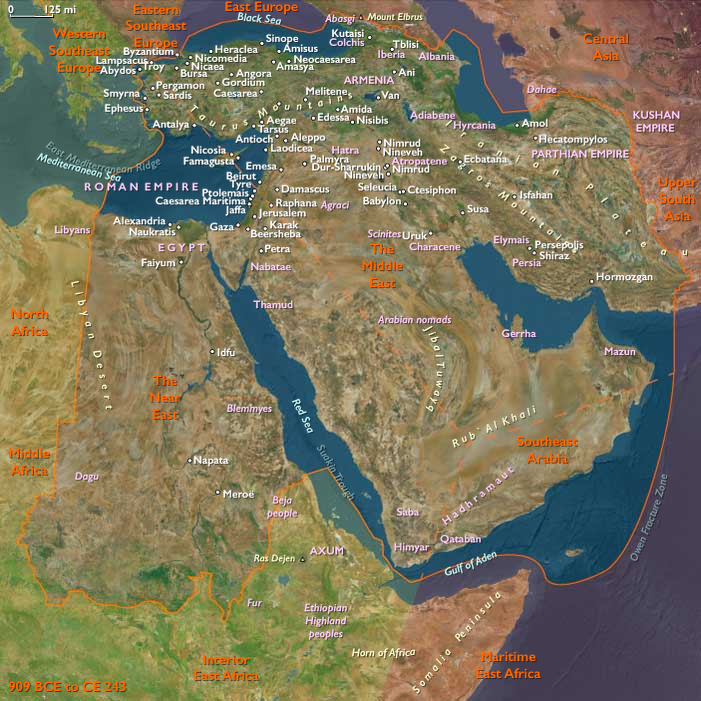
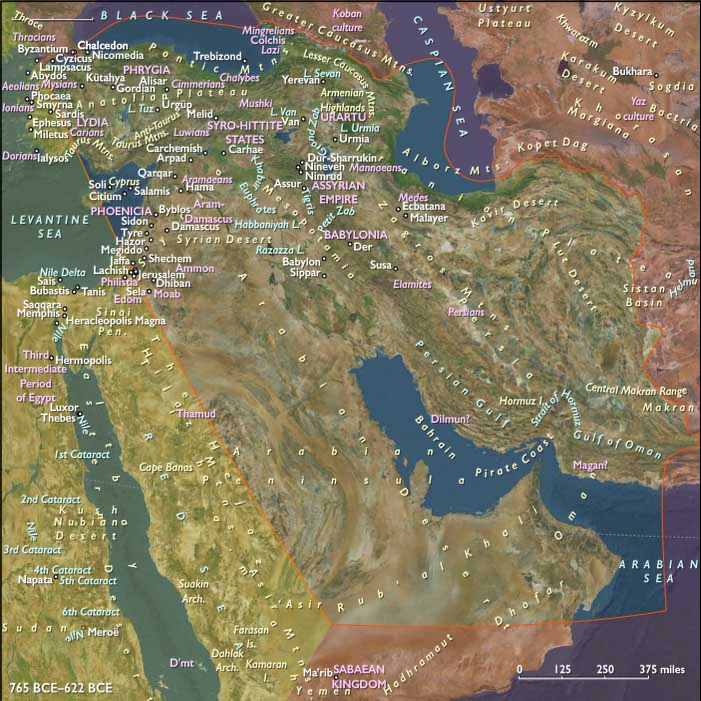
Tiglath-Pileser III has inaugurated the last and greatest phase of Assyrian expansion, having subjected Syria and Palestine to his rule, his conquests having paved the way for the establishment of the Second Assyrian Empire.
He has engraved his royal annals across the bas-reliefs depicting his military achievements on the sculptured slabs decorating the royal palace he has built for himself in Nimrud (the so-called "central palace" later to be dismantled by Esarhaddon).
He seizes the increasingly belligerent Babylonian throne in 729 or 728 to forestall a Chaldean-led rebellion.
He merges the kingdoms of Assyria and Babylonia, using his personal (or perhaps Babylonian) name of Pulu (II Kings 15:19; I Chronicles 5:26).
He dies soon afterward in 727, having set Assyria on the road it is to follow to its end.
He is succeeded by Ululayu, probably his son, who had first appeared as governor of Zimirra in Phoenicia and who now takes the name Shalmaneser V. (The name Shalmaneser is used for him in the Bible; his name in Akkadian cuneiform is actually Shulmanu-asharid.)
Locations
People
Groups
- Mesopotamia
- Hebrews
- Babylon, Kingdom of
- Judah, Kingdom of
- Assyrian people
- Assyria, (New) Kingdom of (Neo-Assyrian Empire)
Topics
- Younger Subboreal Period
- Iron Age, Near and Middle East
- Iron Age Cold Epoch
- Classical antiquity
- Assyrian Wars of c. 745-609 BCE
Commodoties
Subjects
Regions
Subregions
Years: 729BCE - 718BCE
Locations
People
Groups
- Mesopotamia
- Hebrews
- Babylon, Kingdom of
- Judah, Kingdom of
- Assyrian people
- Assyria, (New) Kingdom of (Neo-Assyrian Empire)
Topics
- Younger Subboreal Period
- Iron Age, Near and Middle East
- Iron Age Cold Epoch
- Classical antiquity
- Assyrian Wars of c. 745-609 BCE
Commodoties
Subjects
Regions
Subregions