
Thutmose III, widely considered a military genius …
Years: 1449BCE - 1438BCE
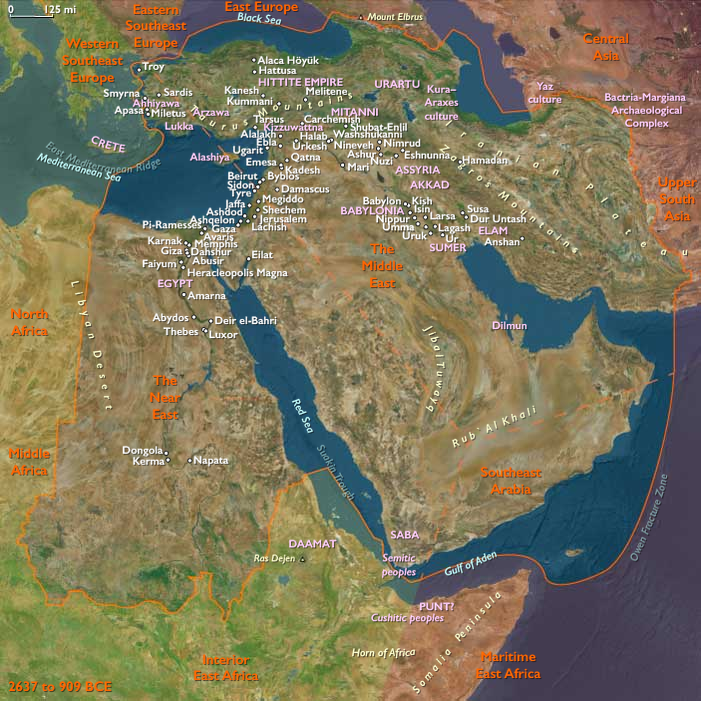
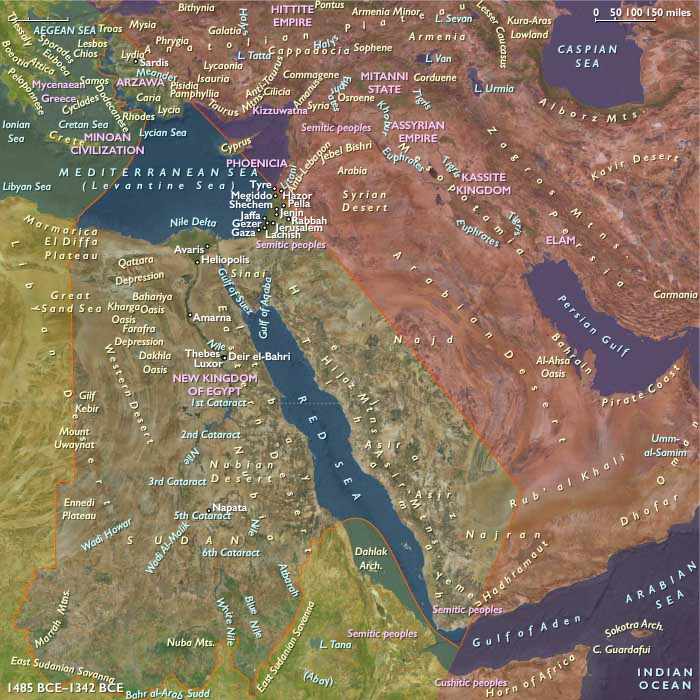
Thutmose III, widely considered a military genius by historians, and an active expansionist ruler who is sometimes called Egypt's greatest conqueror or "the Napoleon of Egypt," has personally led several victorious campaigns in Syria, Palestine, and Phoenicia in the twenty years since Hatshepsut’s death.
Thutmose reaches as far as the east bank of the Euphrates to temporarily defeat the powerful Mitanni kingdom, Egypt’s chief rival for control of the Near East, but fails in his attempt to wrest domination of Syria from Mitanni.
Having spent the latter part of his half-century-plus kingship creating the largest empire Egypt has ever seen, Thutmose III has consolidated imperial power from north Syria to the fourth cataract of the Nile in Nubia.
He has used much of the tribute flowing from vassal nations to construct new temples in gratitude to the Egyptian gods.
A great builder pharaoh, Thutmose has constructed over fifty temples, although some of these are now lost and only mentioned in written records.
He has also commissioned the building of many tombs for nobles, which have been made with greater skill than ever before.
His use of pillars is unprecedented in architecture: he builds Egypt's only known set of heraldic pillars, two large columns standing alone instead of being part of a set supporting the roof.
His jubilee hall is also revolutionary, and is arguably the earliest known building created in the basilica style.
Finally, although not directly pertaining to his monuments, it appears that Thutmose's artisans had learned how to use the skill of glass making, developed in the early Eighteenth Dynasty, to create drinking vessels by the core-formed method.
Thutmose’s most famous constructions are the misnamed Cleopatra's Needles, a trio of red granite obelisks originally erected in the Egyptian city of Heliopolis, inscribed two hundred years later by Ramesses II to commemorate his victories, moved by the Romans to Alexandria in 12 BCE, then moved in the nineteenth century to London, Paris, and New York City, where each still stands.
Locations
People
Groups
- Canaanite culture, ancient
- Phoenicia
- Egypt (Ancient), New Kingdom of
- Mitanni (Hanigalbat), Kingdom of
- Syrian people
Topics
Commodoties
Subjects
Regions
Subregions
Years: 1449BCE - 1438BCE
Locations
People
Groups
- Canaanite culture, ancient
- Phoenicia
- Egypt (Ancient), New Kingdom of
- Mitanni (Hanigalbat), Kingdom of
- Syrian people
Topics
Commodoties
Subjects
Regions
Subregions