
Filters:
The Legacy of Sancho III "the Great" …
Years: 1035 - 1035
The Legacy of Sancho III "the Great" of Pamplona (r. 1004–1035)
Through marriage, politics, and military conquest, Sancho III of Pamplona expands his realm significantly. In 1029, he annexes Castile, and by 1034, he conquers León, assuming the title of Emperor over all the Christian kingdoms of Iberia.
Integration of Iberia into Christian Europe
Sancho plays a crucial role in bringing Christian Spain into closer alignment with European religious and cultural traditions:
- He encourages European pilgrims to travel to Santiago de Compostela, strengthening the Camino de Santiagoas a major pilgrimage route.
- He welcomes the Cluniac monks into his realm, fostering religious reform and increasing ties with the papacy and the wider Christian world.
- He introduces feudal concepts such as vassalage, suzerainty, and the use of "by the grace of God" (Dei gratia) in royal titles, influenced by French political customs.
- He begins the Navarrese currency system, minting deniers of Carolingian influence, as noted by the Encyclopædia Britannica.
The Division of the Empire and the Future of Iberia
Despite his unification of Christian Iberia, Sancho divides his empire upon his death in 1035, ensuring that his lands remain under Jiménez dynasty rule but also fragmenting his dominion. Each of his four sons becomes a king, and his empire is split into multiple kingdoms:
- Navarre
Locations
People
Groups
- Galicia, Kingdom of
- Christianity, Chalcedonian
- Islam
- Aragón, or Zaca, County of
- Navarre, Kingdom of
- Gascony, Duchy of
- León, Kingdom of
- Castile, County of
- France, (Capetian) Kingdom of
- Córdoba, (Hammudid) statelet, or taifa, of
- Aragón, Kingdom of
- Castile, Kingdom of
Topics
Commodoties
Subjects
Regions
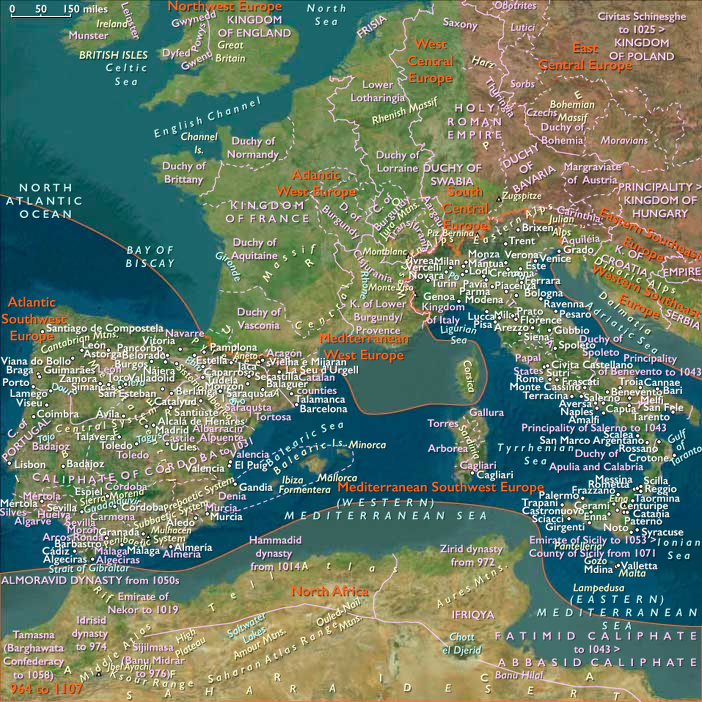
Subregions
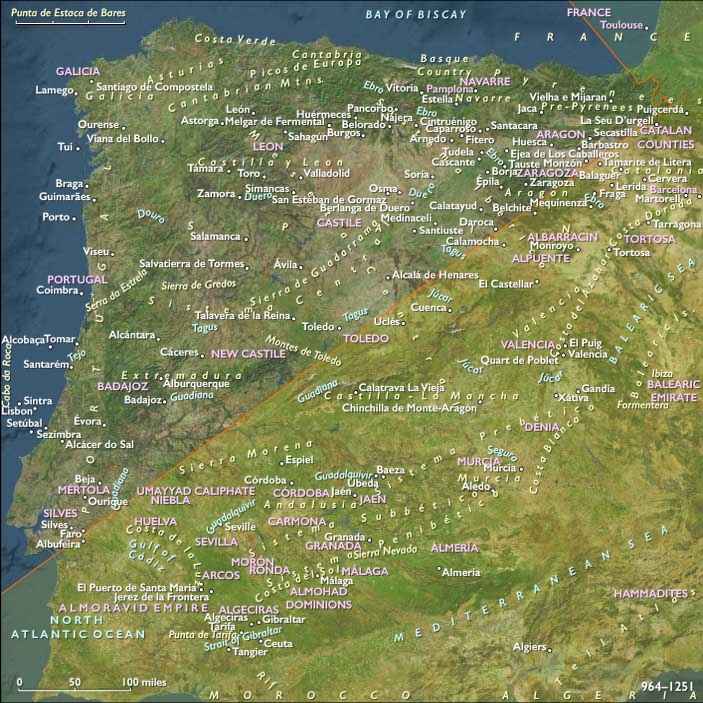
Related Events
Showing 10 events out of 26 total
Years: 1035 - 1035
Locations
People
Groups
- Galicia, Kingdom of
- Christianity, Chalcedonian
- Islam
- Aragón, or Zaca, County of
- Navarre, Kingdom of
- Gascony, Duchy of
- León, Kingdom of
- Castile, County of
- France, (Capetian) Kingdom of
- Córdoba, (Hammudid) statelet, or taifa, of
- Aragón, Kingdom of
- Castile, Kingdom of
Topics
Commodoties
Subjects
Regions
Subregions