
Three German leaders, all called Henry, stage …
Years: 976 - 987
Three German leaders, all called Henry, stage a brief rebellion against the Holy Roman Emperor Otto II in 977.
The conflict is called The War of the Three Henries.
Most Polabian Slavs see Jesus as a "German god" and remain pagan, despite the efforts of Christian missionaries.
In the Great Slav Rising in 983, the pagan Slavs revolt against their subjugation to the Kingdom of the Eastern Franks, aka East Francia.
The Slavic Lutici and Obotrite people, who live to the east of the Elbe in modern northeast Germany, defeat Emperor Otto II in at the Battle of Stilo in 982, then rebel against the Germans the following year.
The Hevelli and Lutici destroy the Bishoprics of Havelberg and Brandenburg., and some Slavs advance across the Elbe into Saxon territory, but retreat when the Christian Duke of the Polans, Mieszko I, attacks them from the East.
The Holy Roman Empire retains only nominal control over the Slavic territories between the Elbe and the Oder.
People
- Henry I, Bishop of Augsburg
- Henry I, Margrave of Austria
- Henry II, Duke of Bavaria
- Mieszko I
- Otto II
Groups
- Polytheism (“paganism”)
- Saxons
- Germans
- Polabian Slavs (West Slavs)
- Christianity, Chalcedonian
- Obotrites (Slavic tribal confederation)
- Saxony, Duchy of
- Roman Empire, Eastern: Macedonian dynasty
- Bavaria, Ottonian Duchy of
- German, or Ottonian (Roman) Empire
- Poland, Principality of
- Lutici (West Slavic Polabian tribe)
- Poles (West Slavs)
- Austria, Margravate of
- Cometopuli dynasty
Topics
Commodoties
Subjects
Regions
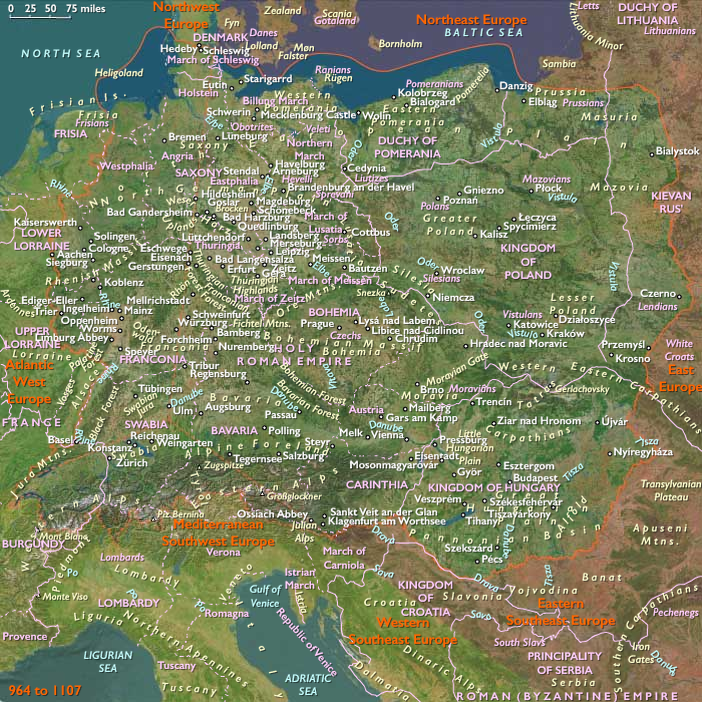
Subregions
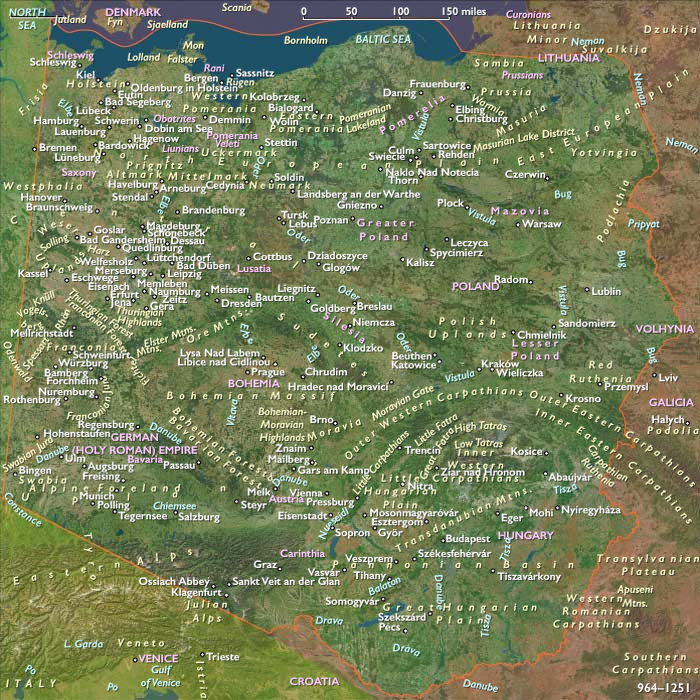
Years: 976 - 987
People
- Henry I, Bishop of Augsburg
- Henry I, Margrave of Austria
- Henry II, Duke of Bavaria
- Mieszko I
- Otto II
Groups
- Polytheism (“paganism”)
- Saxons
- Germans
- Polabian Slavs (West Slavs)
- Christianity, Chalcedonian
- Obotrites (Slavic tribal confederation)
- Saxony, Duchy of
- Roman Empire, Eastern: Macedonian dynasty
- Bavaria, Ottonian Duchy of
- German, or Ottonian (Roman) Empire
- Poland, Principality of
- Lutici (West Slavic Polabian tribe)
- Poles (West Slavs)
- Austria, Margravate of
- Cometopuli dynasty
Topics
Commodoties
Subjects
Regions
Subregions