
Filters:
Albert Sidney Johnston, the Texas Secretary of …
Years: 1840 - 1840
March
Albert Sidney Johnston, the Texas Secretary of War, has ordered San Antonio officials to take the Comanche delegates as hostages if they fail to deliver all captives
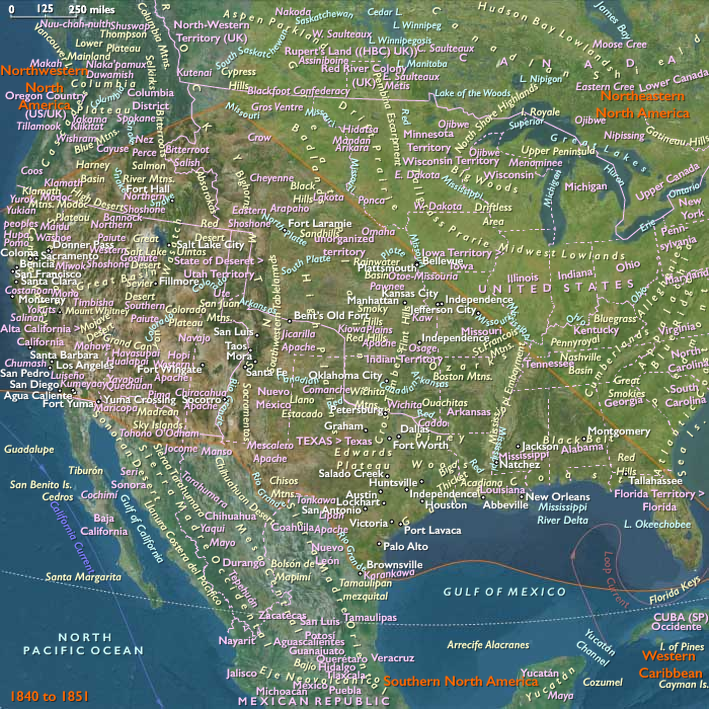
In March, Mukwooru, a powerful eastern Comanche chief, leads sixty-five Comanches, including women and children, to San Antonio for peace talks.
At this time, the Comanche people are not a unified nation.
There are at least twelve divisions of the Comanche, with as many as thirty-five independent roaming bands, also known as rancherías or villages.
Although bound together in various ways, both cultural and political, the bands are not responsible to any formalized unified authority.
The absence of a central authority means that one band cannot force another band to return their captives.
Chiefs Buffalo Hump and Peta Nocona have never agreed to return any captives to the Texian settlers.
Captives are often assimilated into the society and adopt into families, and the Comanche make little distinction between people born Comanche and those adopted.
The Comanche practice of taking captives dates back to at least the early eighteenth century with raids into Spanish New Mexico.
Women and children are preferred, and in a significant number of cases, young captives had been raised as Comanches and doid not wish to leave.
On January 10, 1840, a
In March, Mukwooru, a powerful eastern Comanche chief, leads sixty-five Comanches, including women and children, to San Antonio for peace talks.
At this time, the Comanche people are not a unified nation.
There are at least twelve divisions of the Comanche, with as many as thirty-five independent roaming bands, also known as rancherías or villages.
Although bound together in various ways, both cultural and political, the bands are not responsible to any formalized unified authority.
The absence of a central authority means that one band cannot force another band to return their captives.
Chiefs Buffalo Hump and Peta Nocona have never agreed to return any captives to the Texian settlers.
Captives are often assimilated into the society and adopt into families, and the Comanche make little distinction between people born Comanche and those adopted.
The Comanche practice of taking captives dates back to at least the early eighteenth century with raids into Spanish New Mexico.
Women and children are preferred, and in a significant number of cases, young captives had been raised as Comanches and doid not wish to leave.
On January 10, 1840, a
Locations
People
Groups
Topics
Subjects
Regions

Subregions
Years: 1840 - 1840
March
Locations
People
Groups
Topics
Subjects
Regions
Subregions