
The identity of the Sea Peoples, who …
Years: 1197BCE - 1054BCE
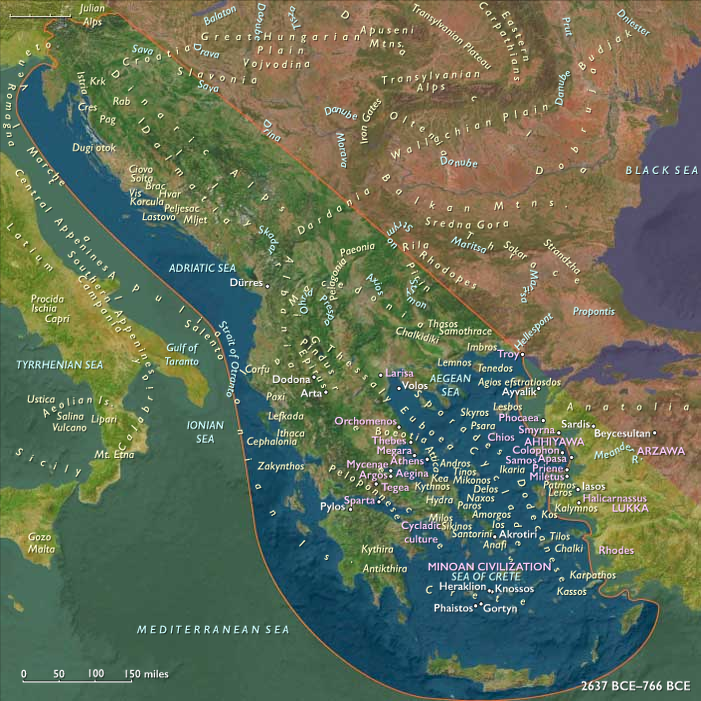
The identity of the Sea Peoples, who appear to be based in the Aegean, has remained enigmatic to modern scholars, who have only the scattered records of ancient civilizations and archaeological analysis to inform them.
Evidence shows that the Egyptians knew of the identities and motives of these peoples.
Many had been subordinate to the Egyptians or in a diplomatic relationship with them for at least as long as the few centuries covered by the records.
Some groups are not included in the Egyptian list of Sea Peoples, as they operate primarily on land.
Among them are the ‘prw (Habiru) of Egyptian inscriptions, or 'apiru of cuneiform (“bandits").
Some people, such as the Lukka, are included in both categories.
The Egyptians employ select groups, or members of groups, as mercenaries.
Pharaoh Ramesses III, the second king of the Twentieth Dynasty, who reigns for most of the first half of the twelfth century BCE, is forced to deal with a later wave of invasions of the Sea Peoples—the best recorded in his eighth year.
The pharaoh records the Sea People's activities in several long inscriptions from his Medinet Habu mortuary temple.
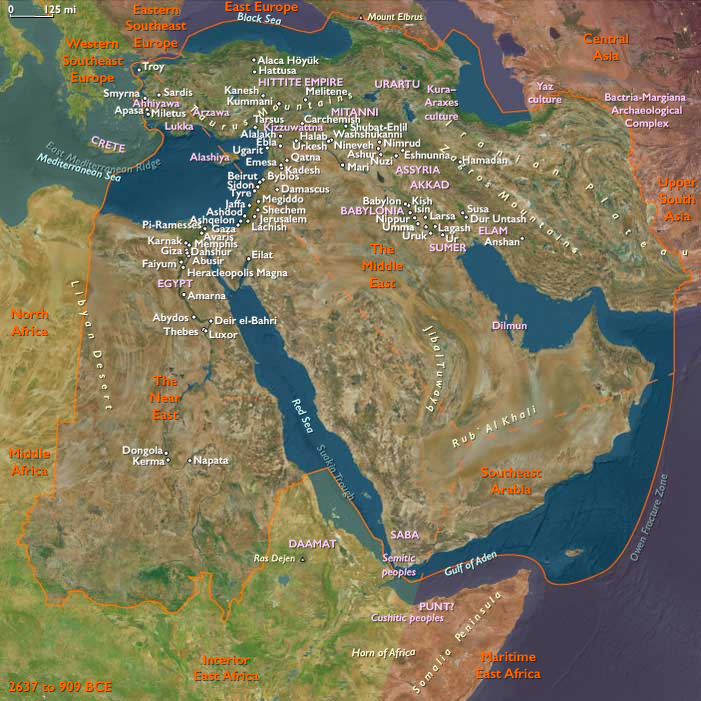
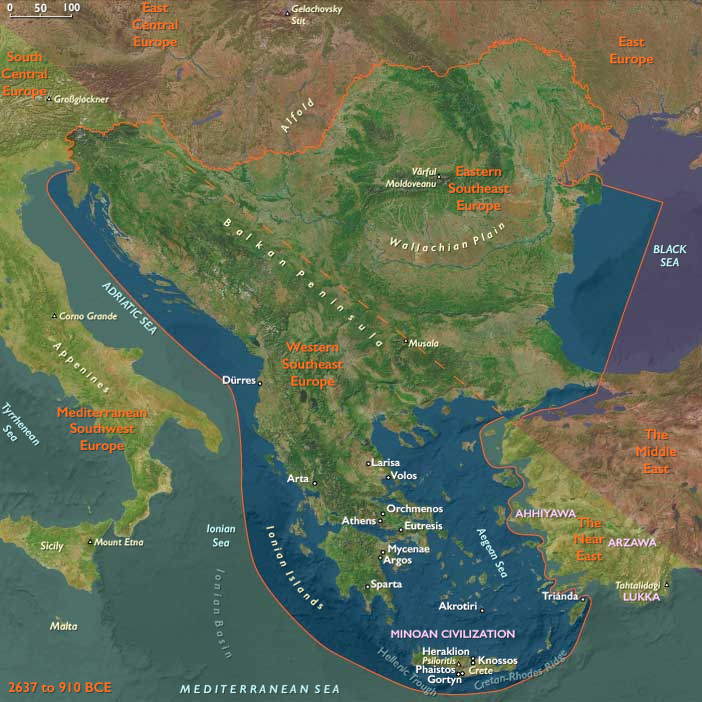
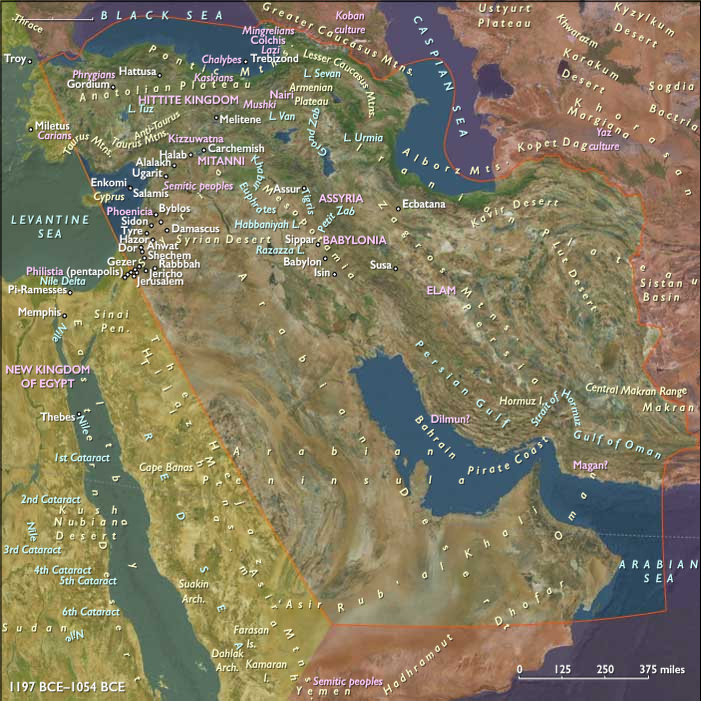
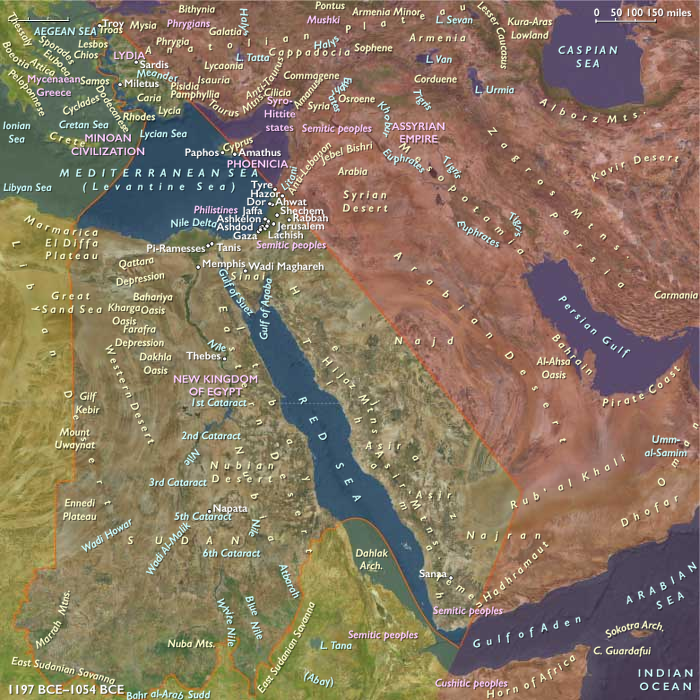
The ends of several civilizations around 1175 BCE have instigated a theory that the Sea Peoples may have caused the collapse of the Hittite, Mycenaean and Mitanni kingdoms.
Ramesses' comments about the scale of the Sea Peoples' onslaught in the eastern Mediterranean are confirmed by the destruction of the states of Hatti, Ugarit, Ashkelon and Hazor around this time.
People
Groups
- Egyptians
- Canaanite culture, ancient
- Aramaeans
- Egypt (Ancient), New Kingdom of
- Phoenicians
- Ahhiyawa
- Hittites (Hittite Empire), (New) Kingdom of the
- Sea Peoples
- Philistines
- Hebrews
- Aram-Damascus (Syria), Kingdom of
Topics
Commodoties
Subjects
Regions
Subregions
Years: 1197BCE - 1054BCE
People
Groups
- Egyptians
- Canaanite culture, ancient
- Aramaeans
- Egypt (Ancient), New Kingdom of
- Phoenicians
- Ahhiyawa
- Hittites (Hittite Empire), (New) Kingdom of the
- Sea Peoples
- Philistines
- Hebrews
- Aram-Damascus (Syria), Kingdom of
Topics
Commodoties
Subjects
Regions
Subregions