
Thorfinn Karlsefni’s brothers Helgi and Finnbogi lead …
Years: 1015 - 1015
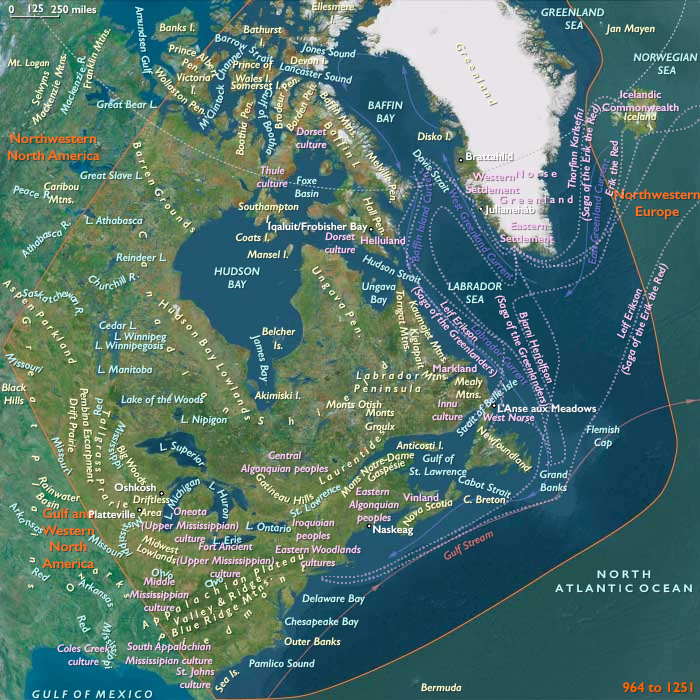
Thorfinn Karlsefni’s brothers Helgi and Finnbogi lead additional expeditions to Vinland around 1013, but the hostility of the native Skraelings apparently causes the Scandinavians to abandon all attempts at colonization around 1015.
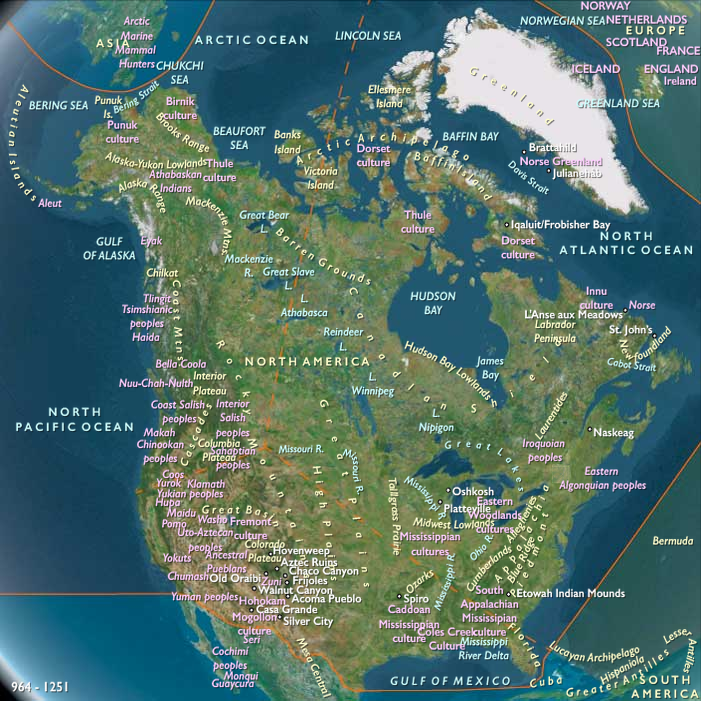
(Vinland could refer to L’Anse aux Meadows, or to a mainland site perhaps as far south as the Virginia Capes; scholars debate its location, as they do the locations of earlier Viking settlements.)
The colonists return to Greenland; Thorfinn eventually settles in Iceland.
This three year excursion will be the longest-lasting European colony in the New World until Columbus' voyages four hundred years later initiate full-scale colonization.
Locations
People
Groups
- Vikings
- Icelandic Commonwealth, or Icelandic Free State
- Icelanders (Scandinavians)
- Greenland, Norwegian Crown Colony of
- Skræling
Topics
Commodoties
Subjects
Regions
Subregions
Related Events
Showing 10 events out of 51769 total
Years: 1015 - 1015
Locations
People
Groups
- Vikings
- Icelandic Commonwealth, or Icelandic Free State
- Icelanders (Scandinavians)
- Greenland, Norwegian Crown Colony of
- Skræling
Topics
Commodoties
Subjects
Regions
Subregions