
Thomas of Lancaster, Duke of Clarence: Military …
Years: 1421 - 1421
Thomas of Lancaster, Duke of Clarence: Military Leadership and Political Divisions (1387–1421)
Thomas of Lancaster, Duke of Clarence (1387–1421), was the second son of King Henry IV of England and Mary de Bohun. He played a key role in English politics and military campaigns in France during the Hundred Years' War, particularly under his older brother, Henry V.
I. Early Life and Political Conflicts
- Thomas was born before November 25, 1387, as evidenced by a payment recorded in his father’s accounts to his nurse on that date.
- In November or December 1411, he married Lady Margaret Holland, widow of John Beaufort, 1st Earl of Somerset, and daughter of Thomas Holland, 2nd Earl of Kent.
- Although they had no children, Thomas became stepfather to Margaret’s six children from her first marriage.
- He had one illegitimate son, Sir John Clarence ("the Bastard of Clarence"), who would fight alongside him in France.
- Thomas became politically involved during his father’s illness (1411), when conflicts arose between his elder brother Henry, Prince of Wales (the future Henry V), and their father, King Henry IV.
- Henry, as Prince of Wales, sought to declare war on France, but his father opposed it.
- When Henry defied the king and persuaded the royal council to declare war, he was removed from the council, and Thomas took his place, aligning with his father’s peace policy.
II. Military Role Under Henry V
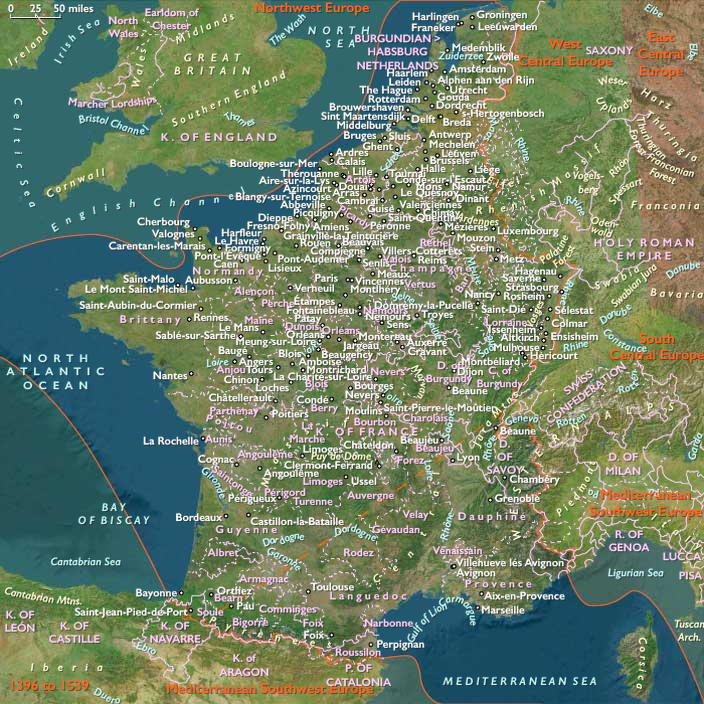
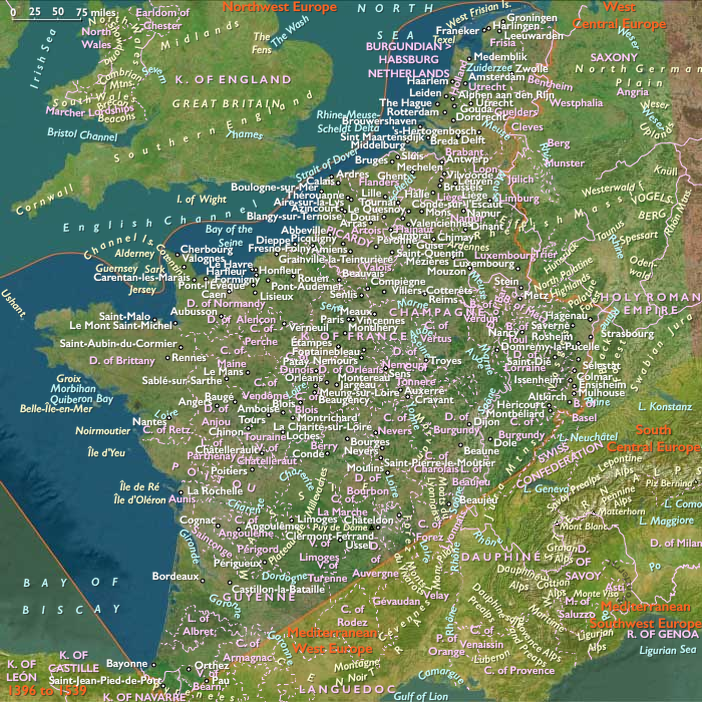
- When Henry V launched his French campaign (1415), Thomas joined him in securing English dominance in Normandy.
- Siege of Rouen (July 1418 – January 1419)
- Thomas commanded the besieging forces during the English capture of Rouen, one of the most crucial victories of the Hundred Years’ War.
- The fall of Rouen solidified English control over Normandy, bringing Henry closer to his goal of securing the French throne.
- Treaty of Troyes (1420)
- Thomas played a role in the negotiations of the Treaty of Troyes, in which Henry V was declared heir to the French throne and married Catherine of Valois, daughter of King Charles VI of France.
III. The French Resistance and the Role of the Scots
- The French Dauphin Charles (the future Charles VII), disinherited by the Treaty of Troyes, refused to accept English rule and continued to lead resistance in southern France.
- The French cause was strengthened by a Scottish army, led by John Stewart, Earl of Buchan, which provided critical reinforcements to the Dauphin’s forces.
- Thomas of Clarence, now one of England’s top commanders in France, would soon face his greatest challenge in battle against these combined forces.
IV. Legacy and the Continuing Conflict
- Thomas was one of England’s most experienced military leaders, but his impulsiveness in battle would ultimately lead to his downfall in 1421 at the Battle of Baugé.
- His rivalry with the Scottish forces, particularly under John Stewart, Earl of Buchan, played a key role in the next phase of the war.
- His death would be a major setback for the English, marking the first major French victory since Agincourt and shifting momentum toward the Dauphin’s forces.
By 1421, Thomas of Lancaster had risen to great prominence as an English military leader, but his impending fate in battle would mark a turning point in the Hundred Years’ War.
Locations
People
Groups
- Normandy, Duchy of
- Burgundy, Duchy of
- Scotland, Kingdom of
- France, (Valois) Kingdom of
- England, (Plantagenet, Lancastrian) Kingdom of
Topics
- Hundred Years' War
- Anglo-Scottish Wars
- Armagnac-Burgundian Civil War
- Hundred Years' War: Resumption of the war under Henry V
- Baugé, Battle of
Commodoties
Subjects
Regions
Subregions
Related Events
Showing 10 events out of 42174 total
Years: 1421 - 1421
Locations
People
Groups
- Normandy, Duchy of
- Burgundy, Duchy of
- Scotland, Kingdom of
- France, (Valois) Kingdom of
- England, (Plantagenet, Lancastrian) Kingdom of
Topics
- Hundred Years' War
- Anglo-Scottish Wars
- Armagnac-Burgundian Civil War
- Hundred Years' War: Resumption of the war under Henry V
- Baugé, Battle of
Commodoties
Subjects
Regions
Subregions