
Thomas Müntzer was born in late 1489 …
Years: 1520 - 1520
April
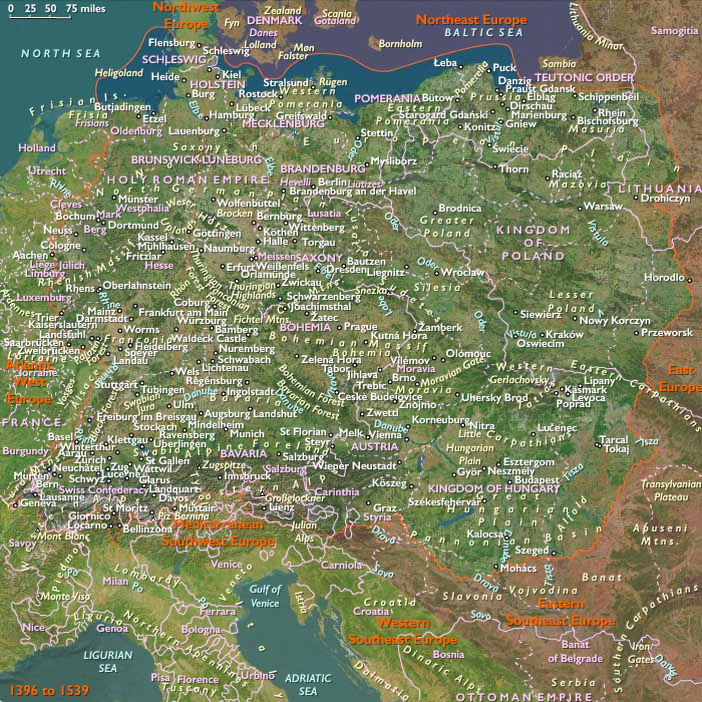
Thomas Müntzer was born in late 1489 (or possibly 1488), in the small town of Stolberg in the Harz Mountains of Germany.
There is every reason to suppose that Müntzer had a relatively comfortable background and upbringing—as evidenced by his lengthy education.
Both his parents are still alive in 1520, his mother dying at around this time.
The family later moved to the neighboring, and slightly larger town of Quedlinburg, and it was as ‘Thomas Munczer de Quedlinburgk’ that he had enrolled at the university of Leipzig in 1506.
Here he may have studied the Arts or even Theology: relevant records are missing, and it is uncertain whether Müntzer actually graduated from Leipzig.
He later enrolled in late 1512 at the Viadriana university of Frankfurt an der Oder.
It is not known what degrees he had obtained by 1514, when he found employment within the Church: almost certainly a Master’s degree in Theology or the Arts; and possibly—but less certainly—a Bachelor of Theology.
At some time in this rather obscure period of his life, possibly before his studies at Frankfurt, he had held posts as an assistant teacher in schools in Halle and Aschersleben, at which time, according to his final confession, he is alleged to have formed a ‘league’ against the incumbent Archbishop of Magdeburg—to what end the league was formed is wholly unknown.
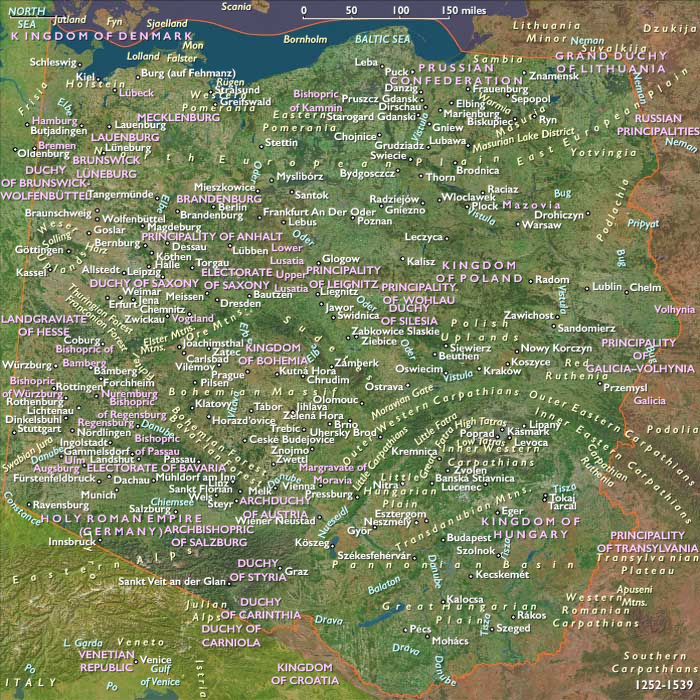
In May 1514, he took up a post as priest in the town of Braunschweig (Brunswick), where he had been occupied on and off for the past few years.
It is here that he began to question the practices of the Catholic Church, and to criticize—for example—the selling of indulgences.
In letters of this time, he is already being addressed as a ‘castigator of unrighteousness’.
Between 1515 and 1516, he had also managed to find a job as schoolmaster at a nunnery in Frose, near Aschersleben.
In the autumn of 1517, he was in Wittenberg, met with Luther and became involved in the great discussions which preceded the posting of Luther’s Ninety-five Theses.
Attending lectures at the university there, he had been exposed to Luther’s ideas as well as other ideas originating with the Humanists, among whom could also be counted Andreas Bodenstein von Karlstadt, who will later become a radical opponent of Luther.
Müntzer had not remained in Wittenberg for long, and was reported in various other locations in Thuringia and Franconia.
He had continued to be paid for his position at Braunschweig until early 1519, when he turned up in the town of Jüterbog, northeast of Wittenberg, where he had been asked to stand in for the preacher Franz Günther.
Günther had already been preaching the reformed gospel, but had found himself viciously attacked by the local Franciscans; requesting leave of absence, he had left the scene and Müntzer had been sent in.
The latter had picked up where Günther had left off.
Before long, the local ecclesiastics are complaining bitterly about Müntzer’s heretical ‘articles’ which challenge both church teaching and church institutions.
By this time, Müntzer is not simply following Luther’s teachings; he has already begun to study the works of the fourteenth century-mystics Suso and Tauler, is seriously wondering about the possibility of enlightenment through dreams and visions, has thoroughly explored the early history of the Christian Church, and is in correspondence with other radical reformers such as Karlstadt.
In June 1519, Müntzer had attended one of the high points of the early Reformation: the disputation in Leipzig, between the reformers of Wittenberg (Luther, Melanchthon and Karlstadt) and the Roman Church hierarchy, represented by Johann Eck.
Müntzer had not gone unnoticed by Luther, who recommended him to a temporary post in the town of Zwickau.
However, at the end of this year, he was still employed in a nunnery at Beuditz, near Weissenfels.
He spends the entire winter studying works by the mystics, the Humanists and the church historians.
Locations
People
Groups
Topics
Subjects
Regions
Subregions
Years: 1520 - 1520
April
Locations
People
Groups
Topics
Subjects
Regions
Subregions