
The surviving members of the Severan dynasty, …
Years: 217 - 217
The surviving members of the Severan dynasty, headed by Julia Maesa (Caracalla's aunt) and her daughters, foster this discontent.
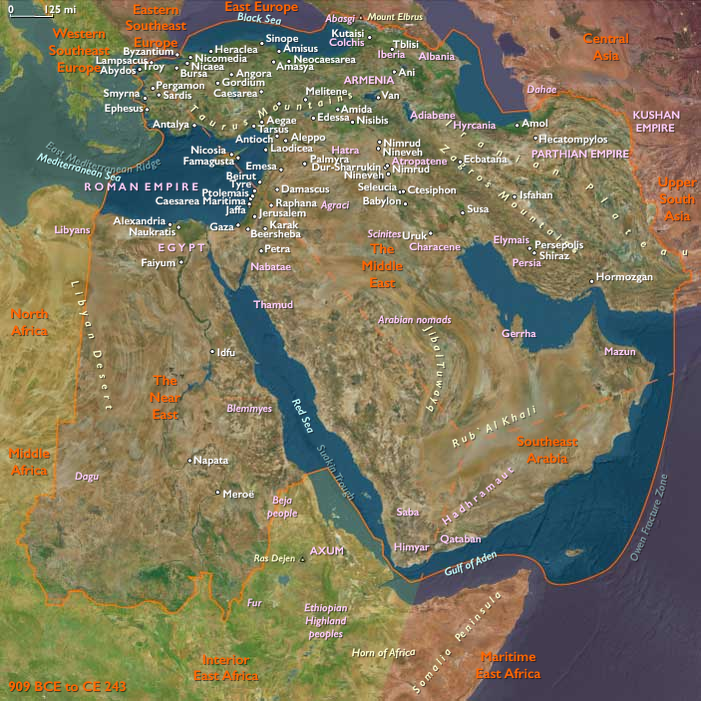
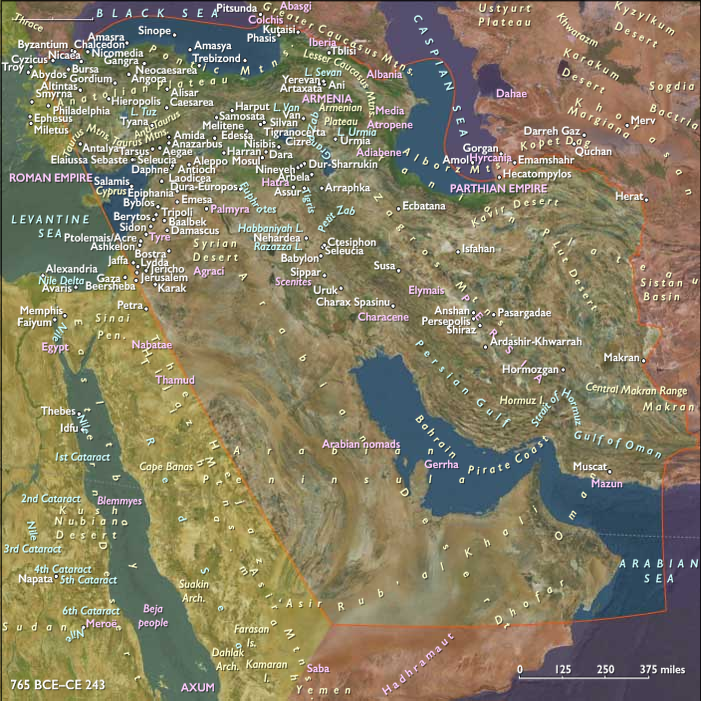
When Macrinus came to power, he suppressed the threat against his reign by the family of his assassinated predecessor by exiling them—Julia Maesa, her two daughters, and her eldest grandson Elagabalus—to their estate near Emesa in Syria, where the Severan women plot, with Julia Maesa’s eunuch advisor and Elagabalus' tutor Gannys, to place another Severan on the imperial throne.
They use their hereditary influence over the cult of sun-deity Elagabalus (the Latinized form of El-Gabal) to proclaim Soaemias' son Elagabalus (named for his family's patron deity) as the true successor to Caracalla.
The false rumor is spread by Elagabalus, with the assistance of the Severan women, that he is Caracalla's illegitimate son and thus the child of a union between first cousins.
He is therefore due the loyalties of Roman soldiers and senators who had sworn allegiance to Caracalla.
Born around the year 203, as Varius Avitus Bassianus to the family of Sextus Varius Marcellus and Julia Soaemias Bassiana, his father had initially been a member of the equestrian class, but had later been elevated to the rank of senator.
His grandmother Julia Maesa is the widow of the Consul Julius Avitus, the sister of Julia Domna, and the sister-in-law of emperor Septimius Severus.
Her daughter Julia Soaemias is a cousin of Caracalla.
Other relatives include his aunt Julia Avita Mamaea and uncle Marcus Julius Gessius Marcianus and their son Alexander Severus.
Elagabalus's family holds hereditary rights to the priesthood of the sun god El-Gabal, of whom Elagabalus is the high priest at Emesa (modern Homs) in Syria.
Elagabalus was initially venerated at Emesa.
The name is the Latinized form of the Syrian Ilāh hag-Gabal, which derives from Ilāh ("god") and gabal ("mountain"), resulting in "the God of the Mountain" the Emesene manifestation of the deity.
The cult of the deity had spread to other parts of the Roman Empire in the second century.
For example, a dedication has been found as far away as Woerden (Netherlands).
The god is later imported and assimilated with the Roman sun god, who was known as Sol Indiges in republican times and as Sol Invictus during the second and third centuries.
Locations
People
- Artabanus IV of Parthia
- Caracalla
- Cassius Dio
- Elagabalus
- Herodian
- Julia Maesa
- Macrinus
- Vologases VI of Parthia
Groups
- Polytheism (“paganism”)
- Parthian Empire
- Osroene, Kingdom of
- Syria Palæstina, Roman province of (Judea, Samaria, and Idumea)
- Roman Empire (Rome): Severan dynasty
- Armenia, Kingdom of
Topics
Commodoties
Subjects
Regions
Subregions
Years: 217 - 217
Locations
People
- Artabanus IV of Parthia
- Caracalla
- Cassius Dio
- Elagabalus
- Herodian
- Julia Maesa
- Macrinus
- Vologases VI of Parthia
Groups
- Polytheism (“paganism”)
- Parthian Empire
- Osroene, Kingdom of
- Syria Palæstina, Roman province of (Judea, Samaria, and Idumea)
- Roman Empire (Rome): Severan dynasty
- Armenia, Kingdom of
Topics
Commodoties
Subjects
Regions
Subregions