
Filters:
Thierry, Count of Flanders: His Final Years …
Years: 1168 - 1168
Thierry, Count of Flanders: His Final Years and the Expansion of Flemish Power (1156–1168 CE)
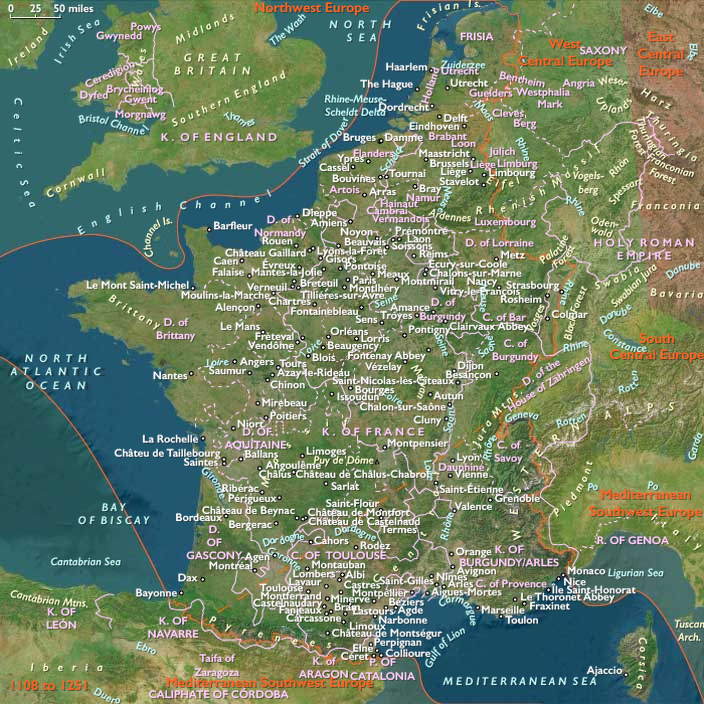
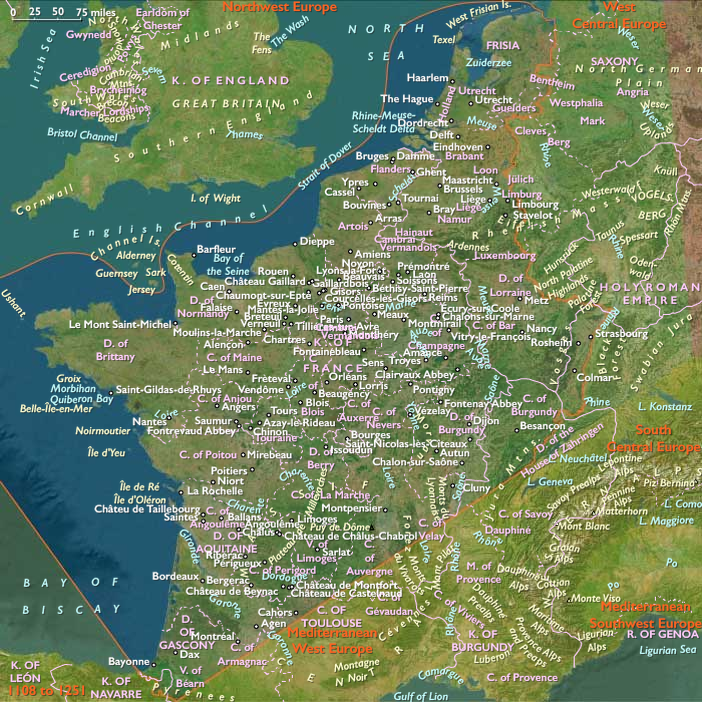
Thierry, Count of Flanders (r. 1128–1168), spent his final years expanding Flemish influence both militarily and diplomatically while continuing his commitment to the Crusades. His rule was marked by territorial expansion, economic growth, and the strengthening of Flemish governance, laying the foundation for Flanders’ later prominence in northern Europe.
Marriage Alliances and Territorial Gains
- In 1156, Thierry arranged the marriage of his eldest son, Philip of Alsace, to Elizabeth (Isabelle) of Vermandois, the daughter and heiress of Raoul I of Vermandois.
- This strategic union strengthened Flemish ties to central France and set the stage for future territorial gains in Vermandois.
- That same year, Thierry and his wife, Sibylla of Anjou, left for the Holy Land, leaving Philip to govern Flanders in their absence.
Crusading Efforts and Conflicts in the Levant (1156–1159, 1164–1166)
Thierry participated in two major Crusader campaigns:
-
The Siege of Shaizar (1157–1158)
- Thierry joined King Baldwin III of Jerusalem in the siege of Shaizar, an important fortress in Syria.
- A dispute over possession of the stronghold arose between Thierry and Raynald of Châtillon, which ultimately led to the siege failing, and the fortress remained in Muslim hands.
-
The Campaigns of Amalric I (1164–1166)
- Thierry returned to the Holy Land in 1164, accompanying King Amalric I of Jerusalem (his wife's half-brother) on expeditions to Antioch and Tripoli.
- These campaigns were part of Amalric’s broader effort to expand Christian control in the Levant, though Thierry played a secondary role.
- Upon returning to Flanders in 1166, he adopted a date palm as his seal, symbolizing his devotion to the Crusader cause.
Philip of Alsace’s Leadership and Flemish Expansion (1156–1168)
- While Thierry was absent, Philip ruled Flanders as co-count, proving himself an effective leader and military strategist.
- He defeated Floris III, Count of Holland, ending piracy along the Flemish coast.
- Floris was captured in Bruges and remained imprisoned until 1167, when he was forced to recognize Flemish suzerainty over Zeeland as part of his ransom.
- In 1159, Philip married Elizabeth of Vermandois, securing the Vermandois inheritance.
- When Elizabeth’s brother died in 1167, Vermandois passed to Philip, pushing Flemish influence further south than ever before, disrupting the balance of power in northern France.
- Additionally, Philip recovered Waasland and Quatre-Métiers, further expanding Flemish authority.
Thierry’s Final Years and Legacy
- Thierry returned to Flanders in 1166, continuing his moderate and peaceful rule.
- His reign saw the beginning of a highly developed administration, setting the stage for Flanders’ economic and political growth in later centuries.
- Commercial expansion and agricultural development flourished, making Flanders a leading economic hubin medieval Europe.
- He died on January 17, 1168, and was buried in the Abbey of Watten, between Saint-Omer and Gravelines.
- His son, Philip of Alsace, succeeded him as sole ruler, inheriting a strong and expanding Flemish state.
Through marriage diplomacy, military campaigns, and economic reforms, Thierry secured Flanders’ position as a dominant power in northern Europe, with Philip poised to take it to even greater heights
Locations
People
- Amalric I of Jerusalem
- Petronilla of Aquitaine
- Philip I, Count of Flanders
- Raynald of Châtillon
- Thierry
Groups
Topics
Commodoties
Subjects
Regions
Subregions
Years: 1168 - 1168
Locations
People
- Amalric I of Jerusalem
- Petronilla of Aquitaine
- Philip I, Count of Flanders
- Raynald of Châtillon
- Thierry
Groups
Topics
Commodoties
Subjects
Regions
Subregions