
Thessaly had fallen under the control of …
Years: 1309 - 1309
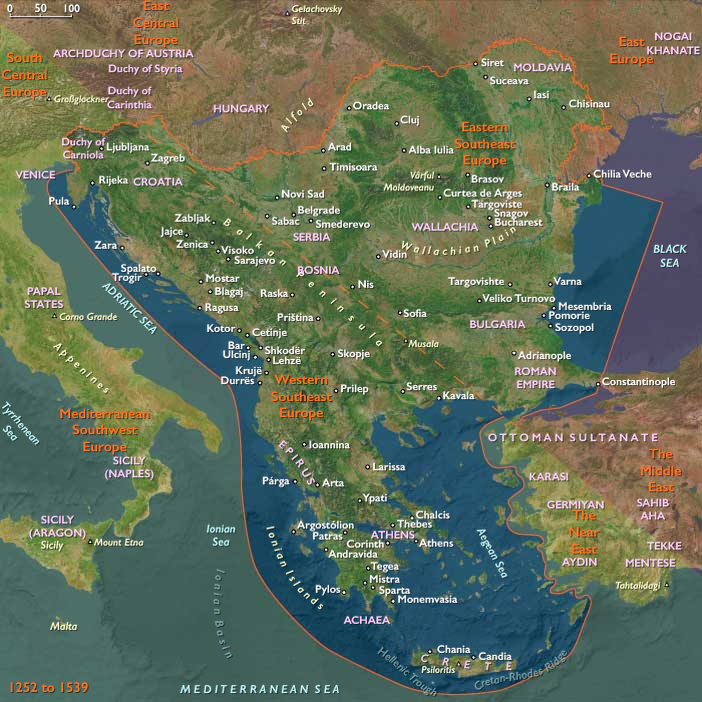
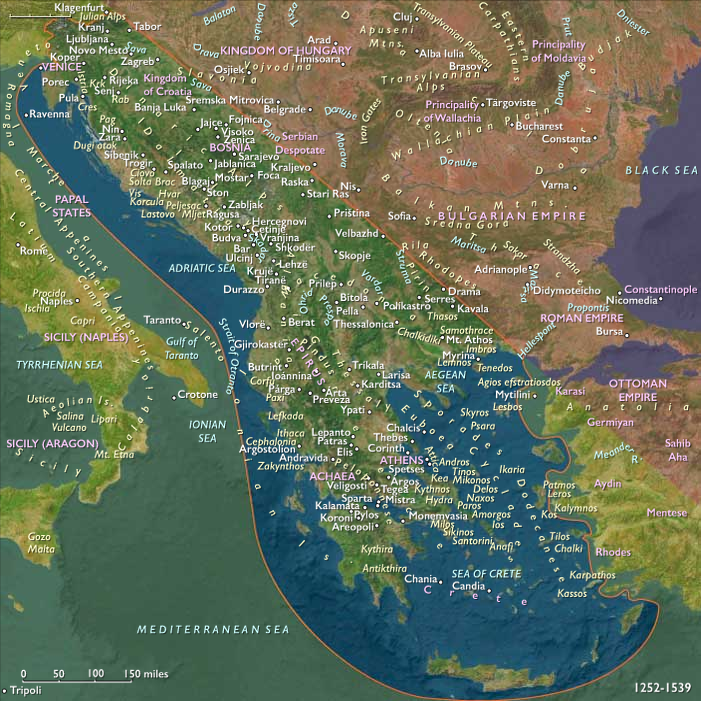
Thessaly had fallen under the control of the short-lived Kingdom of Thessalonica in the aftermath of the Fourth Crusade, but had been conquered again in 1215 by Theodore Komnenos Doukas of the Despotate of Epirus and become one of the independent territories governed by that family.
The region had remained attached to the domains of Theodore and his successors in Thessalonica until 1239, when the deposed ruler of Thessalonica, Manuel Komnenos Doukas, conquered it from his nephew John Komnenos Doukas and secured its status as a separate section of the family holdings.
His death around 1241 brought the area to the ruler of Epirus, Michael II Komnenos Doukas, upon whose death in about 1268 Thessaly became the holding of a distinct, illegitimate, branch of the family.
Venetian support, the result of a favorable trading relationship (Thessaly exports agricultural produce), has helped maintain Thessalian independence until the arrival in 1309 of the Catalan Grand Company, which has moved into Greece through Thrace and Macedonia, plundering as they go.
Thibault de Chepoy, the deputy of Charles of Valois, ends the leadership of Rocafort, arresting him and sending him to Naples, where he will die of hunger this same year.
Locations
People
Groups
- Aragón, Kingdom of
- Venice, (Most Serene) Republic of
- Athens, Duchy of
- Epirus, Despotate of
- Roman Empire, Eastern: Palaiologan dynasty
- Achaea, Principality of
- Neopatras, Duchy of
- Ottoman Emirate
- Catalan Company of the East, Grand (officially the Company of the Army of the Franks in Romania, sometimes called the Grand Company and widely known as the Catalan Company
Topics
Commodoties
Subjects
Regions
Subregions
Related Events
Showing 10 events out of 44896 total
Years: 1309 - 1309
Locations
People
Groups
- Aragón, Kingdom of
- Venice, (Most Serene) Republic of
- Athens, Duchy of
- Epirus, Despotate of
- Roman Empire, Eastern: Palaiologan dynasty
- Achaea, Principality of
- Neopatras, Duchy of
- Ottoman Emirate
- Catalan Company of the East, Grand (officially the Company of the Army of the Franks in Romania, sometimes called the Grand Company and widely known as the Catalan Company
Topics
Commodoties
Subjects
Regions
Subregions