
There is great religious intolerance upon the …
Years: 340 - 351
There is great religious intolerance upon the conversion of the Roman Empire to Christianity.
The center of Judaism has already shifted from Palestine, a Roman province, to Persian-controlled Babylonia, where the Jewish focus on study leads to the compilation of the Talmud (”tradition”), an immense commentary on the Torah that thoroughly analyzes the application of Jewish law to the day-to-day life of the Jewish community.
Locations
Groups
- Babylonia, Classical
- Jews
- Syria Palæstina, Roman province of (Judea, Samaria, and Idumea)
- Persian Empire, Sassanid, or Sasanid
- Christianity, Arian
- Christianity, Nicene
- Roman Empire: Constantinian dynasty (Constantinople)
Topics
Subjects
Regions
Subregions
Related Events
Filter results
Showing 10 events out of 59847 total
Tensions are high in China following the fall of the ethnically Jie Later Zhao regime in 350 by the Chinese state of Ran Wei.
The Jie people, who had formed the Later Zhao Dynasty, do not accept Ran Min's rule and rise against him, and are joined in this by many other Wu Hu nations.
The resulting war is a decisive victory for Ran Min, who then proceeds to issue his famous "extermination order," which results in the extermination of virtually all of the Jie and most of the Wu Hu.
Japan, having assimilated Chinese culture for the past four centuries, develops an extremely complex writing system by adapting the script of China’s monosyllabic language to convey Japanese phonemes.
The Jewish Revolt in Palestine During the Reign of Constantius II (351 CE)
In 351 CE, as Emperor Constantius II struggled to govern the vast Roman Empire alone, he appointed his cousin Gallus as Caesar of the East on March 15, 351 CE, at Sirmium. Gallus arrived in Antioch on May 7, 351 CE, assuming control over the eastern provinces.
During this transition of power, or shortly after Gallus' arrival, a Jewish revolt erupted in Palestine, centered in Diocesarea (modern-day Sepphoris, Israel).
1. Leaders and Messianic Hopes
The rebellion was led by:
- Isaac of Diocesarea (or Sepphoris) – A Jewish leader who mobilized local forces.
- Patricius (also called Natrona) – His name carried messianic connotations, suggesting that he may have been viewed as a deliverer or messianic figure.
These leaders likely capitalized on long-standing Jewish discontent over Roman rule and Christian dominance, intensified under Constantius II, who strongly favored Christianity.
2. The Course of the Revolt
- The rebellion began with a night attack on a Roman garrison, which was destroyed, allowing the rebels to seize weapons.
- After securing arms, the insurgents expanded their attacks, targeting:
- Greeks, who were often aligned with Roman authority.
- Samaritans, long-standing rivals of Jewish factions in the region.
- The revolt quickly spread, raising concerns in Rome’s eastern provinces about regional instability.
3. Roman Response and Gallus’ Brutal Suppression
- As the Caesar of the East, Gallus was responsible for restoring order.
- He dispatched his general, Ursicinus, to crush the rebellion with overwhelming force.
- Roman legions retaliated harshly, leading to:
- Mass executions of Jewish rebels.
- The destruction of Diocesarea, the heart of the uprising.
- Widespread devastation in Galilean towns, discouraging future resistance.
4. Consequences of the Revolt
- The Jewish population of Palestine suffered severe losses, with many killed, enslaved, or displaced.
- Roman authorities increased their crackdown on Jewish communities, further limiting their autonomy and rights.
- The revolt deepened Jewish-Christian tensions, as Christian Roman officials saw the uprising as a threat to imperial stability.
- This rebellion was one of the last major Jewish revolts in the Roman East, marking the continued decline of Jewish political influence in Palestine.
5. Conclusion: A Failed Revolt and Its Aftermath
While the revolt in Palestine of 351 CE was short-lived, its brutal suppression reaffirmed Roman dominance and highlighted:
- The fragility of Jewish-Roman relations under a Christianized empire.
- The ruthlessness of Gallus, whose harsh rule would eventually lead to his own downfall in 354 CE.
- The gradual decline of Jewish resistance in the region, as repeated uprisings failed to restore independence.
This largely forgotten rebellion was one of the last Jewish armed uprisings in antiquity, overshadowed by earlier revolts but still a testament to the ongoing resistance against Roman and Christian rule.
Constantius II and the Intensification of Religious Conflict in the Roman Empire (337–361 CE)
Following the death of Constantine the Great in 337 CE, his son Constantius II ascended as sole emperor by 353 CE after defeating his brothers and rivals. Like his father, he strongly favored Christianity, but he went further by actively suppressing both paganism and Judaism, leading to heightened religious tensions across the empire.
1. Christian Persecution of Pagans and Jews
- Unlike Constantine, who had maintained a degree of religious tolerance, Constantius II permitted the persecution of non-Christians.
- He issued edicts closing pagan temples and banning animal sacrifices, striking at the core of Roman traditional religious practices.
- He also placed restrictions on Jewish religious practices, including:
- Banning Jewish conversions to Christianity or paganism.
- Prohibiting the construction of new synagogues while allowing churches to be built.
2. Christian Clergy and Religious Intolerance
- Some Christian bishops and clergy took advantage of imperial favor, using secular authorities to persecute non-Christians.
- In many regions, violent Christian mobs, sometimes incited by clergy, destroyed synagogues and pagan temples.
- This fueled resentment and backlash from both Jews and traditional Roman elites, who saw imperial policies as an attack on their ancestral traditions.
3. Jewish Resistance and Hostility Toward Converts
- As persecution intensified, Jewish communities became increasingly resistant to Christian proselytism.
- Jewish leaders condemned Jewish converts to Christianity, often ostracizing or excommunicating them.
- To express their opposition to Roman rule, some Jewish preachers used veiled references in synagogues, invoking:
- Edom, a biblical symbol of foreign oppression, as a metaphor for Rome’s suppression of Judaism.
- Passages in Jewish sermons that criticized imperial policies and Christian encroachments.
4. The Growing Religious Divide in the Empire
- The repression of paganism and Judaism under Constantius II further polarized religious communities, deepening divisions between:
- Christians and pagans, as traditional Roman elites resisted Christian dominance.
- Christians and Jews, as imperial policies pushed Jewish communities into active defiance.
- These tensions would continue to shape imperial policies, leading to later imperial interventions in religious disputes, particularly under Theodosius I (r. 379–395 CE), who would make Christianity the official state religion.
Conclusion: A New Phase of Religious Conflict in the Roman Empire
Under Constantius II, the Christianization of the empire became more aggressive, marking a shift from imperial favoritism to outright suppression of other faiths. This period:
- Weakened traditional Roman religion, paving the way for its eventual elimination as the state faith.
- Exacerbated Jewish-Christian relations, leading to centuries of hostility and legal discrimination against Jewish communities.
- Fueled opposition from pagans, setting the stage for later pagan revivals, including Julian the Apostate’s reign (361–363 CE).
Constantius II’s religious policies not only strengthened Christianity’s dominance but also deepened religious and social conflicts within the late Roman Empire, shaping its future trajectory.
East Central Europe (340–351 CE): Rising Frontier Tensions and Regional Realignments
Between 340 and 351 CE, East Central Europe—covering Poland, Czechia, Slovakia, Hungary, and those portions of Germany and Austria lying east of 10°E and north of a line stretching from roughly 48.2°N at 10°E southeastward to the Austro-Slovenian border near 46.7°N, 15.4°E—began facing increased frontier pressures following the death of Constantine the Great (337 CE). Internal Roman political divisions weakened frontier stability, prompting growing assertiveness among tribal groups, notably the Goths, while the recently settled Rugii continued to consolidate their presence in Roman Pannonia. The proto-Slavic communities of Eastern Europe remained stable but increasingly felt external pressures amid shifting regional dynamics.
Political and Military Developments
Post-Constantine Frontier Instability
-
Constantine’s death (337 CE) triggered internal political instability among his successors, weakening Roman control over the Danube provinces (Pannonia Superior, Pannonia Inferior, and Noricum) and creating vulnerabilities along the frontier.
-
Frontier defenses, while still robust, became strained by periodic tribal incursions and internal Roman power struggles.
Growing Gothic Pressure
-
The Goths intensified their pressure and influence in Eastern Europe, increasing incursions along the Danube frontier. While large-scale invasions were limited, frequent smaller raids and diplomatic tensions heightened regional insecurity.
Rugian Stability in Pannonia
-
The Rugii, settled along the upper Tisza, maintained stable relations with Roman authorities despite the increasing instability. Their settlements provided a stabilizing influence on local frontier dynamics.
Economic and Technological Developments
Economic Stress along the Frontier
-
Growing tensions led to disruptions in frontier trade, though economic exchanges continued cautiously between Roman provinces, Rugian settlements, and neighboring tribal communities.
Continued Infrastructure Maintenance
-
Roman frontier infrastructure maintenance continued at a reduced pace due to internal divisions and resource constraints, emphasizing defensive fortifications and critical trade routes.
Cultural and Artistic Developments
Adaptive Cultural Expressions
-
Cultural and artistic production adapted to regional uncertainties, increasingly reflecting defensive themes in metalwork, pottery, and jewelry. Nevertheless, cultural interactions and exchanges between Romans, Rugii, and neighboring tribes persisted.
Continued Proto-Slavic Cultural Resilience
-
Proto-Slavic communities maintained stable cultural identities despite growing Gothic dominance, preserving traditional customs and lifestyles.
Settlement and Urban Development
Frontier Town Fortifications Strengthened
-
Roman frontier settlements (Carnuntum, Vindobona, Aquincum) focused heavily on defensive enhancements due to growing regional instability, with limited economic and demographic expansion.
Rugian Settlement Consolidation
-
Rugian settlements along the upper Tisza further solidified their presence, strengthening local economic ties and integrating into frontier dynamics, providing stability amid regional tensions.
Social and Religious Developments
Rugian Leadership Stability
-
Rugian tribal structures remained stable, successfully balancing diplomatic cooperation with Roman authorities and independent tribal governance.
Proto-Slavic Community Cohesion
-
Proto-Slavic societies sustained stable internal social structures and religious practices, reinforcing community resilience amidst growing external pressures.
Long-Term Consequences and Historical Significance
The era 340–351 CE marked the beginning of renewed frontier tensions in East Central Europe following Constantine’s death. Growing Gothic assertiveness and internal Roman instability signaled challenges ahead, even as Rugian and proto-Slavic communities maintained relative stability. These shifting dynamics foreshadowed intensified regional conflicts and realignments, significantly influencing the subsequent historical development of the region.
Eastern Southeast Europe (340–351 CE): Imperial Challenges and Frontier Pressures
Settlement and Migration Patterns
Intensified Frontier Pressures
Between 340 and 351 CE, Eastern Southeast Europe faced renewed pressure along the Danube frontier as tribal movements intensified, particularly from Gothic tribes. While urban centers such as Constantinople, Philippopolis (Plovdiv), and Serdica (Sofia) remained secure, smaller border settlements experienced instability due to periodic incursions and raids.
Gothic and Tribal Raids
Gothic incursions significantly increased during this era, with several penetrations into Roman territories in Moesia, Thracia, and Scythia Minor. These raids disrupted rural populations, prompting migrations into fortified cities and impacting local demographics.
Economic and Technological Developments
Strained Economic Conditions
Repeated frontier raids introduced economic strains, particularly in agricultural regions near the Danube. Nonetheless, major cities continued economic activities due to their fortified status and strategic location, maintaining regional trade and urban commerce despite increased instability in outlying areas.
Enhanced Defensive Infrastructure
In response to increased threats, Roman authorities expanded and improved frontier fortifications and strengthened the military road network. These enhancements ensured rapid mobilization of troops and supplies, showcasing Roman adaptability to evolving threats.
Cultural and Artistic Developments
Preservation Amid Instability
Cultural life persisted despite frontier disruptions. Urban centers continued artistic and architectural projects, particularly religious structures such as basilicas and shrines, reflecting ongoing imperial support and the growing influence of Christianity.
Continuing Classical Scholarship
Educational institutions maintained their role in preserving Greek and Roman intellectual traditions. Despite external threats, scholarship and literary activities continued, particularly in major urban and ecclesiastical centers like Constantinople.
Social and Religious Developments
Christianity's Ongoing Consolidation
Christianity further solidified its position across Eastern Southeast Europe, supported by imperial endorsement and patronage. Bishops and ecclesiastical institutions increasingly played central roles in social administration, community leadership, and regional cohesion.
Administrative Adjustments
Roman governance adapted to growing frontier pressures through increased militarization and strengthened provincial administration. Local elites continued integration into the imperial administrative framework, ensuring a degree of societal coherence despite external challenges.
Long-Term Consequences and Historical Significance
The period from 340 to 351 CE highlighted increased frontier pressures and imperial responses through strengthened military and administrative strategies. Despite disruptions, cultural continuity and religious consolidation continued, laying critical foundations for resilience and adaptation in the face of growing external threats. These developments significantly shaped regional preparedness for the more severe challenges of subsequent decades.
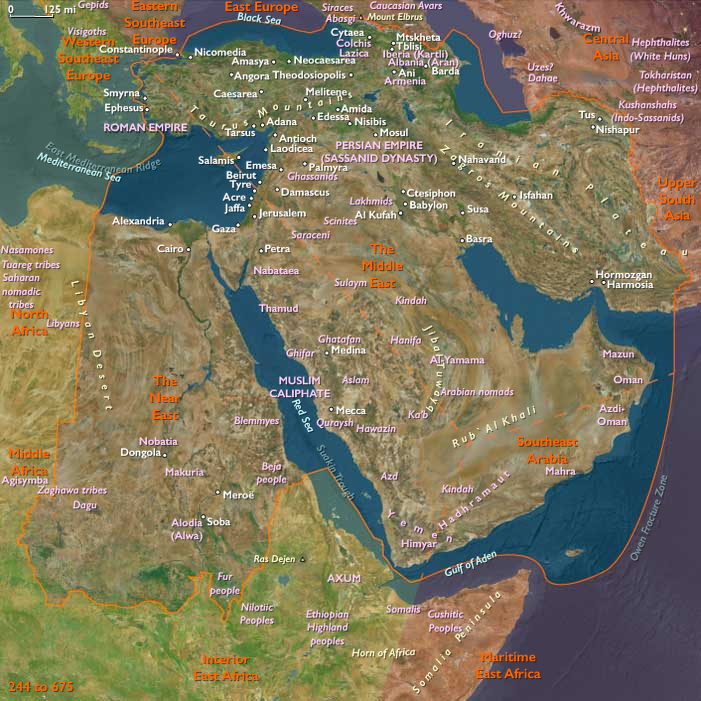
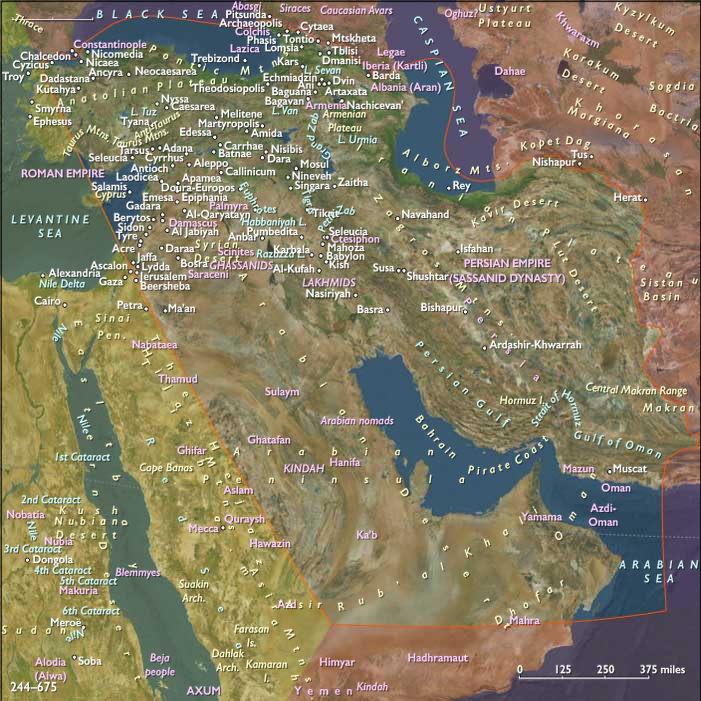
The Middle East: 340–351 CE
Shapur II and the Battle for Mesopotamia
The era from 340 to 351 CE is dominated by persistent military confrontations between the Sassanid Empire under King Shapur II and the Roman Empire under Emperor Constantius II. Of the numerous battles fought during this prolonged conflict, the inconclusive Battle of Singara (modern-day Sinjar, Iraq), occurring in either 344 or 348, is the most renowned. Initially, Constantius II manages a notable success, capturing the Persian camp, but a vigorous night counterattack by Shapur's rallied forces compels the Romans to retreat. Despite historian Edward Gibbon's claim that Shapur consistently bested Constantius, contemporary assessments suggest a more evenly matched struggle between these formidable leaders. The very location of Singara, deep within Persian territory, may itself indicate that Rome had not seriously lost ground at this juncture.
A defining feature of this conflict is the remarkable resilience of the Roman fortress city Nisibis in Mesopotamia. Shapur lays siege to Nisibis on three distinct occasions (337, c. 344, and 349), each time being decisively repulsed by Roman general Lucilianus. Although often victorious in open battles, Shapur's advances make minimal lasting gains against determined Roman resistance.
Simultaneously, Shapur II faces severe threats along his eastern borders from Central Asian tribes, particularly the Scythian Massagetae. These persistent incursions force Shapur to abandon his western campaigns prematurely, prompting a hurried truce with Rome in 350 CE.
This period also sees a profound religious shift. As Christianity's ascendancy within the Roman Empire engenders increased intolerance towards other faiths, the heart of Jewish religious and intellectual life moves decisively eastward, toward Persian-controlled Babylonia. Here, Jewish scholars intensify their study, ultimately compiling the Talmud, a monumental commentary on the Torah. This work meticulously analyzes Jewish law, shaping the religious and communal life of the Jewish diaspora for centuries to come.
Thus, the era 340–351 CE encapsulates a time of persistent but inconclusive warfare between Rome and Persia, significant fortitude displayed at Nisibis, and pivotal cultural developments in the religious landscape of the Middle East.
The inconclusive Battle of Singara (Sinjar, in Iraq) in which the Roman emperor Constantius II is at first successful, capturing the Persian camp, only to be driven out by a surprise night attack after Shapur II had rallied his troops (344-or 348?), is the most renowned of the nine major battles that are apparently fought during this period between the Sassanid and Roman Empires.
Gibbon asserts that Shapur II invariably defeated Constantius, but there is reason to believe that the honors were fairly evenly shared between the two capable commanders. (Since Singara is on the Persian side of the Mesopotamian frontier, this alone may suggest that the Romans had not seriously lost ground in the war up to that time.)
The most notable feature of this war is the consistently successful defense of the Roman fortress of Nisibis in Mesopotamia.
Shapur besieges the fortress three times (337, 344? and 349) and is repulsed each time by Roman general Lucilianus.
Although often victorious in battles, Shapur has made scarcely any progress.
He is attacked at the same time in the East by Scythian Massagetae and other Central Asian tribes.
In order to pay attention to the East, he has to break off the war with the Romans in 350 and arrange a hasty truce.
Indian emperor Samudragupta conquers Bengal and …
…Nepal; his subjugation of the northwestern Indian republics marks a victory of caste over tribe.
In India, where the companions of Alexander the Great had reported seeing "honey produced without the intervention of bees," a new process developed around 351 by the Imperial Guptas makes more efficient the extraction of sugar crystals from sugar cane.
Indian sailors, who are consumers of clarified butter and sugar, carry sugar by various trade routes.
Years: 340 - 351
Locations
Groups
- Babylonia, Classical
- Jews
- Syria Palæstina, Roman province of (Judea, Samaria, and Idumea)
- Persian Empire, Sassanid, or Sasanid
- Christianity, Arian
- Christianity, Nicene
- Roman Empire: Constantinian dynasty (Constantinople)
Topics
Subjects
Regions
Subregions