
The Hook and Cod Wars and the …
Years: 1420 - 1420
The Hook and Cod Wars and the Struggle for Holland, Zeeland, and Hainaut (1417–1420)
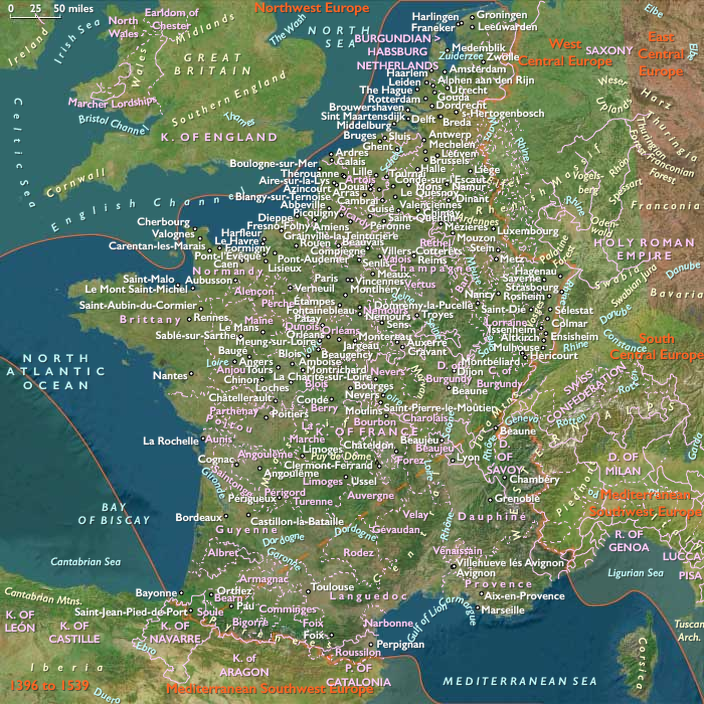
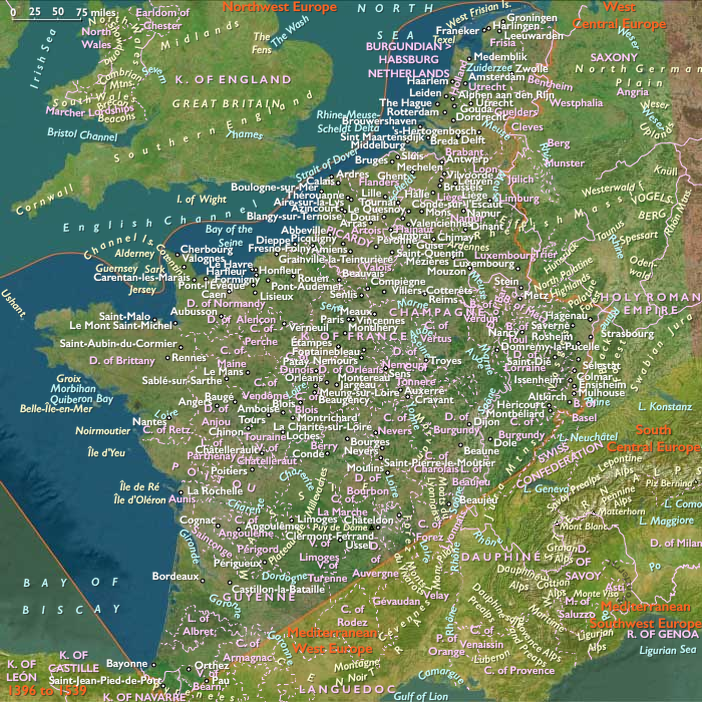
The Hook and Cod Wars, a long-running conflict over control of Holland, Zeeland, and Hainaut, reignited in 1417upon the death of William VI, Count of Holland and Hainaut. His daughter, Jacqueline of Bavaria, and his brother, John III of Bavaria-Straubing (known as John the Pitiless), both laid claim to the inheritance, plunging the region into a civil war.
I. The Succession Crisis and the Role of the Holy Roman Emperor (1417)
- John III of Bavaria, already Bishop of Liège, rejected holy orders and took secular control of Holland, Zeeland, and Hainaut, claiming them over Jacqueline.
- With the support of Holy Roman Emperor Sigismund (his wife's uncle), John III launched a civil war against Jacqueline and her husband, John IV, Duke of Brabant.
II. The Role of Philip the Good and the Siege of Dordrecht (1419)
- When Philip the Good became Duke of Burgundy in 1419, he initially sought to maintain the status quo, avoiding direct intervention in the conflict.
- John the Pitiless, however, openly supported Philip and the city of Dordrecht, making Holland a battleground between opposing factions.
- A siege of Dordrecht in 1419 failed, leading to a compromise between John IV of Brabant and John III:
- They agreed to a joint administration, though Jacqueline was excluded from political power due to her gender.
III. The Treaty of Sint-Maartensdijk (April 1420): Jacqueline’s Political Defeat
- John IV of Brabant, heavily in debt, chose financial stability over military intervention, mortgaging Holland and Zeeland to John the Pitiless under the Treaty of Sint-Maartensdijk (April 1420).
- Under the treaty:
- John III was granted full control over Holland and Zeeland for twelve years.
- John IV and Jacqueline were compensated financially, but the subjects of Holland, Zeeland, and Friesland were released from their oath of allegiance to Jacqueline.
- As Jacqueline lost control of her patrimony, John IV also pledged Hainaut, further undermining her authority.
IV. Jacqueline’s Response: The Push for Separation
- By 1420, Jacqueline and her supporters began seeking a formal separation from John IV, as he had:
- Abandoned her cause.
- Financially weakened her position.
- Failed to defend her claims against John the Pitiless.
- This led to Jacqueline’s increasing opposition to both her husband and uncle, setting the stage for further conflicts and her eventual flight to England in 1421.
V. Consequences and the Path to Burgundian Dominance
- Philip the Good continued to watch the situation carefully, as John IV’s incompetence made Burgundian intervention increasingly inevitable.
- The Treaty of Sint-Maartensdijk effectively sidelined Jacqueline, paving the way for Burgundy’s eventual absorption of Holland, Zeeland, and Hainaut.
The Treaty of Sint-Maartensdijk (1420) marked a decisive step in Jacqueline’s loss of power, as her husband prioritized his financial stability over defending her inheritance, leaving her isolated and politically weakened. This set the stage for further conflicts, leading to Burgundian consolidation of the Low Countries in the coming years.
Locations
People
- Henry V of England
- Humphrey of Lancaster, 1st Duke of Gloucester
- Jacqueline of Hainaut
- John III the Pitiless
- John IV, Duke of Brabant
- Philip the Good
Groups
- Frisians
- Flanders, County of
- Burgundy, Duchy of
- Christians, Roman Catholic
- Hainaut, County of
- Holland, County of
- Brabant, Duchy of
- Holy Roman Empire
- Zeeland, County of
- France, (Valois) Kingdom of
- Bavaria-Straubing, Wittelsbach Duchy of
- Netherlands, Burgundian
- England, (Plantagenet, Lancastrian) Kingdom of
Topics
- Hundred Years' War
- Hook and Cod wars
- Armagnac-Burgundian Civil War
- Hundred Years' War: Resumption of the war under Henry V
Commodoties
Subjects
Regions
Subregions
Related Events
Showing 10 events out of 42254 total
Years: 1420 - 1420
Locations
People
- Henry V of England
- Humphrey of Lancaster, 1st Duke of Gloucester
- Jacqueline of Hainaut
- John III the Pitiless
- John IV, Duke of Brabant
- Philip the Good
Groups
- Frisians
- Flanders, County of
- Burgundy, Duchy of
- Christians, Roman Catholic
- Hainaut, County of
- Holland, County of
- Brabant, Duchy of
- Holy Roman Empire
- Zeeland, County of
- France, (Valois) Kingdom of
- Bavaria-Straubing, Wittelsbach Duchy of
- Netherlands, Burgundian
- England, (Plantagenet, Lancastrian) Kingdom of
Topics
- Hundred Years' War
- Hook and Cod wars
- Armagnac-Burgundian Civil War
- Hundred Years' War: Resumption of the war under Henry V
Commodoties
Subjects
Regions
Subregions