
There are no records from travelers to …
Years: 1272 - 1272
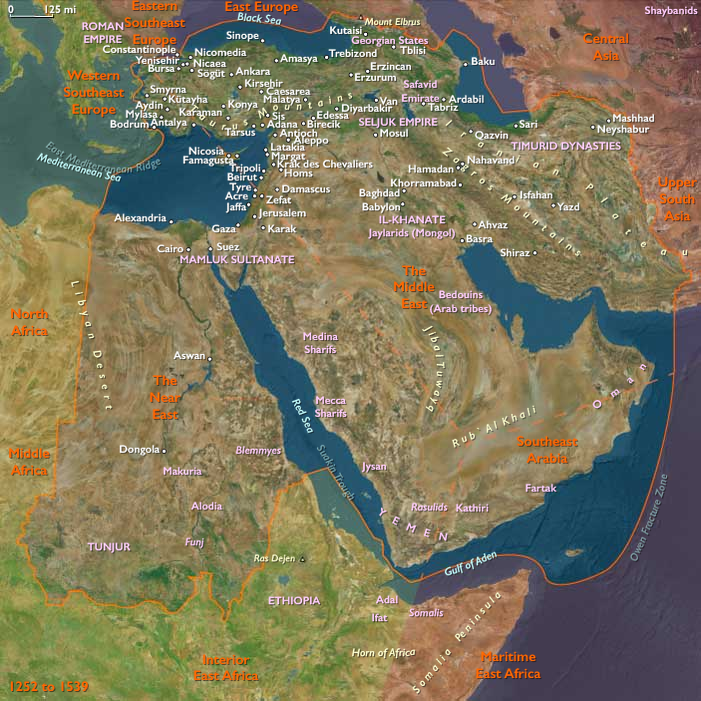
There are no records from travelers to the Nubian Christian kingdom Makuria from 1171 to 1272, and the events of this period have long been a mystery, although modern discoveries have shed some light on this era.
During this period, Makuria seems to have entered a steep decline.
The best source on this is Ibn Khaldun, writing several decades later, who blamed it on Bedouin invasions and Nubian intermarriage with Arabs.
The Ayyubid rulers of Egypt had dealt very aggressively with the Bedouin tribes of the nearby deserts, forcing them south into conflict with the Nubians.
Archaeology gives clear evidence of increasing instability in Makuria.
Once unfortified cities gained city walls, the people retreated to better defended positions, such as the cliff tops at Qasr Ibrim.
Houses throughout the region were built far sturdier, with secret hiding places for food and other valuables.
Archaeology also shows increased signs of Arabization and Islamicization.
Free trade between the kingdoms was part of the ancient trade treaty known as the bakt, and over time Arab merchants became prominent in Dongola and other cities.
Eventually the northern area, most of what was once Nobatia, had become largely Arabized and Islamicized.
Largely independent of Dongola it was increasingly referred to as al-Maris.
While the desert tribes may have been the most important destructive force, the campaigns of the Egyptian Mamlks are far better documented.
An important component of the bakt was the promise that Makuria would secure Egypt's southern border against raids by desert nomads, like the Beja.
The Makurian state could no longer do this, prompting interventions by Egyptian armies that further weakened it.
The Mamluk Sultan Baibars invaded in 1272 after King David I had attacked the Egyptian city of Aidhab, initiating several decades of intervention by the Mamluks in Nubian affairs.
Locations
People
Groups
- Nubians
- Arab people
- Bedouin
- Makuria, Kingdom of
- Christians, Miaphysite (Oriental Orthodox)
- Islam
- Egypt and Syria, Mamluk Bahri Sultanate of
Topics
Commodoties
Subjects
Regions
Subregions

Related Events
Showing 10 events out of 45712 total
Years: 1272 - 1272
Locations
People
Groups
- Nubians
- Arab people
- Bedouin
- Makuria, Kingdom of
- Christians, Miaphysite (Oriental Orthodox)
- Islam
- Egypt and Syria, Mamluk Bahri Sultanate of
Topics
Commodoties
Subjects
Regions
Subregions