
Theodosius seeks new possibilities for coexistence, recognizing …
Years: 382 - 382
Theodosius seeks new possibilities for coexistence, recognizing after a series of costly and inconclusive campaigns that the barbarians can no longer be expelled from the provinces by force and that he can count on Gratian for only limited assistance.
This had resulted in the friendly reception, in 381, of Therving chieftain Athanaric (who died at Constantinople a fortnight after his arrival) and the conclusion of an unprecedented treaty of alliance, or foedus, with the main body of the Thervings in the fall of 382.
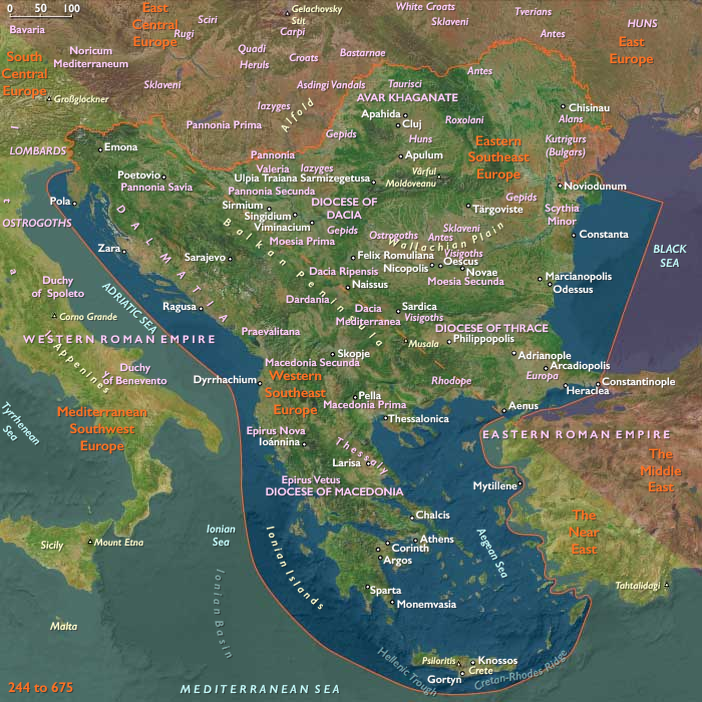
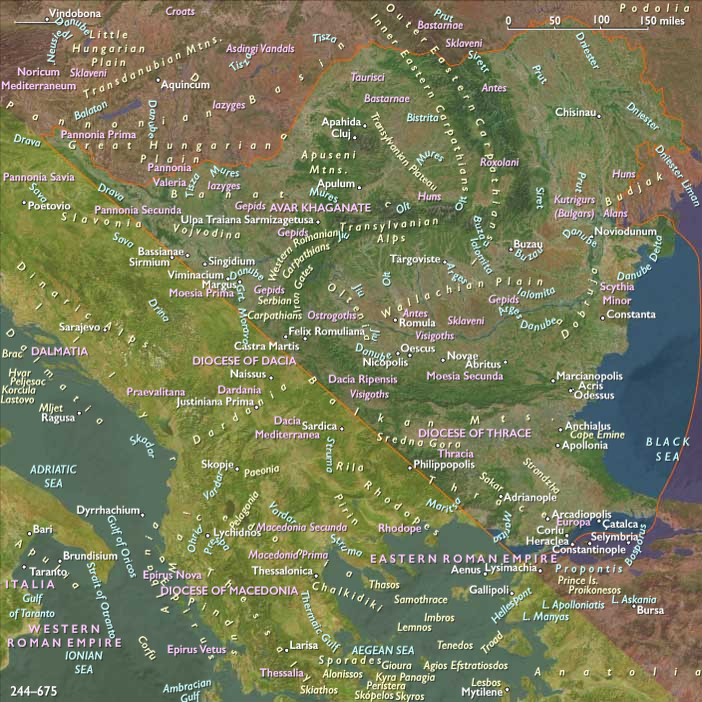
Pledging themselves to lending military assistance, the Goths are assigned territory for settlement between the lower Danube and the Balkan mountains.
Under this novel arrangement, an entire people is to be settled on imperial soil while retaining its autonomy.
Theodosius may hope that these Goths will become integrated, as had a group of Goths who in around 350 had settled near Nicopolis in Moesia; their leader, Bishop Ulfilas, undertakes missionary work among the parties to the foedus of 382.
Locations
People
Groups
- Thracia (Roman province)
- Thervingi (East Germanic tribe)
- Apollinarism
- Sabellianism
- Monarchianism
- Christianity, Arian
- Thrace, Diocese of
- Christianity, Nicene
- East, or Oriens, Praetorian prefecture of
- Anomoeanism
- Roman Empire: Valentinian dynasty (Rome)
- Roman Empire: Theodosian dynasty (Constantinople)
Topics
- Roman Age Optimum
- Late Antiquity
- Migration Period
- Visigothic Raids on the Roman Empire, Early
- Roman Gothic War, Fifth, or Gothic War (376–382)
- Fall of the Western Roman Empire
Commodoties
Subjects
- Commerce
- Environment
- Labor and Service
- Conflict
- Faith
- Government
- Technology
- Movements
- Theology
- Christology
Regions
Subregions
Related Events
Showing 1 events out of 1 total
Years: 382 - 382
Locations
People
Groups
- Thracia (Roman province)
- Thervingi (East Germanic tribe)
- Apollinarism
- Sabellianism
- Monarchianism
- Christianity, Arian
- Thrace, Diocese of
- Christianity, Nicene
- East, or Oriens, Praetorian prefecture of
- Anomoeanism
- Roman Empire: Valentinian dynasty (Rome)
- Roman Empire: Theodosian dynasty (Constantinople)
Topics
- Roman Age Optimum
- Late Antiquity
- Migration Period
- Visigothic Raids on the Roman Empire, Early
- Roman Gothic War, Fifth, or Gothic War (376–382)
- Fall of the Western Roman Empire
Commodoties
Subjects
- Commerce
- Environment
- Labor and Service
- Conflict
- Faith
- Government
- Technology
- Movements
- Theology
- Christology
Regions
Subregions