The Isaurian War, a conflict that begins …
Years: 484 - 495
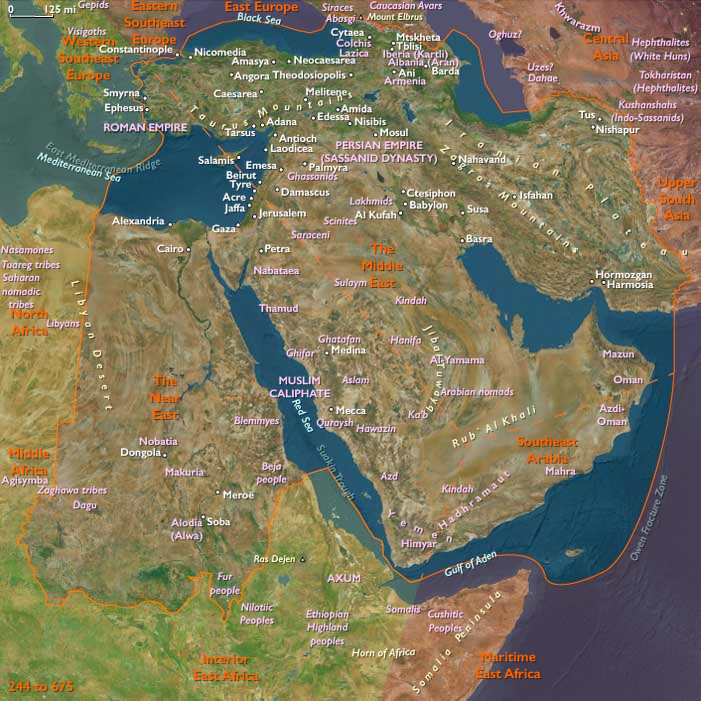
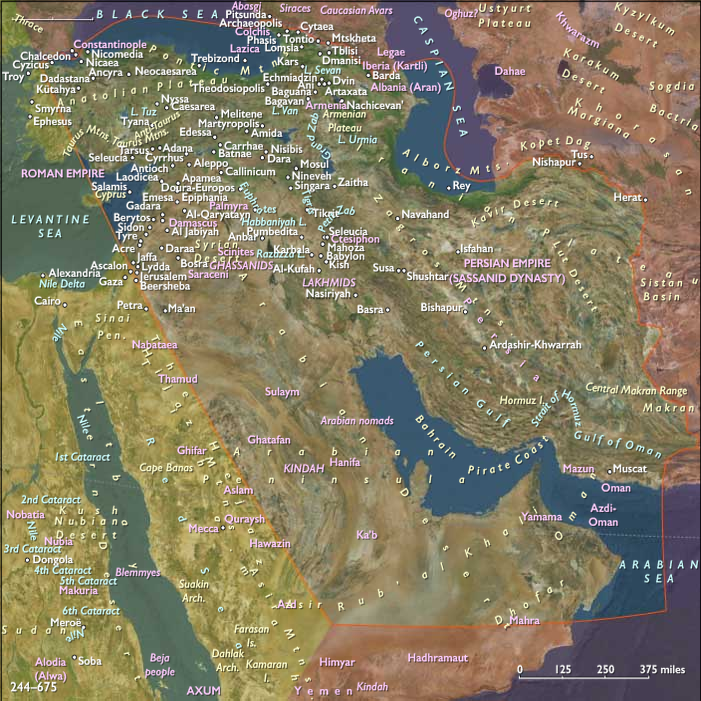
The Isaurian War, a conflict that begins in 492, is fought between the army of the Eastern Roman Empire and the rebels of Isauria, a rugged isolated district in the interior of southern Asia Minor.
Groups
Topics
Subjects
Regions
Subregions
Related Events
Filter results
Showing 10 events out of 44 total
The Northern Wei Dynasty moves its capital from Datong to Luoyang in 494.
Emperor Xiaowen makes Chinese the official language of his court and orders his nobles to adopt Chinese names.
After this move, …
Emperor Xiaowen of Northern Wei starts a Sinicization process by changing his clan name to the Han Chinese surname Yuan.
The general Yu Lie and Yuan Xiang warn Xuanwu in 501 that Yuan Xi is growing corrupt and Yuan Xie is growing too popular, and suggests that they be relieved of their posts.
Xuanwu does so, and formally personally takes over governmental matters, but at his age, he cannot actually properly handle governmental affairs himself, so his trusted attendants and Gao Zhao begin to become more powerful and corrupt.
Traditional historians generally regard this as the starting point of Northern Wei's decline.
Late in 501, Yuan Xi, displeased that his power is being stripped and fearful that he will be killed, plots a rebellion to secede with the provinces south of the Yellow River.
His plot is discovered, however, and he is executed.
From this point on, Xuanwu grows increasingly suspicious of members of the imperial clan.
Later in 501, Xuanwu creates Yu Lie's niece, Consort Yu, empress.
Near the end of the year, with Xiao Yan's forces crushing Xiao Baojuan's, Xuanwu's general Yuan Ying suggests that a major attack be launched against Southern Qi to take advantage of Southern Qi's civil war.
However, Xuanwu only authorizes small scale attacks, which are generally fruitless.
Xuan Xiang, who has taken over Yuan Xi's posts, is in 504 accused by Gao Zhao of corruption, demoted to commoner rank, and dies soon thereafter.
At Gao's suggestion and despite Yuan Xie's opposition, Xuanwu subsequently puts the imperial princes under heavy guard, effectively putting them under house arrest.
Empress Yu had died suddenly in winter 507, and in early 508, her young son Yuan Chang, Xuanwu's only son by this point, dies suddenly as well.
Because Gao Zhao is now exceeding powerful, and his niece Consort Gao is Xuanwu's favorite concubine, it is largely suspected that Gao Zhao and Gao had murdered them, but there is no conclusive proof.
In 508, Xuanwu creates Gao as Empress to replace Yu, despite opposition by Yuan Xie, and from this point on Gao Zhao becomes resentful of Yuan Xie.
Xuanwu's younger brother Yuan Yu the Prince of Jingzhao, who had just been demoted by Xuanwu for corruption, becomes angry at both his demotion and that his favorite consort Lady Li had been severely battered by Empress Yu briefly before Empress Yu's death (because Yuan Yu's wife was Empress Yu's sister but was not favored by him).
Yuan Yu declares a rebellion at his provincial post of Xindu (in modern Hengshui, Hebei) in fall 508 and proclaims himself emperor.
Gao Zhao uses this opportunity to falsely accuse Yuan Xie of acting in concert with both Yuan Yu (because Yuan Yu had forced Yuan Xie's uncle Pan Senggu into joining his rebellion) and the Liang Dynasty.
Xuanwu believes Gao, and forces Yuan Xie to commit suicide.
The populace and the officials greatly mourn Yuan Xie's death, and grow increasingly resentful of Gao.
Soon, Yuan Yu's rebellion is defeated, and while Xuanwu contemplates not putting Yuan Yu to death, Yuan Yu is killed on Gao's orders.

Xuanwu's concubine Consort Hu gives birth in 510 to a son, Yuan Xu.
Because Xuanwu has lost multiple sons in childhood by this point, he carefully selects several experienced mothers to serve as Yuan Xu's wet nurses, and disallows both Gao and Hu from seeing him.
Xuanwu creates Yuan Xu crown prince in winter 512 and, abolishing the Northern Wei custom that the crown prince's mother must be forced to commit suicide, he does not force Hu to commit suicide.
Northern Wei and Liang have continued to wage relatively minor border battles, with each side having gains and losses.
In 514, however, Xuanwu commissions Gao Zhao to launch a major attack against Liang's Yi Province (modern Sichuan and Chongqing).
Emperor Xuanwu dies suddenly in spring 515, and Yuan Xu succeeds him (as Emperor Xiaoming).
Yuan Cheng, Xuanwu's brother Yuan Yong the Prince of Gaoyang, and Yu Lie's son Yu Zhong seize power and, after recalling Gao, put him to death.
Xiaoming's mother Hu becomes empress dowager and regent.
Empress Dowager Hu is considered intelligent, capable of understanding many things quickly, but she is also overly lenient and tolerant of corruption.
For example, in winter 515, the corrupt governor of Qi Province (roughly modern Baoji, Shaanxi), Yuan Mi the Prince of Zhao, provokes a popular uprising when he kills several people without reason, and while he is relieved from his post, as soon as he returns to the capital, Luoyang, Empress Dowager Hu makes him a minister because his wife is her niece.
Empress Dowager Hu's power is unchallenged during these few years of Yuan Xu's childhood, and while she tolerates—and, in certain circumstances, encourages—criticism, including rewarding such officials as Yuan Kuang the Prince of Dongping and Zhang Puhui for their blunt words, she is slow to implement suggestions that will curb corruption.
Empress Dowager Hu is a fervent Buddhist, and during this part of the regency, she builds magnificent temples in Luoyang.
One, dedicated to her father Hu Guozhen the Duke of Qin, after his death in 518, is particularly beautiful.
Because of her influence, Emperor Xiaoming also becames a dedicated Buddhist.
In his youth, however, he also favors spending time in imperial gardens rather than studies or learning about important affairs of state.