
The Death of Theobald I of Lorraine …
Years: 1220 - 1220
The Death of Theobald I of Lorraine and the Turmoil of His Succession (1220 CE)
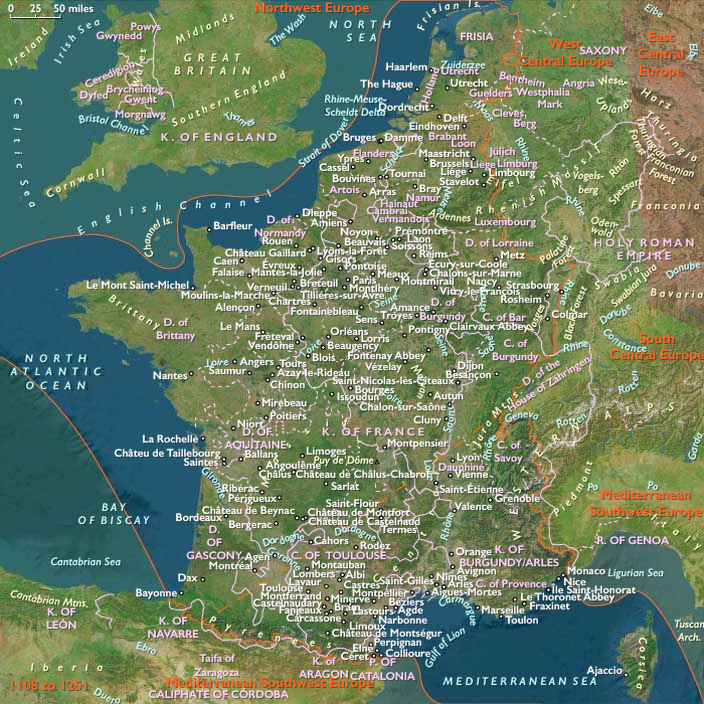
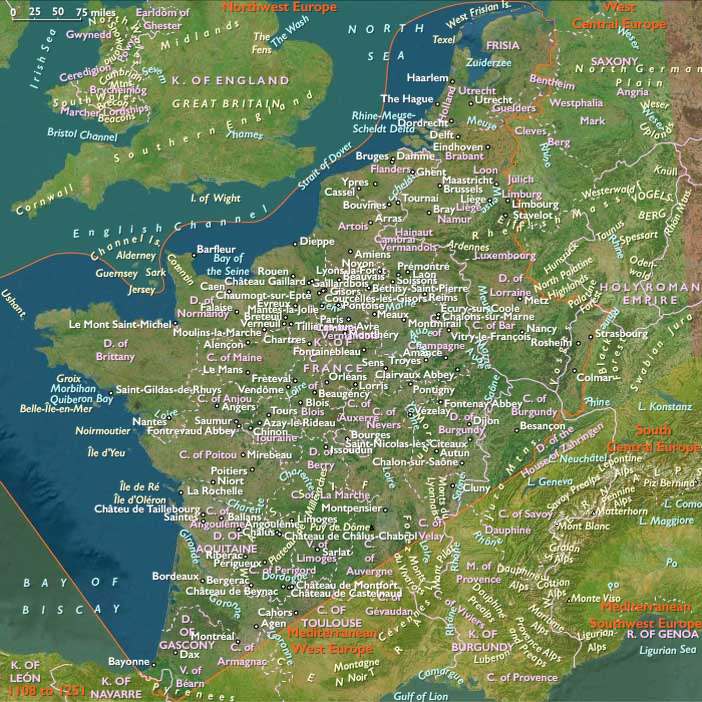
Theobald I, Duke of Lorraine, never recovered the lands and prestige he lost following his defeat and capture by Emperor Frederick II in 1218. His imprisonment and forced concessions significantly weakened his rule, and he died in February 1220, leaving Lorraine in a precarious state.
Theobald’s Marriage and Lack of Heirs
- In 1206, Theobald married Gertrude of Dagsburg, the only child and heir of Albert II, Count of Dagsburg and Metz.
- Their marriage produced no children, meaning there was no direct heir to his title.
- His death created a succession crisis, as power now passed to his brother, Matthias II of Lorraine.
Gertrude’s Controversial Second Marriage (May 1220)
- Just three months after Theobald’s death, Gertrude remarried—this time to his former rival, Theobald IV of Champagne, who was only nineteen years old.
- The marriage was highly controversial, as it was arranged without the approval of Emperor Frederick II, who opposed the union.
- Frederick II likely saw the marriage as a political threat, as it strengthened Champagne’s position in Lorraine and increased the influence of the Capetian-aligned nobility in the empire.
Consequences of Theobald I’s Death and Gertrude’s Remarriage
-
Matthias II Becomes Duke of Lorraine
- Matthias inherited a weakened duchy, still recovering from Frederick II’s occupation and intervention.
- His rule would be overshadowed by external pressures from both the Holy Roman Emperor and French-aligned nobility.
-
Gertrude’s Marriage to Theobald IV of Champagne Deepens Political Tensions
- Frederick II’s opposition to the marriage set the stage for further imperial interference in Lorraine and Champagne.
- Theobald IV of Champagne gained influence in the region, complicating relations between the French and the Holy Roman Empire.
The death of Theobald I in 1220 marked the end of his troubled rule and set off a chain of political conflicts in Lorraine, Champagne, and the Holy Roman Empire, influencing the balance of power between France and the empire.
Locations
People
- Frederick II
- Henry II of Bar
- Otto IV of Brunswick
- Philip II of France
- Theobald I
- Theobald I of Navarre
- Érard de Brienne
Groups
Topics
Commodoties
Subjects
Regions
Subregions
Related Events
Showing 10 events out of 47201 total
Years: 1220 - 1220
Locations
People
- Frederick II
- Henry II of Bar
- Otto IV of Brunswick
- Philip II of France
- Theobald I
- Theobald I of Navarre
- Érard de Brienne
Groups
Topics
Commodoties
Subjects
Regions
Subregions