
Themistocles, the son of Neocles, an Athenian …
Years: 472BCE - 472BCE
Themistocles, the son of Neocles, an Athenian of no distinction and moderate means, his mother being a Carian or a Thracian, had been the most influential politician in Athens, if not in Greece, in the year prior to the invasion of Xerxes.
Though the Greek fleet had been nominally under the control of the Spartan Eurybiades, Themistocles had caused the Greeks to fight the indecisive Battle of Artemisium, and more, it was he who brought about the Battle of Salamis, by his threat that he would lead the Athenian army to found a new home in the West, and by his seemingly treacherous message to Xerxes, whose fleet was lured into the channel between Salamis and the mainland and crushed.
This has left the Athenians free to restore their ruined city.
Sparta, on the ground that it is dangerous to Greece that there should be any citadel north of the Isthmus of Corinth which an invader might hold, has urged against this, but Themistocles has forestalled Spartan action by means of a visit to Sparta that had allowed diplomatic delays and subterfuges and enabled the work to be carried sufficiently near to completion to make the walls defensible.
He has also carried out his original plan of making Piraeus a real harbor and fortress for Athens.
Athens has thus become the finest trade center in Greece, and this, along with Themistocles' remission of the alien's tax, induces many foreign traders to settle in Athens.
After the crisis of the Persian invasion Themistocles and Aristides "the Just", with whom he had previously competed over the love of a boy, appear to have made up their differences.
One of the ten Athenian strategoi during the Greco-Persian war, Aristides has been instrumental in having Athens, rather than Sparta, become the ruling state of the Delian League.
But Themistocles had soon begun to lose the confidence of the people, partly due to his arrogance (it is said that he built near his own house a sanctuary to Artemis Aristoboulë ["of good counsel"]) and partly due to his alleged readiness to take bribes.
Diodorus and Plutarch both refer to some accusation leveled against him, and at some point between 476 and 471 he is ostracized (or banished).
Locations
People
Groups
- Argos, City-State of
- Greece, classical
- Persian people
- Sparta, Kingdom of
- Achaemenid, or First Persian, Empire
- Athenian Empire (Delian League)
Topics
- Younger Subboreal Period
- Iron Age Europe
- Iron Age Cold Epoch
- Classical antiquity
- Greco-Persian Wars, Early
Commodoties
Subjects
- Commerce
- Watercraft
- Engineering
- Environment
- Labor and Service
- Conflict
- Faith
- Government
- Custom and Law
- Technology
Regions
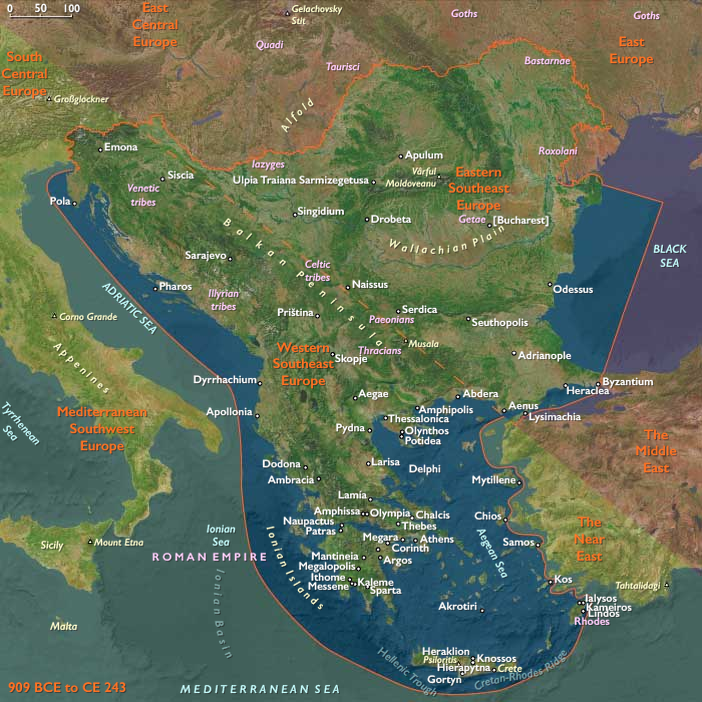
Subregions
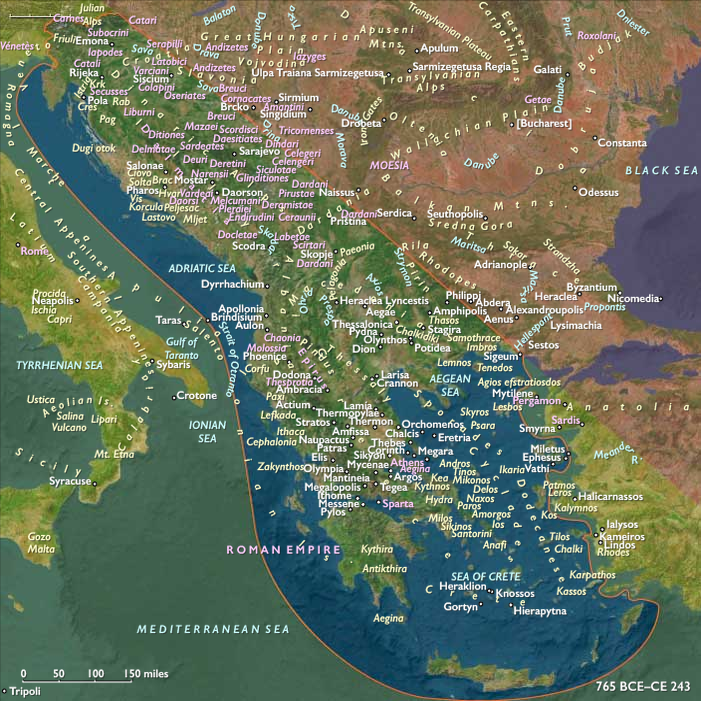
Related Events
Showing 10 events out of 65424 total
Years: 472BCE - 472BCE
Locations
People
Groups
- Argos, City-State of
- Greece, classical
- Persian people
- Sparta, Kingdom of
- Achaemenid, or First Persian, Empire
- Athenian Empire (Delian League)
Topics
- Younger Subboreal Period
- Iron Age Europe
- Iron Age Cold Epoch
- Classical antiquity
- Greco-Persian Wars, Early
Commodoties
Subjects
- Commerce
- Watercraft
- Engineering
- Environment
- Labor and Service
- Conflict
- Faith
- Government
- Custom and Law
- Technology
Regions
Subregions