
Thebes in the late LHIIIB is able …
Years: 1197BCE - 1054BCE
Thebes in the late LHIIIB is able to pull resources from Lamos near Mount Helicon, and from Karystos and Amarynthos on the Greek side of the isle of Euboea, according to Palaima ("Sacrificial Feasting", Hesperia 73, 2004).
The neglect of Thebes in the Homeric poems is a perplexing feature of Theban history.
As a fortified community, it attracts attention from the invading Dorians, and the fact of their eventual conquest of Thebes lie behind the stories of the successive legendary attacks on that city.
The central position and military security of the city naturally tends to raise it to a commanding position among the Boeotians, and from early days, its inhabitants have endeavored to establish a complete supremacy over their kinsmen in the outlying towns.
This centralizing policy is as much the cardinal fact of Theban history as the counteracting effort of the smaller towns to resist absorption forms the main chapter of the story of Boeotia.
Thebes is governed by a landholding aristocracy who safeguard their integrity by rigid statutes about the ownership of property and its transmission.
Of the earlier history of the city, no details have been preserved.
Locations
Groups
Topics
- Younger Subboreal Period
- Sea Peoples, Movements of the
- Greek Dark Ages
- Iron Age Europe
- Dorian Invasion?
Subjects
Regions
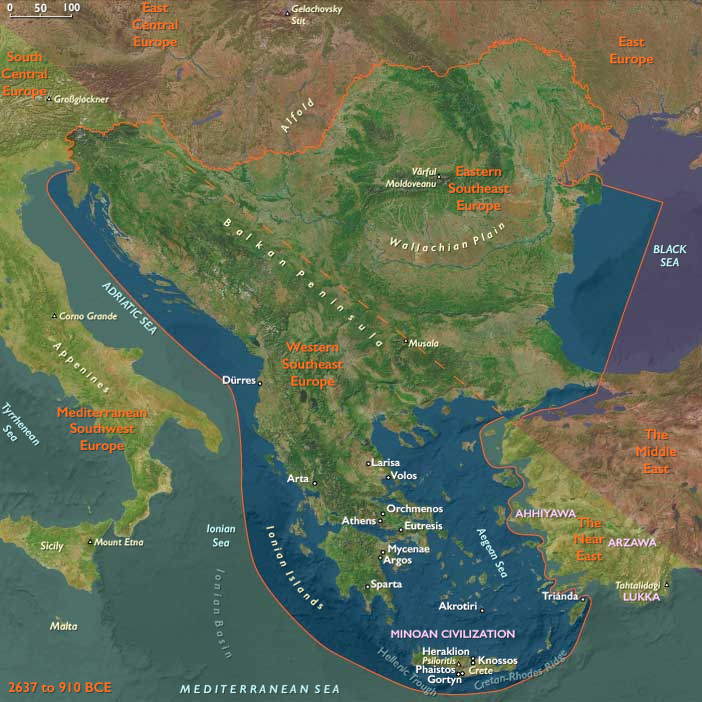
Subregions
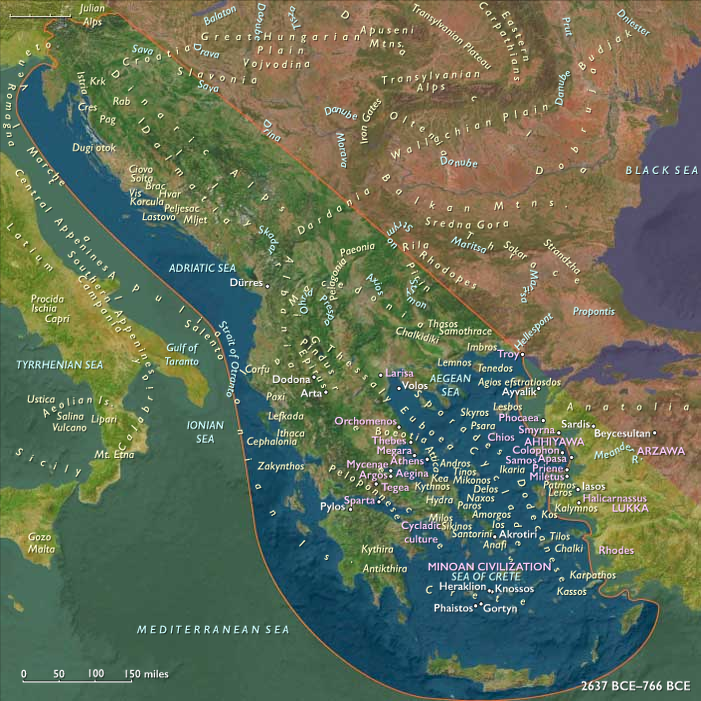
Related Events
Showing 10 events out of 12 total
Years: 1197BCE - 1054BCE
Locations
Groups
Topics
- Younger Subboreal Period
- Sea Peoples, Movements of the
- Greek Dark Ages
- Iron Age Europe
- Dorian Invasion?
Subjects
Regions
Subregions