
The first important decision taken by the …
Years: 1534 - 1534
The first important decision taken by the young Burmese king comes around April 1534, when an affair between Tabinshwehti's half-sister Thakin Gyi and his right-hand man Ye Htut is discovered.
The affair under Burmese law constitutes an act of treason.
Ye Htut, for his part, spurns suggestions of mutiny and submits to arrest, saying that although it is no crime to for a young man to love a young woman, it is an unpardonable crime for a soldier to break his oath of allegiance.
Tabinshwehti deliberates at length with his ministers, and finally concludes that Ye Htut should be given his sister in marriage, and a princely title of Kyawhtin Nawrahta.
With this decision, Tabinshwehti wins the unquestioning loyalty of his new brother-in-law.
Meanwhile, war has arrived uncomfortably close to his realm.
In late 1532, the Confederation of Shan States, already ruling much of Upper Burma, had attacked its erstwhile ally Prome, and sacked the city.
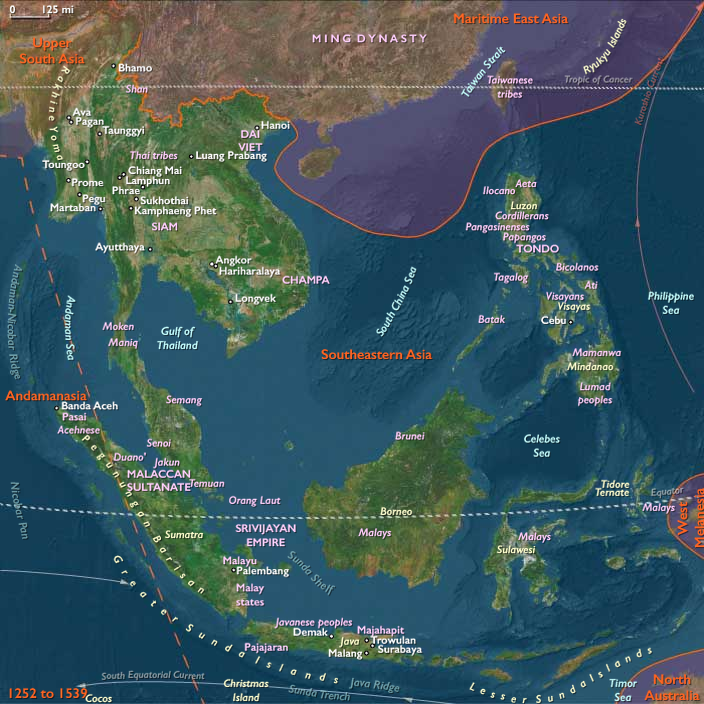
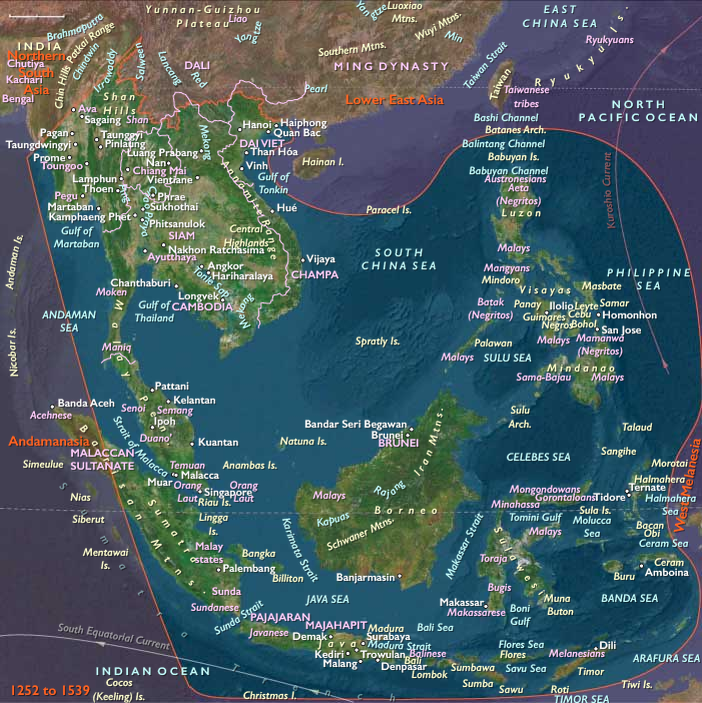
Although the Confederation is content to keep Prome as a vassal, the Toungoo leadership is concerned that their city—east of Prome on the same latitude, separated only by the Pegu Yoma (Bago Yoma) range—is an obvious target for attack.
Toungoo does have some advantages: nestled behind the Pegu Yoma range, the city is difficult to access from Ava, in contrast to the much more easily Prome on the Irrawaddy.
Moreover, the Toungoo principality, swollen as it is with refugees from Ava, commands considerably more manpower than its traditional base would have allowed.
Nevertheless, the Toungoo leadership decides that their kingdom must act decisively to avoid incorporation by the Confederation.
Fortunately for Toungoo, the Confederation is distracted by the leadership change after the assassination of Sawlon of Mohnyin, its principal leader, in 1533.
Breaking completely in late 1534 from his father's longstanding policy, Tabinshwehti decides to break out of his increasingly narrow realm by attacking the Hanthawaddy Kingdom to the south.
Though the Burmese chronicles attribute the audacious decision to the king alone, the eighteen-year-old king was more probably persuaded by older more experienced ministers at the court, who may have also played a major role in the initial campaigns.
Over the next sixteen years, Tabinshwehti, along with his deputy Kyawhtin Nawrahta (later Bayinnaung; lit.
"King's Elder Brother") will go on to unite many of the petty kingdoms that had existed since the fall of the Pagan Empire in 1287.
Locations
People
Groups
- Mon people
- Tai peoples, or Thais
- Bamar or Burmans
- Shan people
- Hanthawaddy Pegu, (Mon) Kingdom of
- Shan States
- Lanna, or Lan Na (Siam), Thai kingdom of
- Ayutthaya (Siam), Thai state of
- Portugal, Avizan (Joannine) Kingdom of
- Portuguese Empire
- Sukhothai (Siam), Thai vassal kingdom of
- Prome Kingdom
- Toungoo Empire, First
- Portuguese Malacca
Topics
- Age of Discovery
- Colonization of Asia, Portuguese
- Portuguese Conquests in India and the East Indies
- Toungoo–Hanthawaddy War
Commodoties
Subjects
Regions
Subregions
Years: 1534 - 1534
Locations
People
Groups
- Mon people
- Tai peoples, or Thais
- Bamar or Burmans
- Shan people
- Hanthawaddy Pegu, (Mon) Kingdom of
- Shan States
- Lanna, or Lan Na (Siam), Thai kingdom of
- Ayutthaya (Siam), Thai state of
- Portugal, Avizan (Joannine) Kingdom of
- Portuguese Empire
- Sukhothai (Siam), Thai vassal kingdom of
- Prome Kingdom
- Toungoo Empire, First
- Portuguese Malacca
Topics
- Age of Discovery
- Colonization of Asia, Portuguese
- Portuguese Conquests in India and the East Indies
- Toungoo–Hanthawaddy War
Commodoties
Subjects
Regions
Subregions