
Filters:
Fighting had resulted in a draw by …
Years: 1759 - 1759
July
Fighting had resulted in a draw by late summer of 1758.
None of Prussia's enemies seem willing to take the decisive steps to pursue Frederick into Prussia's heartland.
The Austrian Feldmarshalleutnant Leopold Josef Graf Daun could have ended the war in October at Hochkirch, but he had failed to follow up on his victory with a determined pursuit of Frederick's retreating army.
This has allowed Frederick time to recruit a new army over the winter.
Prussia has reached a strategic defensive position in the war by 1759.
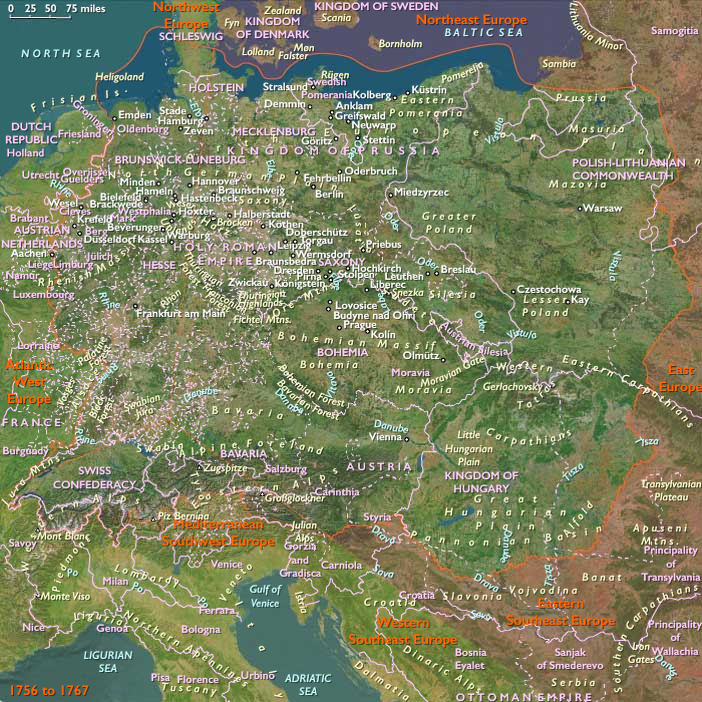
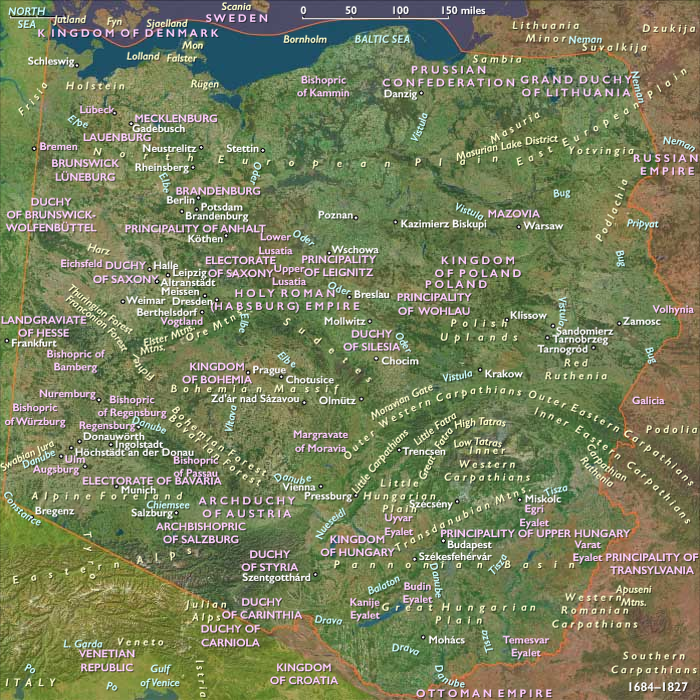
Russian and Austrian troops surround Prussia, although not quite at the borders of Brandenburg.
Frederick, upon leaving winter quarters in April 1759, had assembled his army in Lower Silesia; this had forced the main Habsburg army to remain in its winter staging position in Bohemia.
The Russians, however, had shifted their forces into western Poland and marched westward toward the Oder river, a move that had threatened the Prussian heartland, Brandenburg, and potentially Berlin itself.
Frederick had countered by sending an army corps commanded by Friedrich August von Finck to contain the Russians; he had sent a second column commanded by Christoph II von Dohna to support Finck.
The Austrian and Russian goal is twofold.
The Austrians have advanced to the northern Bohemian frontier river Queis (Kwisa), the frontier between Lusatia and Silesia, and occupied fifteen kilometers (nine point three miles) of the frontier between Austria and Prussia in Silesia.
From there, Leopold Joseph von Daun can cross into either Lusatia or Silesia, as needed.
The Allies hold a council of war on July 8, and Saltykov presses for a crossing into Silesia.
Daun is still reluctant to do so, but he does send Ernst Gideon von Laudon with the auxiliary corps.
Part of Daun's reluctance is based on what Frederick and his brother, Henry, might do.
Frederick leaves his encampment near Landeshut on 4 July and marches north west toward Lowenberg, twenty kilometers (twelve miles) east of Daun's position on July 10.
At the same time, his brother marches with the main army from Saxony to Sagan, in Silesia.
This effectively separates Daun from Saltykov.
Knowing, though, that Loudon's corps is not sufficient to fully support the Russian ally, he sends also Count András Hadik's seventeen thousand-man observation corps from northern Bohemia.
This corps has been shadowing Henry's army and Hadik breaks off his contact with Henry's force on July 22, crossing into Lusatia at Zwickau.
None of Prussia's enemies seem willing to take the decisive steps to pursue Frederick into Prussia's heartland.
The Austrian Feldmarshalleutnant Leopold Josef Graf Daun could have ended the war in October at Hochkirch, but he had failed to follow up on his victory with a determined pursuit of Frederick's retreating army.
This has allowed Frederick time to recruit a new army over the winter.
Prussia has reached a strategic defensive position in the war by 1759.
Russian and Austrian troops surround Prussia, although not quite at the borders of Brandenburg.
Frederick, upon leaving winter quarters in April 1759, had assembled his army in Lower Silesia; this had forced the main Habsburg army to remain in its winter staging position in Bohemia.
The Russians, however, had shifted their forces into western Poland and marched westward toward the Oder river, a move that had threatened the Prussian heartland, Brandenburg, and potentially Berlin itself.
Frederick had countered by sending an army corps commanded by Friedrich August von Finck to contain the Russians; he had sent a second column commanded by Christoph II von Dohna to support Finck.
The Austrian and Russian goal is twofold.
The Austrians have advanced to the northern Bohemian frontier river Queis (Kwisa), the frontier between Lusatia and Silesia, and occupied fifteen kilometers (nine point three miles) of the frontier between Austria and Prussia in Silesia.
From there, Leopold Joseph von Daun can cross into either Lusatia or Silesia, as needed.
The Allies hold a council of war on July 8, and Saltykov presses for a crossing into Silesia.
Daun is still reluctant to do so, but he does send Ernst Gideon von Laudon with the auxiliary corps.
Part of Daun's reluctance is based on what Frederick and his brother, Henry, might do.
Frederick leaves his encampment near Landeshut on 4 July and marches north west toward Lowenberg, twenty kilometers (twelve miles) east of Daun's position on July 10.
At the same time, his brother marches with the main army from Saxony to Sagan, in Silesia.
This effectively separates Daun from Saltykov.
Knowing, though, that Loudon's corps is not sufficient to fully support the Russian ally, he sends also Count András Hadik's seventeen thousand-man observation corps from northern Bohemia.
This corps has been shadowing Henry's army and Hadik breaks off his contact with Henry's force on July 22, crossing into Lusatia at Zwickau.
Locations
People
- Count Leopold Joseph von Daun
- Ernst Gideon Laudon
- Frederick the Great
- Prince Henry of Prussia (1726–1802)
- Pyotr Saltykov
Groups
Topics
Subjects
Regions
Subregions
Years: 1759 - 1759
July
Locations
People
- Count Leopold Joseph von Daun
- Ernst Gideon Laudon
- Frederick the Great
- Prince Henry of Prussia (1726–1802)
- Pyotr Saltykov
Groups
Topics
Subjects
Regions
Subregions