
The Yazidi are a Kurdish-speaking people who …
Years: 1162 - 1162
The Yazidi are a Kurdish-speaking people who adhere to a branch of Yazdanism that blends elements of Mithraism, pre-Islamic Mesopotamian religious traditions, Christianity and Islam.
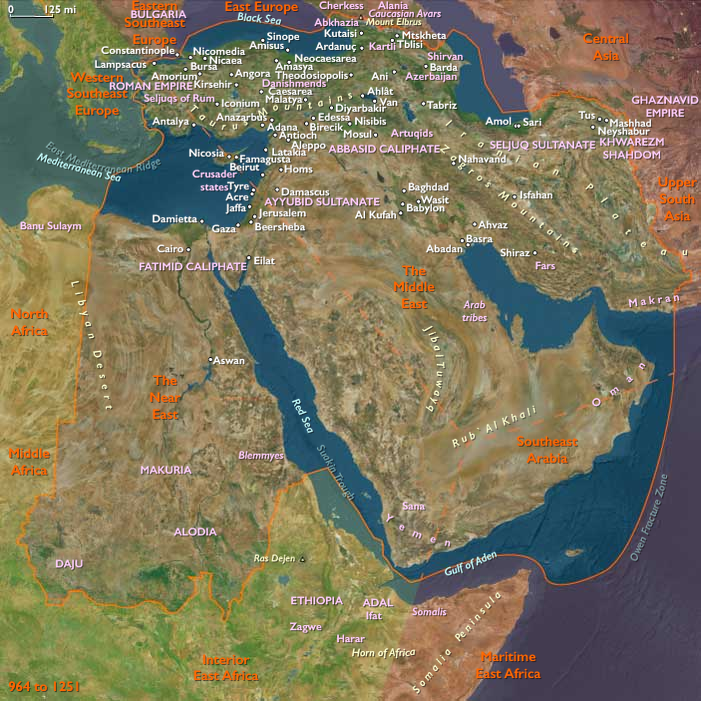
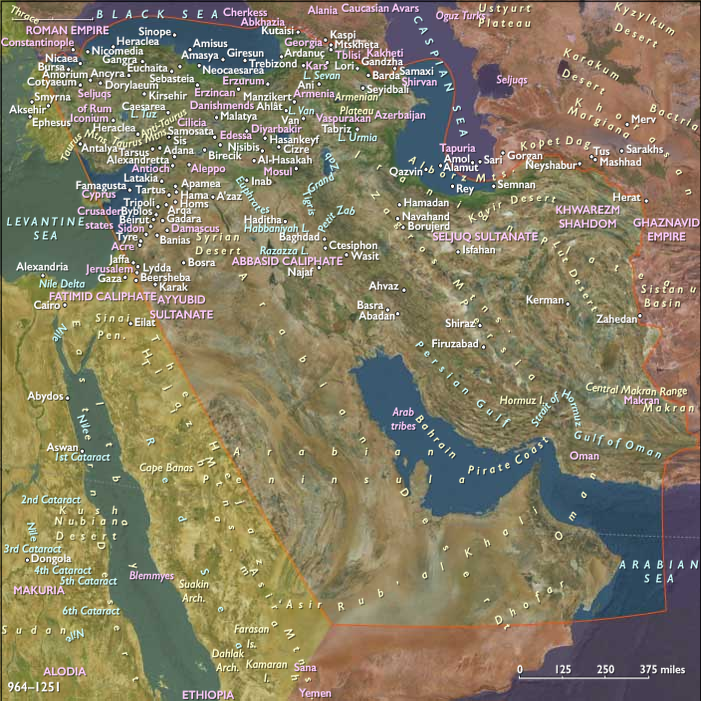
Their principal holy site is in Lalish, northeast of Mosul.
The Yazidis' own name for themselves is Êzidî or Êzîdî or, in some areas, Dasinî (the latter, strictly speaking, is a tribal name).
Some scholars have derived the name Yazidi from Old Iranic yazata (divine being), but most say it is a derivation from Umayyad Caliph Yazid I (Yazid bin Muawiyah), revered by the Yazidis as an incarnation of the divine figure Sultan Ezi.
Yazidis, themselves, believe that their name is derived from the word Yezdan or Êzid "God".
The Yazidis' cultural practices are observably Kurdish, and almost all speak Kurmanjî (Northern Kurdish), with the exception of the villages of Bashiqa and Bahazane, where Arabic is spoken.
Kurmanjî is the language of almost all the orally transmitted religious traditions of the Yazidis.
Thus, religious origins are somewhat complex.
The religion of the Yazidis is a highly syncretic one: Sufi influence and imagery can be seen in their religious vocabulary, especially in the terminology of their esoteric literature, but much of the mythology is non-Islamic.
Their cosmogonies apparently have many points in common with those of ancient Persian religions.
Early writers attempted to describe Yazidi origins, broadly speaking, in terms of Islam, or Persian, or sometimes even pagan religions; however, publications since the 1990s have shown such an approach to be overly simplistic.
The origin of the Yazidi religion is now usually seen by scholars as a complex process of syncretism, whereby the belief system and practices of a local faith had a profound influence on the religiosity of adherents of the ʻAdawiyya Sufi order living in the Kurdish mountains, and caused it to deviate from Islamic norms relatively soon after the death of its founder, Shaykh ʻAdī ibn Musafir (Kurdish Şêx Adî), who is said to be of Umayyad descent.
He had settled in the valley of Laliş (some thirty-six miles northeast of Mosul) in the early twelfth century.
Şêx Adî himself, a figure of undoubted orthodoxy, enjoys widespread influence.
He dies in 1162, and his tomb at Laliş become a focal point of Yazidi pilgrimage.
Locations
People
Groups
Subjects
Regions
Subregions
Related Events
Showing 10 events out of 48509 total
Years: 1162 - 1162
Locations
People
Groups
Subjects
Regions
Subregions