
The world of London theatergoing in 1700 …
Years: 1700 - 1700
March
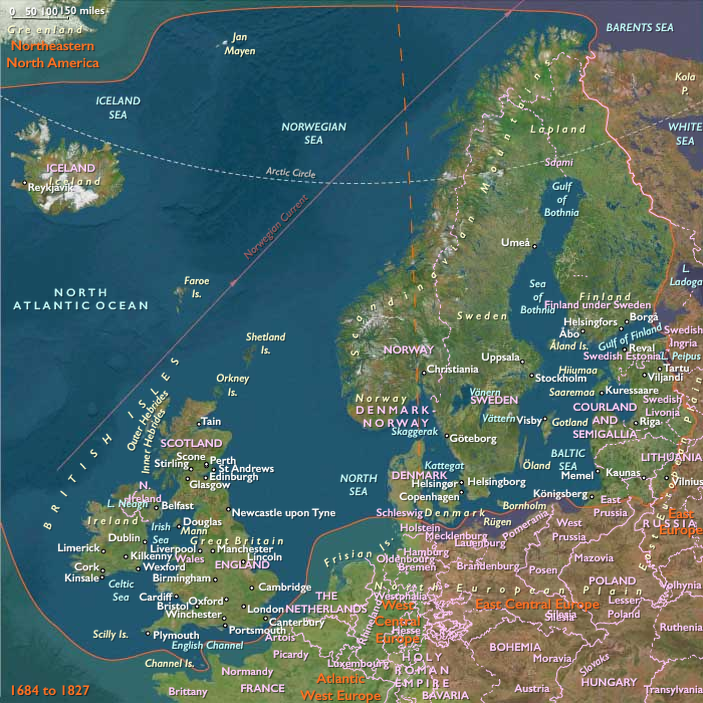
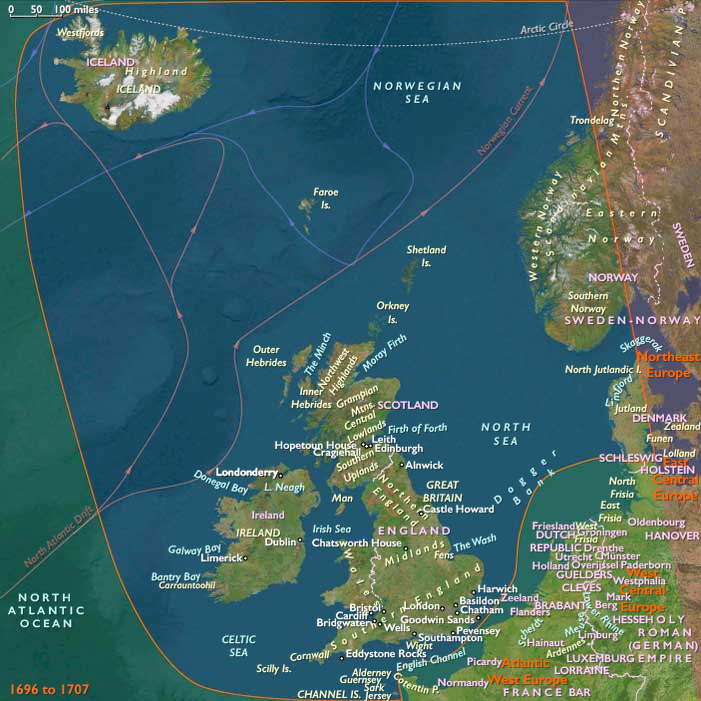
The world of London theatergoing in 1700 has changed significantly from the days of, for example, The Country Wife.
Charles II is no longer on the throne, and the jubilant court that revels in its licentiousness and opulence has been replaced by the far more dour and utilitarian Dutch-inspired court of William of Orange.
His wife, Mary II, is, long before her death, a retiring person who does not appear much in public.
William himself is a military king who is reported to be hostile to drama.
The political instabilities that had been beneath the surface of many Restoration comedies are still present, but with a different side seeming victorious.
William Congreve's comedy The Way of the World is first performed in Lincoln’s Inn Fields in London in early March.
Widely regarded as being one of the best Restoration comedies written, it is still performed sporadically to this day.
One of the features of a Restoration comedy is the opposition of the witty and courtly (and Cavalier) rake and the dull-witted man of business or the country bumpkin, who is understood to be not only unsophisticated but often (as, for instance, in the very popular plays of Aphra Behn in the 1670s) either Puritan or another form of dissenter.
The courtly and Cavalier side had been in power in 1685, and Restoration comedies had belittled the bland and foolish losers of the Restoration.
By 1700, however, the other side is ascendant.
Therefore, The Way of the World's recreation of the older Restoration comedy's patterns is only one of the things that make the play unusual.
The 1688 revolution concerning the overthrow of James II had created a new set of social codes primarily among the bourgeoisie.
This shift in social perspectives is perhaps best shown in the characters of Fainall and Mirabell, who represent respectively the old form and new form of marital relations: sexual power at first and then developing into material power.
The new capitalist system means an increasing emphasis on property and property law.
Thus, the play is packed with legal jargon and financial and marital contracts.
These new legal aspects allow characters like Mrs. Fainall to secure her freedom through an equitable trust and for Mirabell and Millamant's marriage to be equal though a prenuptial agreement.
Later in the month, on the 25th, France, England and the Dutch Republic sign the Treaty of London.
Sometimes known as the Second Partition Treaty, the agreement is an attempt to restore the Pragmatic Sanction following the death of Duke Joseph Ferdinand of Bavaria, which had undermined the First Partition Treaty (the Treaty of Den Haag).
Under the new Treaty, Archduke Charles (later Charles VI), the second son of the Emperor Leopold I, is to become King of Spain when Carlos II dies.
Locations
People
- Charles II of Spain
- Charles VI, Holy Roman Emperor, King of the Romans (King of Germany)
- Leopold I
- Mary II of England
- William Congreve
- William III, Prince of Orange
Groups
Topics
Subjects
Regions
Subregions
Related Events
Showing 10 events out of 28916 total
Years: 1700 - 1700
March
Locations
People
- Charles II of Spain
- Charles VI, Holy Roman Emperor, King of the Romans (King of Germany)
- Leopold I
- Mary II of England
- William Congreve
- William III, Prince of Orange
Groups
Topics
Subjects
Regions
Subregions