North Polynesia (1900–1911 CE)
Establishment of the Territory and Economic Growth
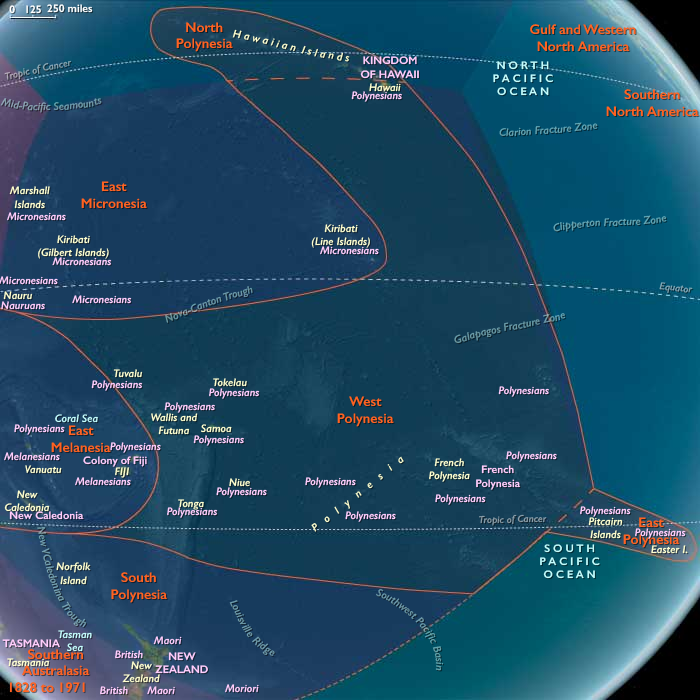
With annexation finalized in 1898, Hawaii was formally organized as the Territory of Hawaii on April 30, 1900, under the Hawaiian Organic Act, signed into law by President William McKinley. The Act established a territorial government, including a governor appointed by the U.S. president, a bicameral legislature, and judicial system, firmly integrating Hawaii into the American political framework.
Sanford B. Dole's Governorship
Sanford B. Dole, former president of the Republic of Hawaii, became the first governor of the Territory in 1900. Dole's administration emphasized infrastructural development, modernizing Honolulu with improved roads, port facilities, and public utilities, reinforcing Hawaii’s position as a critical Pacific hub.
Economic Transformation and Plantation Expansion
Sugarcane plantations experienced unprecedented growth, bolstered by duty-free access to U.S. markets guaranteed by annexation. Companies such as Alexander & Baldwin and C. Brewer & Co. significantly expanded production, leading to considerable economic prosperity for plantation owners. The economic boom also stimulated growth in subsidiary industries, including shipping, railways, and commerce.
Demographic Shifts and Labor Immigration
To meet rising labor demands, immigration from Asia and other regions accelerated dramatically. Thousands of Japanese, Chinese, Filipino, Korean, and Portuguese laborers arrived under contracts to work in the sugar and pineapple plantations, profoundly transforming Hawaii's demographic composition. This wave of immigration introduced new cultures, languages, and traditions, significantly diversifying Hawaiian society.
Labor Conditions and Early Union Movements
Laborers on plantations faced difficult working conditions, long hours, and minimal pay, prompting the first significant labor movements. In 1909, Japanese plantation workers organized major strikes on the island of Oahu, notably at the Waipahu Plantation, demanding improved wages and working conditions. Though these early efforts were met with harsh repression and limited immediate success, they laid a crucial foundation for future labor activism in Hawaii.
Educational and Cultural Developments
Education underwent notable reform under the territorial government, with the expansion of public schooling and increased efforts at Americanization. English-language education became compulsory, significantly impacting Hawaiian language usage and cultural practices. Concurrently, native Hawaiian culture experienced renewed efforts at preservation through music, dance (particularly hula), and traditional crafts, as cultural advocates documented and celebrated indigenous traditions amid rapid modernization.
Political and Social Challenges
Although the Organic Act granted citizenship to all residents of Hawaii, it restricted voting rights and political participation primarily to property-owning, English-speaking individuals, effectively marginalizing much of the indigenous and immigrant populations. Native Hawaiians, increasingly displaced from political and economic power, began to organize politically and socially, advocating for greater recognition and protection of their rights and heritage.
Infrastructure and Public Health Initiatives
In response to the growing urban population, infrastructure projects increased significantly. Honolulu expanded its streetcar lines, sewage systems, and water supply. Public health became a major focus after outbreaks of bubonic plague in Honolulu in 1900 led authorities to undertake aggressive sanitation and public health measures, including burning infected areas and imposing strict quarantine policies.
Strategic and Military Importance
The U.S. military presence in Hawaii steadily grew during this period, underscored by the strategic significance of Pearl Harbor. Substantial naval and military installations were expanded, and Pearl Harbor underwent significant improvements and fortifications, laying the groundwork for its future importance as a major Pacific naval base.
Conclusion of the Era
The years from 1900 to 1911 firmly established Hawaii as an integral U.S. territory, characterized by dynamic economic growth, profound demographic change, significant labor movements, and increasing political complexity. While the islands benefited economically, native Hawaiians and immigrant populations faced complex challenges as they adapted to rapid modernization, demographic shifts, and political marginalization, setting the stage for significant future developments.