
The western forces have tremendous tactical advantages, …
Years: 1600 - 1600
October
The western forces have tremendous tactical advantages, but Ieyasu has already contacted many daimyo on the western side, promising them land and leniency after the battle should they switch sides.
This leads some western commanders holding key positions to hesitate when pressed to send in reinforcements or join the battle that is already in progress.
Two such daimyo, Mōri Hidemoto and Kobayakawa Hideaki, are in such positions that had they decided to close in on the eastern forces, they would in fact have Ieyasu surrounded on three sides.
Hidemoto, shaken by Ieyasu's promises, also persuades Kikkawa Hiroie not to take part in the battle.
Kobayakawa, although he had responded to Ieyasu's call, remains hesitant and neutral.
As the battle grows more intense, Ieyasu finally orders arquebusiers to fire at Kobayakawa's position on Mount Matsuo in order to force Kobayakawa to make his choice.
At this point Kobayakawa joins the battle on the eastern side.
His forces assault Yoshitsugu's position, which quickly falls apart as he is already engaging Tōdō Takatora's forces.
Seeing this as an act of treachery, western generals such as Wakisaka Yasuharu, Ogawa Suketada, Akaza Naoyasu, and Kutsuki Mototsuna immediately switch sides, turning the tide of battle.
Tokugawa Ieyasu, proving himself an excellent strategist, is the victor of Japan’s great Battle of Sekigahara on October 21, 1600, in which he and his allies defeat Ishida Mitsunari and his allies, setting the stage for the rule of the Tokugawa shogunate.
This signals the end of the Azuchi-Momoyama period and the beginning of the Edo period.
Mitsunari is captured and executed as a war criminal and all but Hideyori and a few of his followers accept the new order.
Locations
People
Groups
Topics
Subjects
Regions
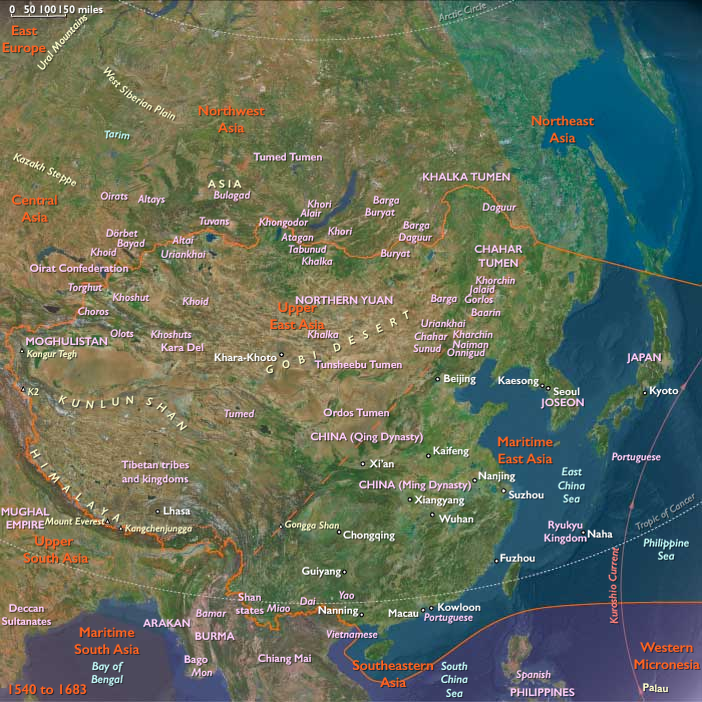
Subregions
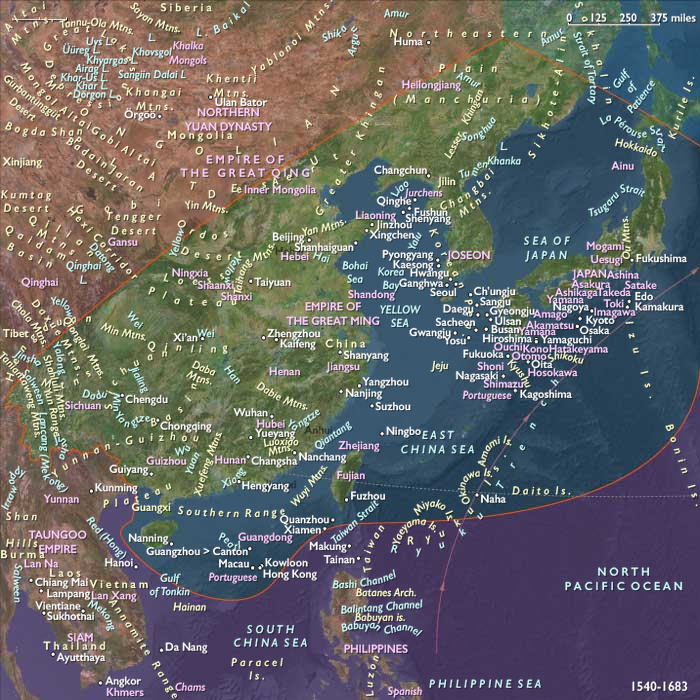
Years: 1600 - 1600
October
Locations
People
Groups
Topics
Subjects
Regions
Subregions