
With the imminent formation of a single …
Years: 1692 - 1692
With the imminent formation of a single Hanoverian state, and the Hanoverians’ continuing contributions to the Empire's wars, Ernest Augustus is made elector of Brunswick-Lüneburg (i.e., Hanover), in 1692 in return for lavish promises of assistance.
Indignant protests follow this proceeding.
A league is formed to prevent any addition to the electoral college; France and Sweden are called upon for assistance.
This agitation, however, soon dies away, and his son is confirmed as elector by the imperial diet.
George's prospects are now better than ever, as the sole heir to his father's Electorate—the ninth of the Holy Roman Empire—and his uncle's duchy.The Welf family has divided into several branches over the past five centuries.
Chief among these are those of Brunswick-Luneburg and Brunswick-Wolfenbuttel.
Ernest Augustus had in 1679 become reigning Duke of Lüneburg-Calenburg (which becomes known as the duchy of Brunswick-Lüneburg or, more popularly, because of its capital city, the duchy of Hanover).
His wife, Sophia of the Rhineland Palatinate, is the last surviving offspring of the marriage between Frederick V, elector Palatine, and Elizabeth (Stuart) of Bohemia, daughter of James I of England.
Two of Ernest Augustus’s three brothers had died childless and the third, George William of Celle, had married his mistress in order to legitimize his only daughter, Sophia Dorothea of Celle, but looked unlikely to have any further children.
Under Salic law, where inheritance of territory was restricted to the male line, the succession of Ernest Augustus’s sons to his father's and uncle's territories now seemed secure.
The family had agreed in 1682 to adopt the principle of primogeniture, meaning George, the eldest, would inherit all the territory, and not have to share it with his brothers.
The same year, George married his first cousin, Sophia Dorothea, thereby securing additional incomes that would have been outside Salic laws requiring male inheritance.
The marriage of state was arranged primarily as it ensured a healthy annual income, and assisted the eventual unification of Hanover and Celle.
Sophia was at first against the marriage, looking down on Sophia Dorothea's mother (who was not of royal birth) and concerned by Sophia Dorothea's legitimated status, but was eventually won over by the advantages inherent in the marriage.
George and his brother, Frederick Augustus, served in the Great Turkish War at the Battle of Vienna in 1683, and Sophia Dorothea had borne George a son, George Augustus.
Frederick Augustus had been informed the following year of the adoption of primogeniture, meaning he would no longer receive part of his father's territory as he had expected.
It led to a breach between father and son, and between the brothers, that lasted until Frederick Augustus's death in battle in 1690.
Sophia Dorothea had borne a second child, a daughter named after her, in 1687, but there have been no other pregnancies.
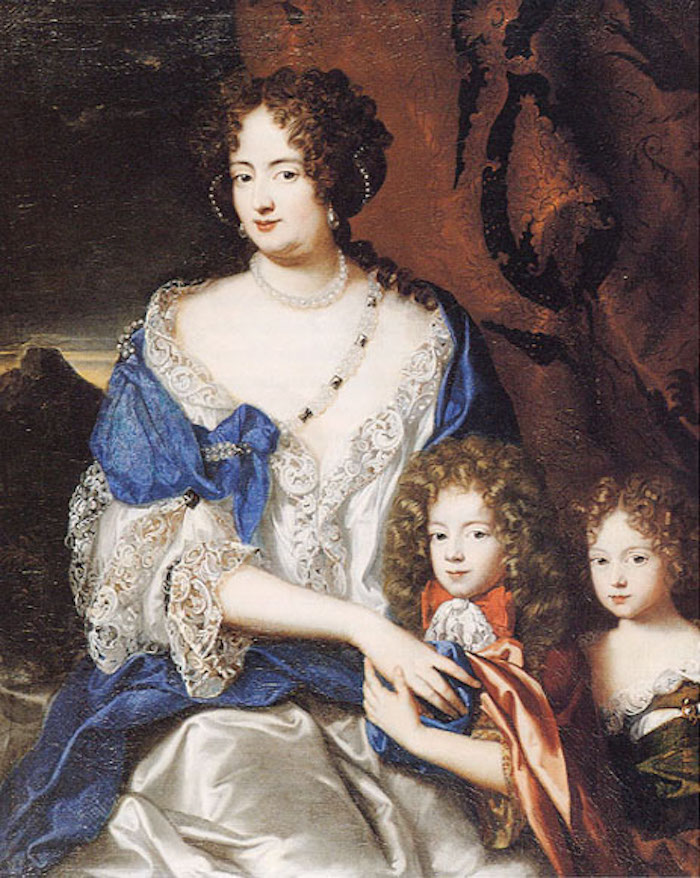
Sophie-Dorothea of Braunschweig-Lüneburg with her children George and Sophia Dorothea. (circa 1691; attributed to Jacques Vaillant) Bomann-Museum Celle.
Locations
People
Groups
- Welf, House of
- Brunswick-Lüneburg, Duchy of
- Brunswick-Wolfenbüttel, Duchy of
- Habsburg Monarchy, or Empire
- Brunswick-Lüneburg, Electorate of (Electorate of Hanover)
Subjects
Regions
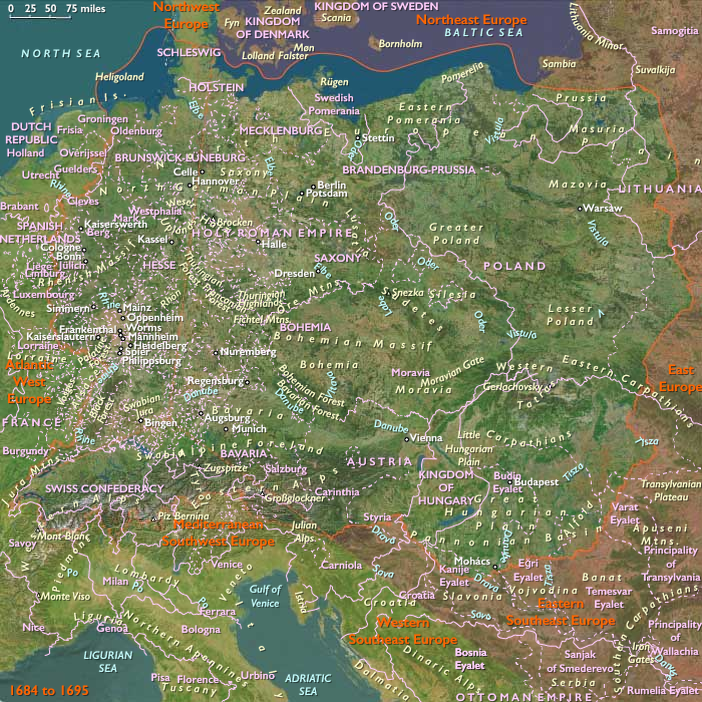
Subregions
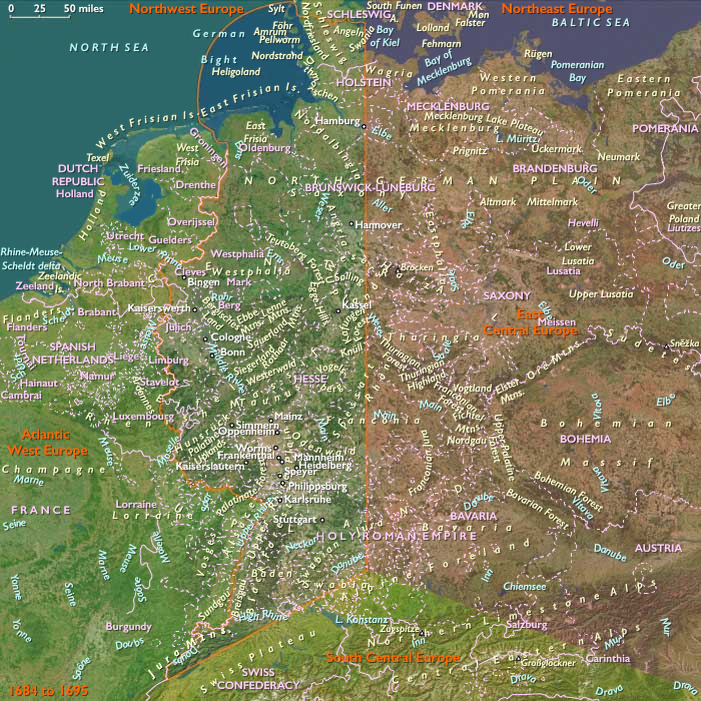
Related Events
Showing 10 events out of 184 total
Years: 1692 - 1692
Sophie-Dorothea of Braunschweig-Lüneburg with her children George and Sophia Dorothea. (circa 1691; attributed to Jacques Vaillant) Bomann-Museum Celle.
Locations
People
Groups
- Welf, House of
- Brunswick-Lüneburg, Duchy of
- Brunswick-Wolfenbüttel, Duchy of
- Habsburg Monarchy, or Empire
- Brunswick-Lüneburg, Electorate of (Electorate of Hanover)
Subjects
Regions
Subregions