
The War of the Spanish Succession has …
Years: 1712 - 1712
The War of the Spanish Succession has raged since 1701.
France, after eleven years of war, is in a dark period, both financially and militarily.
The early victories of Marshal Villars at the Battle of Friedlingen and the Battle of Höchstadt have been followed by numerous defeats to the Allied forces, most notably the armies under Prince Eugene of Savoy and the Duke of Marlborough.
After the rout of Oudenaarde in 1708, nearly all the strongholds of northern France had come under the control of the Austro-English coalition.
There had also been an economic crisis (the winter of 1708-1709 is one of the most rigorous of the eighteenth century) leading to famine and high mortality in the populace.
The command of the French northern army had gone to Marshal Villars in 1709, who had wasted no time in seeing to its reorganization.
When the Allied campaign led by Prince Eugene and the Duke of Marlborough engaged the French at Malplaquet, Villars had been wounded and the French retreated from the field, but the Allies had suffered twice as many casualties and their campaign had soon sputtered out.
France's precarious position has been stabilized, the Allies are unable to achieve their goal of forcing harsh terms on the Bourbons, and the war continues.
People
- Charles VI, Holy Roman Emperor, King of the Romans (King of Germany)
- Claude Louis Hector de Villars
- Eugene of Savoy
- John Churchill, 1st Duke of Marlborough
- Louis XIV of France
- Philip V of Spain
Groups
- Austria, Archduchy of
- Netherlands, United Provinces of the (Dutch Republic)
- France, (Bourbon) Kingdom of
- Habsburg Monarchy, or Empire
- Spain, Bourbon Kingdom of
- Britain, Kingdom of Great
Topics
Subjects
Regions
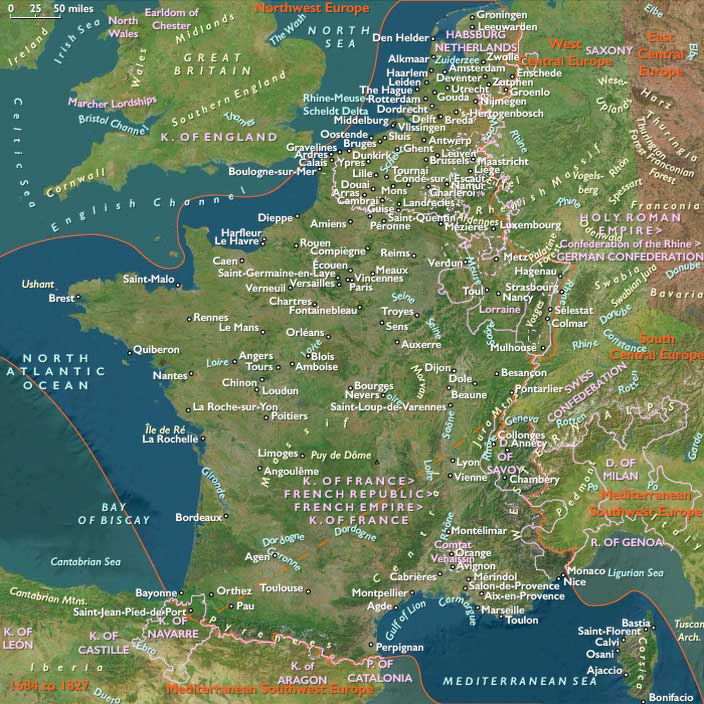
Subregions
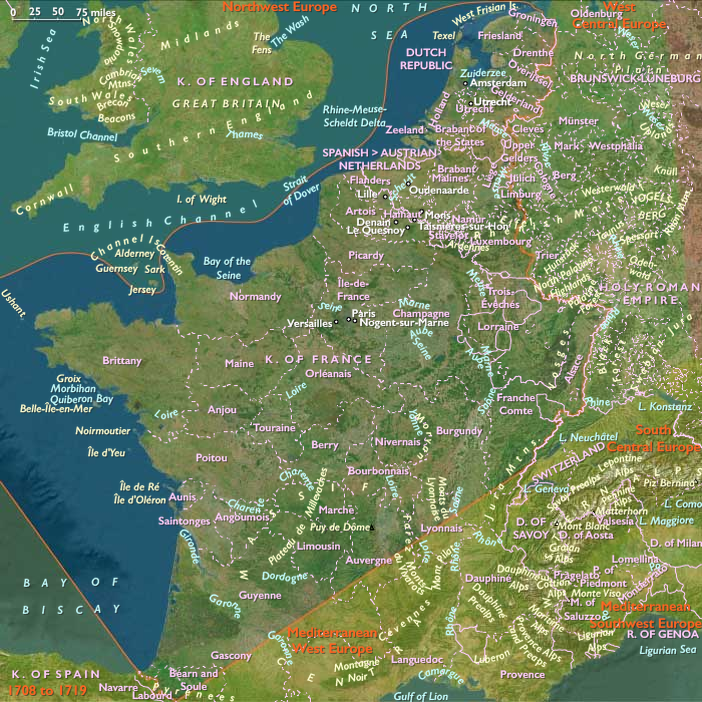
Related Events
Showing 10 events out of 28418 total
Years: 1712 - 1712
People
- Charles VI, Holy Roman Emperor, King of the Romans (King of Germany)
- Claude Louis Hector de Villars
- Eugene of Savoy
- John Churchill, 1st Duke of Marlborough
- Louis XIV of France
- Philip V of Spain
Groups
- Austria, Archduchy of
- Netherlands, United Provinces of the (Dutch Republic)
- France, (Bourbon) Kingdom of
- Habsburg Monarchy, or Empire
- Spain, Bourbon Kingdom of
- Britain, Kingdom of Great
Topics
Subjects
Regions
Subregions