
Filters:
The Continuing Frankish Civil War After Brunhilda’s …
Years: 614 - 614
The Continuing Frankish Civil War After Brunhilda’s Death (613 CE Onward)
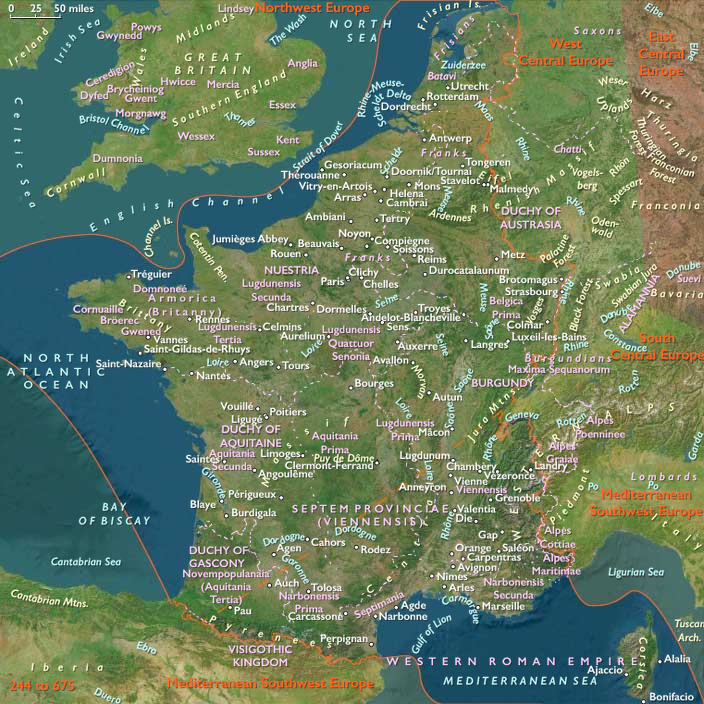
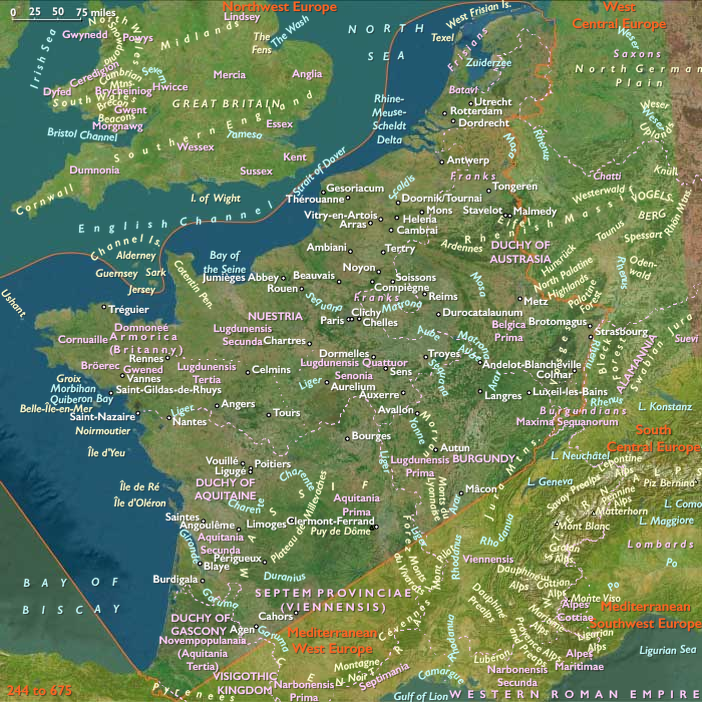
Despite the brutal execution of Queen Brunhild of Austrasia in 613 CE, the half-century-long war between the royal families of Austrasia and Neustria does not end. The dynastic struggle that had defined the Merovingian civil wars continues, as new power struggles emerge between Frankish rulers and aristocratic factions.
1. Chlothar II’s Victory and the Supposed End of the Civil War (613 CE)
- Chlothar II of Neustria, after defeating Theuderic II and Theudebert II, becomes the sole ruler of the Frankish Kingdom, momentarily ending the rivalry between Neustria and Austrasia.
- He orders the execution of Brunhilda, whom he blames for the decades-long bloodshed, thus removing Austrasia’s most powerful political figure.
- With Brunhilda dead and her grandsons eliminated, it seems that the war between the two Merovingian factions is finally over—but this is not the case.
2. The Reemergence of Austrasian Resistance (623 CE)
- To appease the Austrasian nobility, Chlothar II appoints his son, Dagobert I, as King of Austrasia in 623 CE, creating a new sub-kingdom.
- However, this does not prevent further conflict, as Austrasian aristocrats begin seeking greater autonomyfrom Neustrian rule.
- The division of power between the two regions revives old tensions, preventing lasting peace.
3. Aristocratic Power Struggles and the Rise of the Mayors of the Palace
- With Merovingian kings becoming increasingly dependent on their noble advisors, real power shifts to the Mayors of the Palace.
- Pepin of Landen, the Mayor of the Palace in Austrasia, works to secure greater autonomy for Austrasia, setting the stage for future conflict with Neustria.
- This power struggle leads to future wars between Austrasia and Neustria, culminating in the Carolingian rise to power in the 8th century.
4. Long-Term Consequences: The End of Merovingian Rule
- Although Chlothar II temporarily unifies the Frankish Kingdom, Austrasia and Neustria remain politically distinct, and their noble factions continue to compete for dominance.
- The rivalry between the Austrasian and Neustrian aristocracies persists, setting the stage for further wars between their factions.
- Eventually, Austrasia will emerge as the dominant power, leading to the rise of Charles Martel, Pepin the Short, and the Carolingian dynasty.
Conclusion: A Civil War That Outlives Its Key Figures
Even after Brunhilda’s execution in 613 CE, the political divide between Austrasia and Neustria does not disappear. Instead, noble factions take control, shifting power away from the Merovingian kings and leading to a new era of Frankish power struggles. The seeds of Carolingian dominance are planted in these continued conflicts, proving that the half-century-long civil war was far from over.
People
Groups
- Franks
- Soissons (eventually Neustria), Frankish Kingdom of
- Paris, Frankish Kingdom of
- Orléans (eventually Burgundy), Frankish Kingdom of
- Reims and Metz (eventually Austrasia), Frankish Kingdom of
Topics
Commodoties
Subjects
Regions
Subregions
Years: 614 - 614
People
Groups
- Franks
- Soissons (eventually Neustria), Frankish Kingdom of
- Paris, Frankish Kingdom of
- Orléans (eventually Burgundy), Frankish Kingdom of
- Reims and Metz (eventually Austrasia), Frankish Kingdom of
Topics
Commodoties
Subjects
Regions
Subregions