
The wandering of the so-called Gypsies, or …
Years: 1024 - 1035
The wandering of the so-called Gypsies, or Romani, of North India begins at approximately this time.
The absence of a written history has meant that the origin and early history of the Romani people was long an enigma.
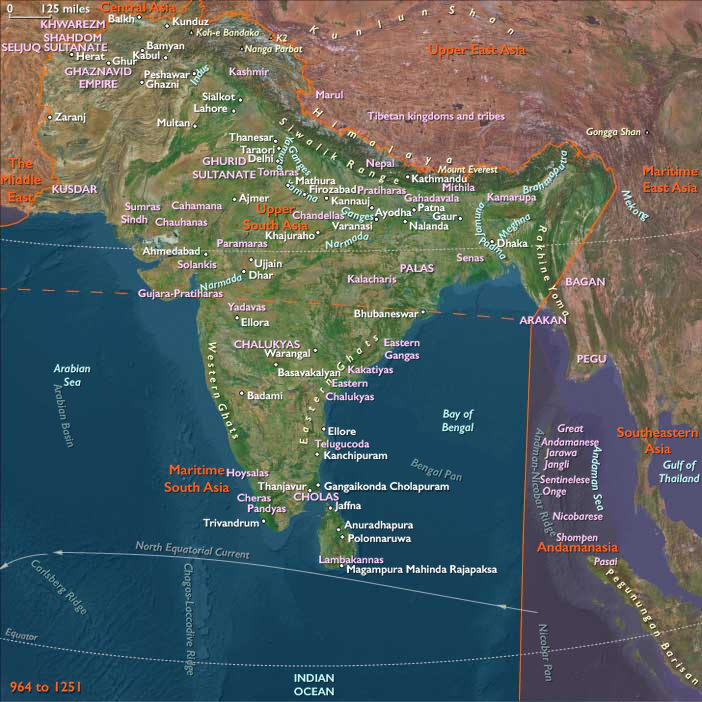
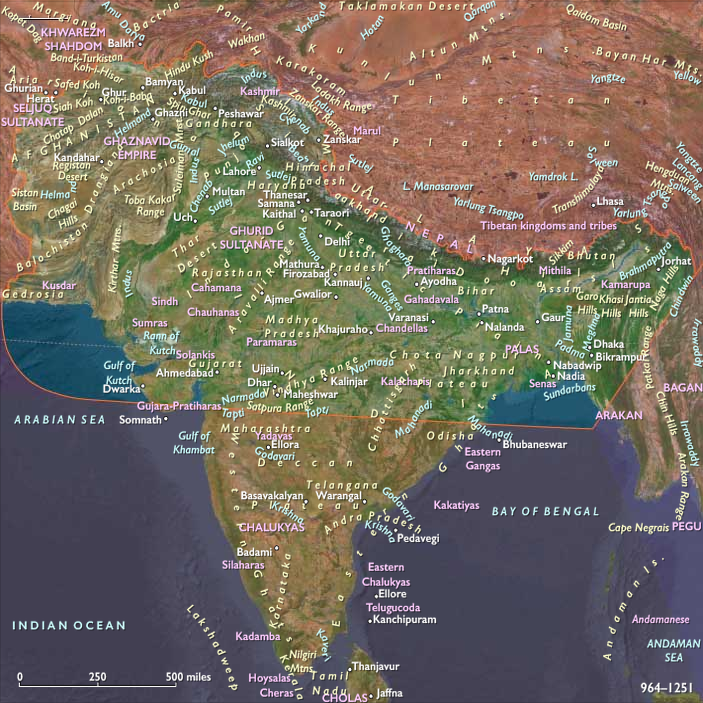
Linguistic evidence indicates the Romanies originated from the Rajasthani people, emigrating from India towards the northwest no earlier than the eleventh century.
Contemporary populations sometimes suggested as sharing a close relationship to the Romani are the Dom people of Central Asia and the Banjara of India.
Genetic evidence connects the Romani people and the Jat people, the descendants of groups that emigrated from India towards Central Asia during the medieval period.
There are serological similarities shared with several populations that linked the two people in a 1992 study.
A limited medical survey of haplotypes frequently found in the Jat Sikhs and Jats of Haryana, and those found in the Romani populations revealed no matches in 2007.
However, in 2009 researchers discovered the "Jat mutation", which causes a type of glaucoma in Romani people.
The cause of the Romani diaspora is unknown.
However, the most probable conclusion is that the Romanies were part of the military in North India.
When there were repeated raids by Mahmud of Ghazni and these soldiers were defeated, they were moved west with their families into the Eastern Roman Empire.
People
Groups
- Rajasthani people
- Banjara
- Dom people
- Jat people
- Romani people
- Roman Empire, Eastern: Macedonian dynasty
- Ghaznavids
Topics
Commodoties
Subjects
Regions
Subregions
Related Events
Showing 10 events out of 51637 total
Years: 1024 - 1035
People
Groups
- Rajasthani people
- Banjara
- Dom people
- Jat people
- Romani people
- Roman Empire, Eastern: Macedonian dynasty
- Ghaznavids
Topics
Commodoties
Subjects
Regions
Subregions