
Filters:
A Labour Party government with anti-imperialist leanings …
Years: 1936 - 1947
A Labour Party government with anti-imperialist leanings is elected in Britain in 1945.
This election encourages Egyptians to believe that Britain will change its policy.
The end of the war in Europe and the Pacific, however, sees the beginning of a new kind of global war, the Cold War, in which Egypt finds itself embroiled against its will.
Concerned by the possibility of expansion by the Soviet Union, the West will come to see the Near and Middle East as a vital element in its postwar strategy of "containment."
In addition, pro-imperialist British Conservatives like Winston Churchill speak of Britain's "rightful position" in the Suez Canal Zone.
He and Anthony Eden, the Conservative Party spokesman on foreign affairs, stress the vital importance of the Suez Canal as an imperial lifeline and claim international security will be threatened by British withdrawal.
This election encourages Egyptians to believe that Britain will change its policy.
The end of the war in Europe and the Pacific, however, sees the beginning of a new kind of global war, the Cold War, in which Egypt finds itself embroiled against its will.
Concerned by the possibility of expansion by the Soviet Union, the West will come to see the Near and Middle East as a vital element in its postwar strategy of "containment."
In addition, pro-imperialist British Conservatives like Winston Churchill speak of Britain's "rightful position" in the Suez Canal Zone.
He and Anthony Eden, the Conservative Party spokesman on foreign affairs, stress the vital importance of the Suez Canal as an imperial lifeline and claim international security will be threatened by British withdrawal.
Locations
People
Groups
- Britain (United Kingdom of Great Britain and Ireland)
- Egypt, Kingdom of (British Protectorate)
- Union of Soviet Socialist Republics (USSR), or Soviet Union
Topics
Subjects
Regions
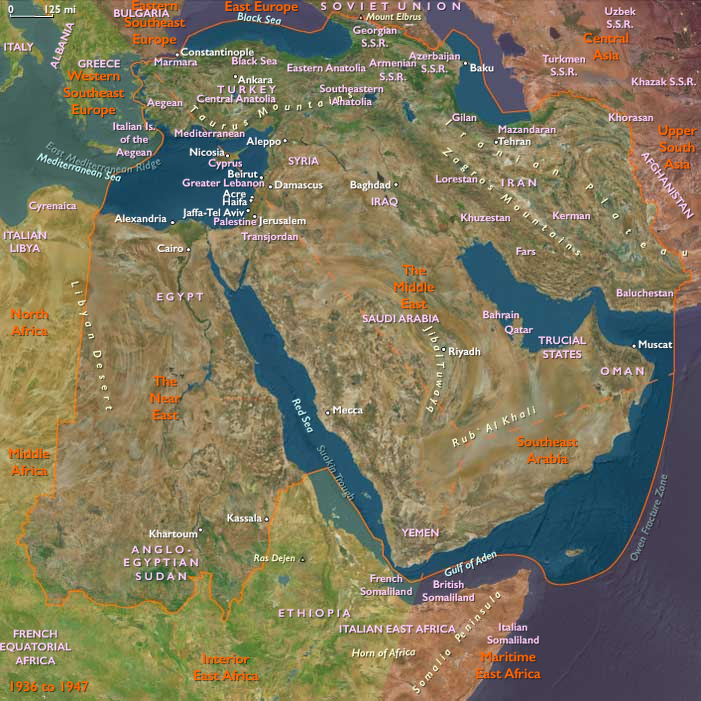
Subregions
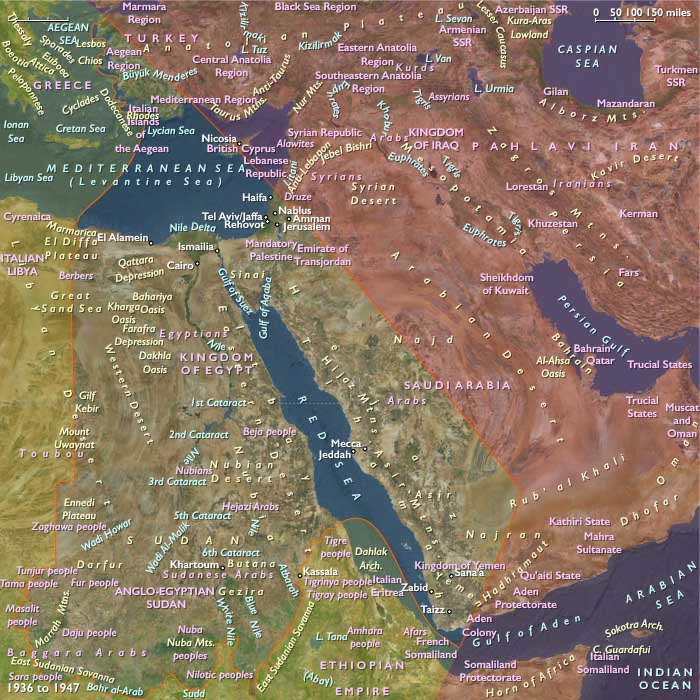
Years: 1936 - 1947
Locations
People
Groups
- Britain (United Kingdom of Great Britain and Ireland)
- Egypt, Kingdom of (British Protectorate)
- Union of Soviet Socialist Republics (USSR), or Soviet Union
Topics
Subjects
Regions
Subregions