
The village of Pagan, on the Irrawaddy …
Years: 849 - 849
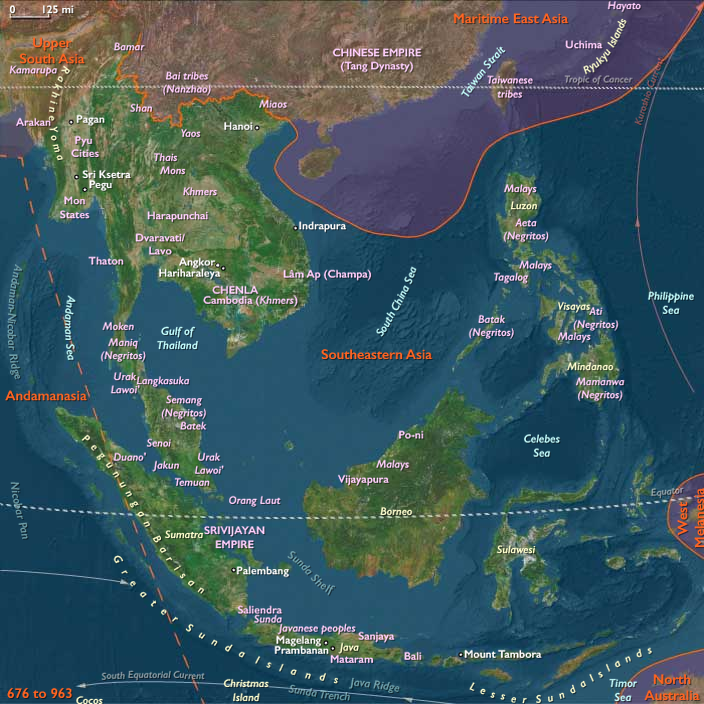
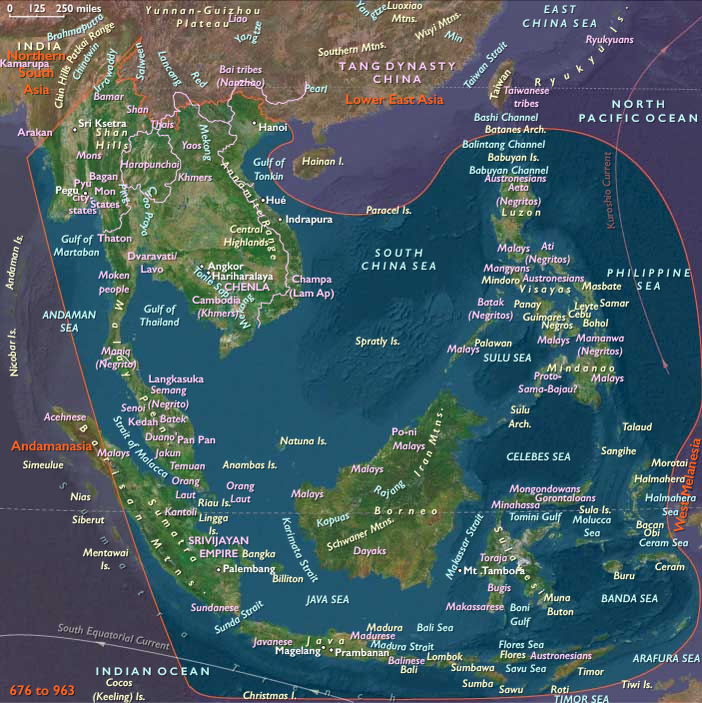
The village of Pagan, on the Irrawaddy River in central Burma, is established in 849.
Modern scholarship holds that the Pagan dynasty was founded by the Mranma (Burmans) of the Nanzhao Kingdom in the mid-to-late ninth century CE; that the earlier parts of the chronicle are the histories and legends of the Pyu people, the earliest inhabitants of Burma of whom records are extant; and that Pagan kings had adopted the Pyu histories and legends as their own.
Although the size of the Pyu city-states and the scale of political organization had grown during the seventh to early ninth centuries, no sizable kingdom had yet emerged by the ninth century.
According to a reconstruction by G.H. Luce, the millennium-old Pyu realm came crashing down under repeated attacks by the Nanzhao Kingdom of Yunnan between the 750s and 830s CE.
Like that of the Pyu, the original home of Burmans prior to Yunnan is believed to be present-day Qinghai and Gansu provinces.
After the Nanzhao attacks had greatly weakened the Pyu city-states, large numbers of Burman warriors and their families first enter the Pyu realm in the 830s and 840s, and settle at the confluence of the Irrawaddy and Chindwin rivers, perhaps to help the Nanzhao pacify the surrounding countryside.
Indeed, the naming system of the early Pagan kings—Pyusawhti and his descendants for six generations—is identical to that of the Nanzhao kings where the last name of the father becomes the first name of the son.
The chronicles date these early kings to between the second and fifth centuries CE, scholars to between the eighth and tenth centuries CE. (A minority view, led by Htin Aung, contends that the arrival of Burmans may have been a few centuries earlier, perhaps the early seventh century.
The earliest human settlement at Pagan is radiocarbon dated to about 650 CE, but evidence is inconclusive to prove that it was specifically a Burman (and not just another Pyu) settlement.)
Locations
Groups
Topics
Subjects
Regions
Subregions
Related Events
Showing 10 events out of 54158 total
Years: 849 - 849
Locations
Groups
Topics
Subjects
Regions
Subregions