
The Venus of Hohle Fels (also known …
Years: 38925BCE - 37198BCE
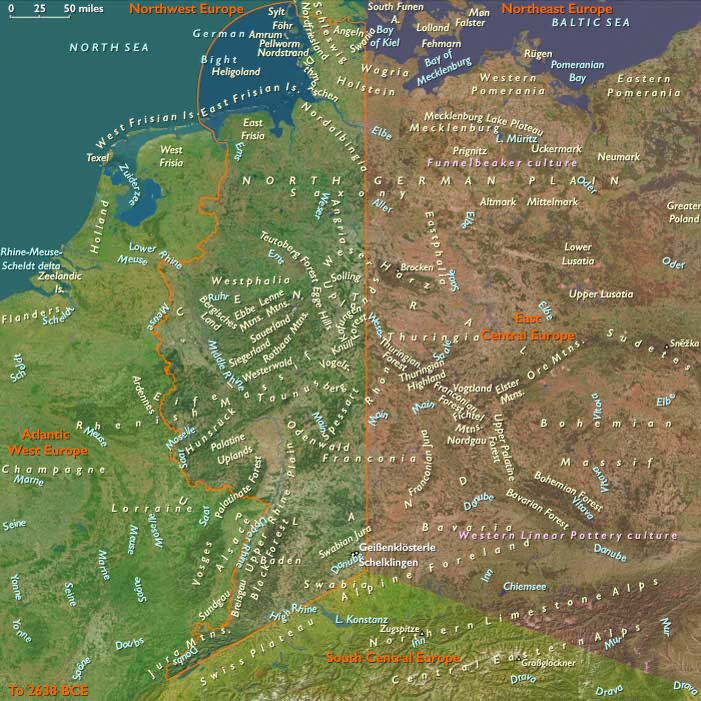
The Venus of Hohle Fels (also known as the Venus of Schelklingen), an Upper Paleolithic “Venus” figurine found near Schelklingen, Germany, is dated to between forty thousand and thirty-five thousand years ago.
Belonging to the early Aurignacian, at the very beginning of the Upper Paleolithic, which is associated with the assumed earliest presence of Homo sapiens in Europe (Early European Modern Humans), it is the oldest undisputed example of Upper Paleolithic art and figurative prehistoric art in general.
The figurine is a representation of a woman, putting emphasis on the vulva and the breasts.
Consequently, it is presumed to be an amulet related to fertility.
It is made of a woolly mammoth tusk and had broken into fragments, of which six have been recovered, with the left arm and shoulder still missing.
In place of the head, the figurine has a perforation so that it could have been worn as a pendant.
Archaeologist John J. Shea suggests it would have taken "tens if not hundreds of hours" to carve the figurine.
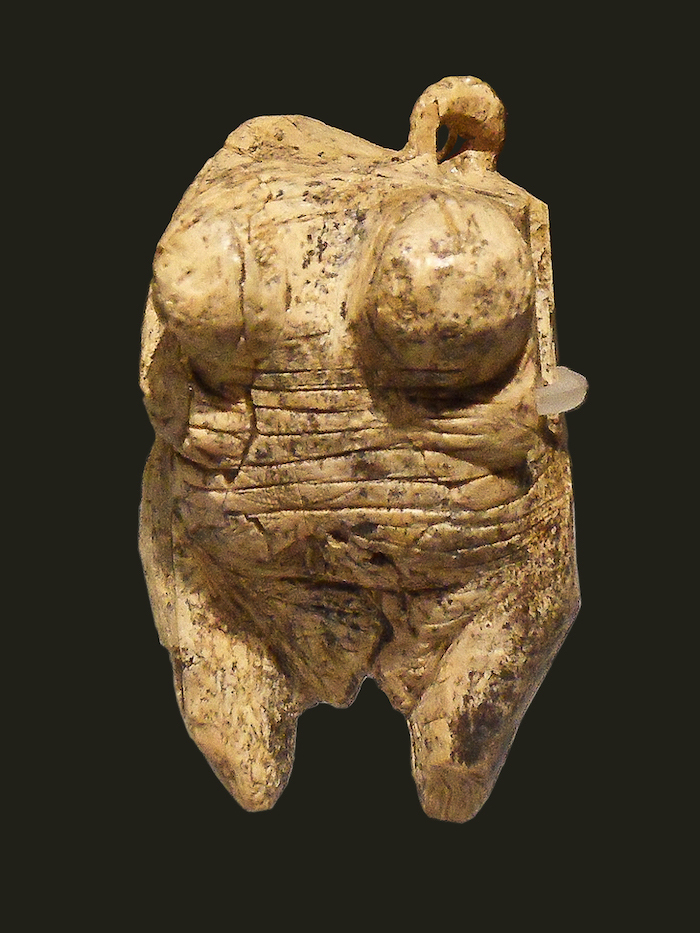
Original Venus from Hohle Fels, mammoth ivory, Aurignacian, aged about 35-40,000 years. Discovered in September 2008 in the cave "Hohler Fels" in the Ach Valley near Schelklingen, Germany. Picture was taken by Thilo Parg at Urgeschichtliches Museum, 89143 Blaubeuren, Germany, on 07/18/2010.
Locations
Topics
Commodoties
Subjects
Regions

Subregions
Related Events
Showing 10 events out of 69600 total
Years: 38925BCE - 37198BCE
Original Venus from Hohle Fels, mammoth ivory, Aurignacian, aged about 35-40,000 years. Discovered in September 2008 in the cave "Hohler Fels" in the Ach Valley near Schelklingen, Germany. Picture was taken by Thilo Parg at Urgeschichtliches Museum, 89143 Blaubeuren, Germany, on 07/18/2010.
Locations
Topics
Commodoties
Subjects
Regions
Subregions