
The Uzbek chiefs, after the massacre at …
Years: 1512 - 1512
The Uzbek chiefs, after the massacre at Karshi, appear for some time to have retired and fortified themselves in their strongholds.
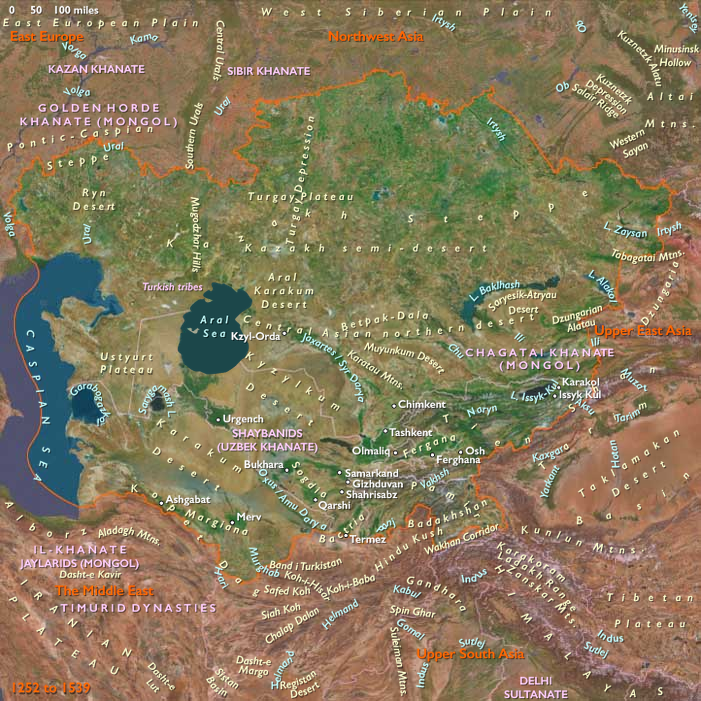
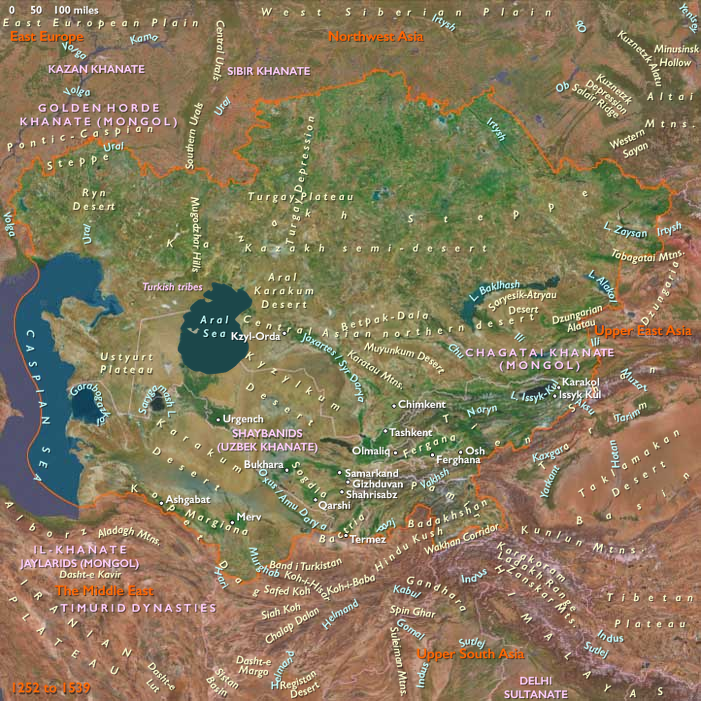
Najm eventually moves on to attack Ghazdewan, on the border of the desert, without having taken Bukhara.
The Uzbek sultans now have time to assemble under the command of Ubaydullah Sultan.
Joined by Timur Sultan from Samarkand, they throw themselves into the fort the very night that Babur and Najm had taken their ground before it, preparing their engines and ladders for an assault.
In the morning, the Uzbeks draw out their army and take up a position among the houses and gardens in the suburbs of the town, with the confederates advancing to meet them.
The Uzbeks, who are protected by the broken ground and by the walls of the enclosures and houses, have posted archers in every corner to pour a shower of arrows on the Qizilbashes as they approach.
Once Biram Khan, the chief military command of the Qizilbash troops falls off his horse and is wounded, the main body of the army falls into disorder.
In the course of an hour, the invaders are routed, with most of them falling in the field.
This defeat puts an end to Safavid expansion and influence in Transoxania and leaves the northeastern frontiers of the kingdom vulnerable to nomad invasions.
Babur, routed and discomfited, flees back to Hissar.
It is said that the Qizilbash chiefs, disgusted with the haughtiness and insolence of Najm, did not use their utmost efforts to assist him: he is eventually taken prisoner and put to death.
Many of the Persian chiefs who flees from the battle cross the Amu Darya at Kirki and enter Greater Khorasan.
The Uzbeks now not only recover the country that they had lost in Transoxiana, but also make incursions into Greater Khorasan, ravaging the northern part of the province.
Shah Ismail I, on hearing of this disaster, resolves to return.
On his approach, the Uzbeks retreat in alarm.
He causes several of the officers who had escaped from the battle to be seized and some of them to be executed for deserting their commander.
Certain inhabitants of the province, accused of having shown attachment to the Uzbeks and their creed and of having vexed the Shias, are consumed in the fire of his wrath.
Locations
People
Groups
- Iranian peoples
- Transoxiana
- Khorasan, Greater
- Oghuz Turks
- Muslims, Sunni
- Muslims, Shi'a
- Turkmen people
- Ottoman Emirate
- Uzbeks
- Qizilbash or Kizilbash, (Ottoman Turkish for "Crimson/Red Heads")
- Bukhara, Uzbek (Shaybanid) Khanate of
- Persia, Safavid Kingdom of
Topics
Commodoties
Subjects
Regions
Subregions
Years: 1512 - 1512
Locations
People
Groups
- Iranian peoples
- Transoxiana
- Khorasan, Greater
- Oghuz Turks
- Muslims, Sunni
- Muslims, Shi'a
- Turkmen people
- Ottoman Emirate
- Uzbeks
- Qizilbash or Kizilbash, (Ottoman Turkish for "Crimson/Red Heads")
- Bukhara, Uzbek (Shaybanid) Khanate of
- Persia, Safavid Kingdom of
Topics
Commodoties
Subjects
Regions
Subregions