Northeast Europe (1324–1335 CE): Lithuanian Power, Swedish Territorial Expansion, and Social Progress
Introduction
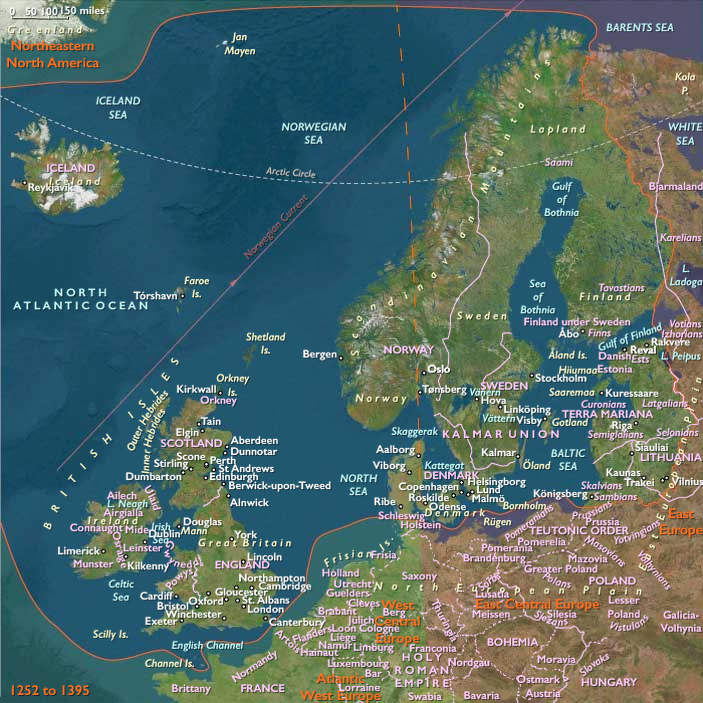
Between 1324 and 1335 CE, Northeast Europe experienced significant developments characterized by the continued strength of Lithuania, consolidation of crusader states, and notable territorial and social changes in Sweden. Crusader states maintained their dominance amidst persistent Baltic tensions, while Sweden made important territorial gains and progressive social reforms, notably the abolition of slavery.
Lithuanian Strength and Persistent Resistance
During this period, Lithuania continued to emerge as a regional power, effectively resisting crusader incursions and challenging their territorial ambitions. Lithuanian leaders conducted frequent military raids against the Teutonic Knights and the Livonian Confederation, disrupting crusader settlements and fortifications, and firmly resisting forced Christianization efforts. Lithuania's resilience significantly influenced regional power dynamics, ensuring ongoing military preparedness among crusader authorities.
Swedish Expansion and Social Reforms
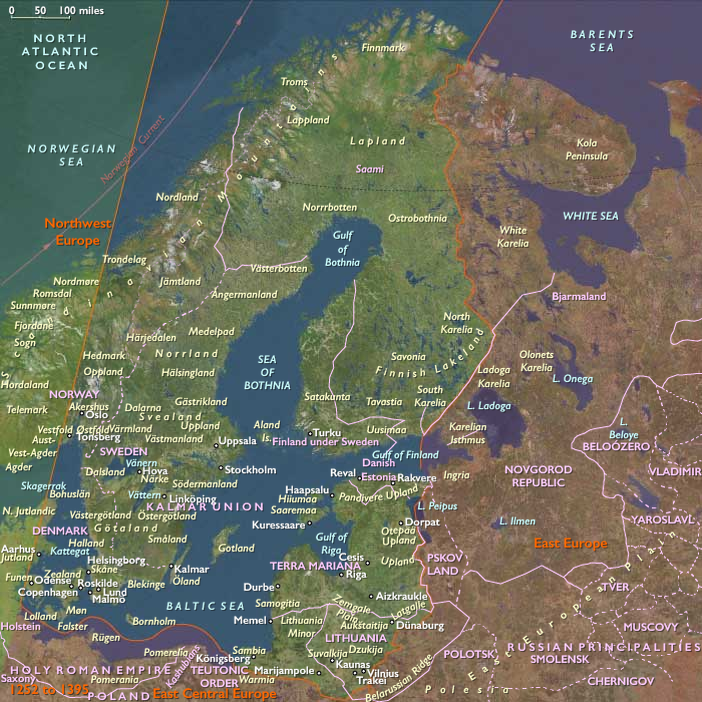
In a significant territorial acquisition, King Magnus IV of Sweden and Norway purchased the strategically vital southern province of Scania from Denmark in 1332, greatly strengthening Swedish control over the Baltic region and enhancing its economic and political influence.
Moreover, Sweden enacted a major social reform in 1335, becoming one of the first European realms to abolish slavery officially. This progressive measure marked a critical shift in social policy, reflecting evolving attitudes toward personal liberty and human dignity within the Scandinavian context.
Stability in Danish Estonia and the Livonian Confederation
Danish governance over Estonia, centered around Reval (Tallinn), remained stable, with effective administrative oversight and economic growth facilitated by strong military presence and robust fortifications such as the prominent fortress of Castrum Danorum on Toompea Hill.
Similarly, the German-administered Livonian Confederation, headquartered in Riga, enjoyed political and economic stability, reinforced by extensive trade networks, efficient administration, and strengthened ecclesiastical structures. Both territories experienced relative prosperity, despite ongoing regional tensions.
Teutonic Control and Germanization of Prussia
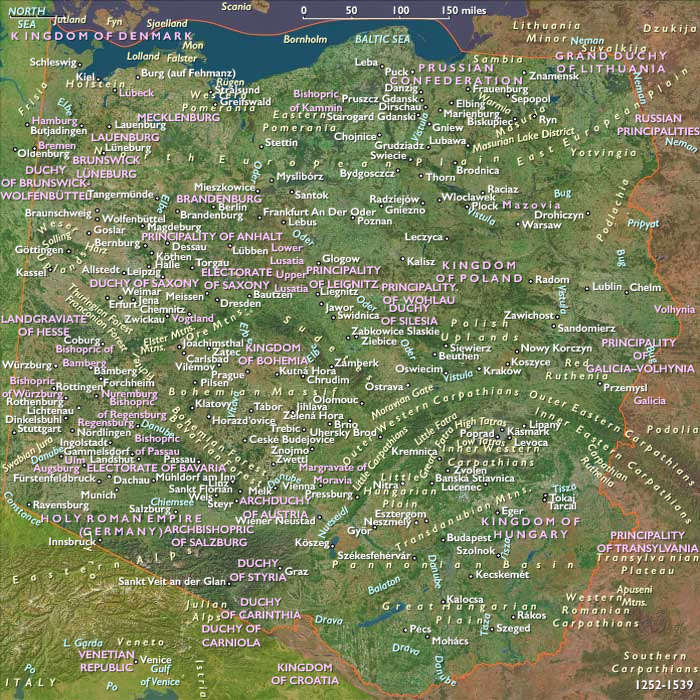
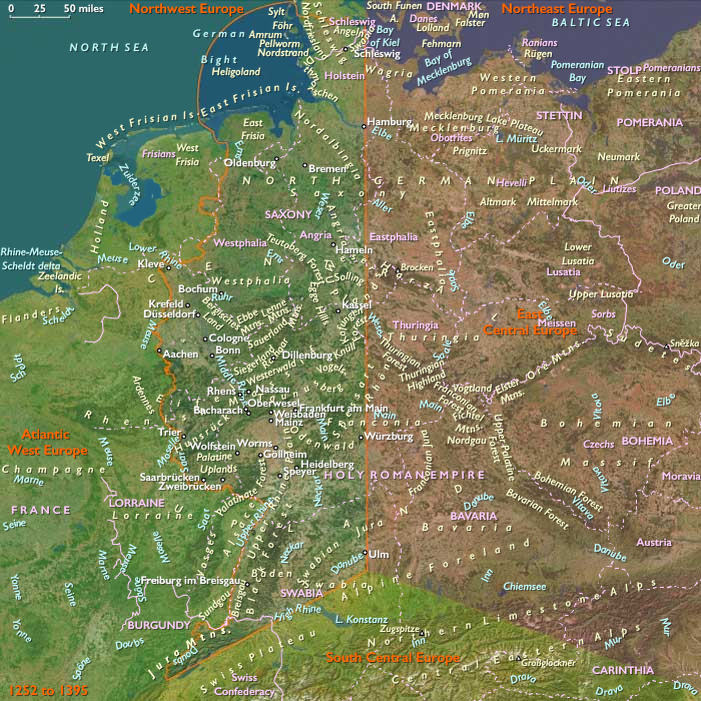
In Prussia, the Teutonic Knights continued consolidating their territorial control, aggressively fortifying strategic sites, notably Königsberg. The Germanic cultural and linguistic influence intensified, driven by the continued influx of settlers from German states, ensuring long-term stability through cultural assimilation and robust defensive infrastructure.
Persistent Baltic Tensions
Localized resistance continued among the remaining Baltic tribes such as the Curonians and isolated Prussian groups, necessitating ongoing military vigilance and occasionally leading to minor uprisings. While major rebellions had largely ceased, this persistent resistance continued to influence regional stability and crusader policies.
Economic Development and Urban Prosperity
The crusader-controlled territories saw significant economic and urban growth. Reval (Tallinn), Riga, and Königsbergthrived as key commercial and cultural centers. Maritime commerce through Visby on Gotland further connected Northeast Europe to broader European trade networks, enhancing regional prosperity and integration.
Ecclesiastical Influence and Cultural Integration
Ecclesiastical structures, particularly those led by the Teutonic Order, expanded their cultural and religious influence. Monastic communities played critical roles in educational and cultural assimilation, embedding Latin Christianity deeply into the governance and daily life of local populations.
Geopolitical Rivalries and Strategic Alignments
This era witnessed increasing geopolitical complexity, marked by Lithuanian assertiveness, Swedish territorial expansion, and ongoing tensions between crusader states and neighboring Russian principalities. These dynamics created shifting alliances and heightened military preparedness, influencing regional interactions significantly.
Legacy of the Era
The period from 1324 to 1335 CE was pivotal in shaping Northeast Europe, featuring notable territorial acquisitions such as Sweden’s purchase of Scania, progressive reforms like Sweden’s abolition of slavery, and sustained Lithuanian resistance. These developments laid the groundwork for lasting political and cultural shifts, profoundly impacting the region's historical trajectory for centuries to follow.