
The University of Bologna will receive a …
Years: 1088 - 1088
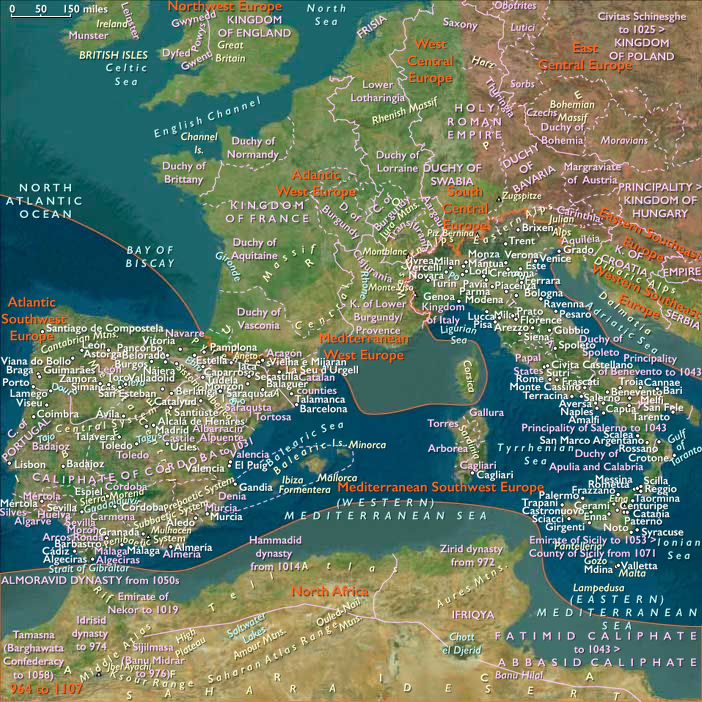
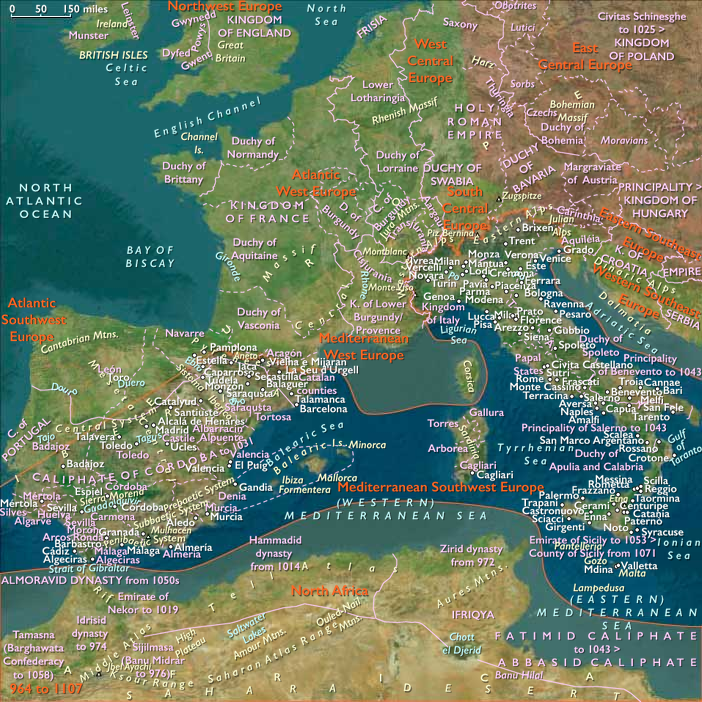
The University of Bologna will receive a charter from Frederick I Barbarossa in 1158, but in the nineteenth century, a committee of historians led by Giosuè Carducci will trace the founding of the University to 1088, which would make it the oldest continuously operating university in the world.
The University has arisen around mutual aid societies of foreign students called "nations" (as they are grouped by nationality) for protection against city laws that impose collective punishment on foreigners for the crimes and debts of their countrymen.
These students then hired scholars from the city to teach them.
In time the various "nations" had decided to form a larger association, or universitas—thus, the university.
The university will grow to have a strong position of collective bargaining with the city, since by then it derives significant revenue through visiting foreign students, who will depart if they are not well treated.
The foreign students in Bologna receive greater rights, and collective punishment is ended.
There is also collective bargaining with the scholars who serve as professors at the university.
By the initiation or threat of a student strike, the students can enforce their demands as to the content of courses and the pay professors will receive.
University professors are hired, fired, and have their pay determined by an elected council of two representatives from every student "nation" which governs the institution, with the most important decisions requiring a majority vote from all the students to ratify.
The professors can also be fined if they fail to finish classes on time, or complete course material by the end of the semester.
A student committee, the "Denouncers of Professors", keeps tabs on them and reports any misbehavior.
Professors themselves are not powerless, however: they form a College of Teachers, and secure the rights to set examination fees and degree requirements.
Eventually, the city will end this arrangement, paying professors from tax revenues, and making it a chartered public university.
The university is historically notable for its teaching of canon and civil law; indeed, it has been set up in large part with the aim of studying the Digest, a central text in Roman law, which had been rediscovered in Italy in 1070, and the university is central in the development of medieval Roman law.
Until modern times, the only degree granted at this university is the doctorate.
Locations
Groups
Commodoties
Subjects
Regions
Subregions
Years: 1088 - 1088
Locations
Groups
Commodoties
Subjects
Regions
Subregions