The United States, at the behest of …
Years: 1954 - 1954
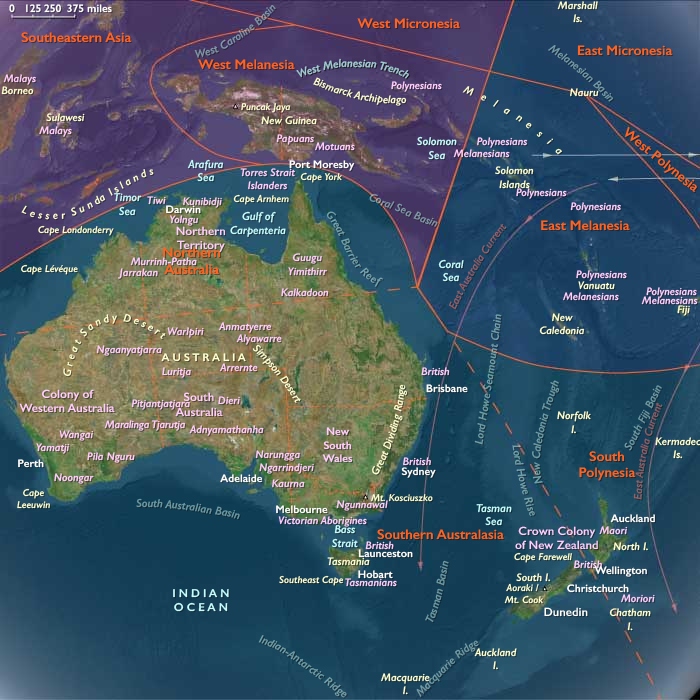
The United States, at the behest of Secretary of State John Foster Dulles in 1954, establishes the Southeast Asia Treaty Organization (SEATO), an anti-Communist military alliance including Australia, France, Great Britain, New Zealand, Pakistan, the Philippines, Thailand and the US, all of whom pledge collective action in the event of external aggression or internal subversion against any one of them.
Cambodia, Laos and South Vietnam are not signatories.

Related Events
Filter results
Showing 10 events out of 4416 total
The United States, at the behest of Secretary of State John Foster Dulles in 1954, establishes the Southeast Asia Treaty Organization (SEATO), an anti-Communist military alliance including Australia, France, Great Britain, New Zealand, Pakistan, the Philippines, Thailand and the US, all of whom pledge collective action in the event of external aggression or internal subversion against any one of them.
Cambodia, Laos and South Vietnam are not signatories.
Despite heavy opium consumption, Southeast Asia does not become a significant opium producer until the 1950s, a full century after China.
During the First Indochina War (1947-54), French intelligence officers, denied funds by the National Assembly, merge the opium supply of Laos with the drug demand of Saigon to fund covert operations against Vietnam's communists.
After the French colonial regime abolishes the Opium Monopoly in 1950, military intelligence assumes control of the drug trade.
French paratroopers fighting with Hmong guerrillas in Laos and Tonkin ship their clients' opium south to Saigon on French military aircraft where it is sold in smoking dens run by the Binh Xuyen bandits, a criminal syndicate that controls the city.
Through this operation, French intelligence, particularly the SDECE, integrates narcotics into Indochina's political economy and its anti-Communist political forces.
Across the Mekong in Burma and Thailand, Nationalist Chinese irregulars controlling the opium hills of northeastern Burma supply the demand for drugs in Bangkok.
To provide logistic support for their forces, the Nationalists forge a tactical alliance with Thailand's dominant military leader, Police General Phao Sriyanond, which rapidly becomes a de facto division of the Burma-to-Bangkok opium trade.
In the Golden Triangle, many of the Thai military men who dominate the country's politics and control the opium traffic with Burma are veterans of the Shan State occupation.
The Communist Viet Minh, having fought the French for eight years, finally defeat them in at Dien Bien Phu, ending French control of Indochina.
The UN-sponsored Geneva Conference of 1954, convened by an exhausted France during Dien Bien Phu’s ten-week siege, temporarily divides Vietnam along the 17th parallel into an independent Communist North and a French-backed South, ending the Indochina War, mandating French withdrawal from the North and recognizing Ho Chi Minh as the President of the Republic of North Vietnam.
The conference also recognizes Pathet Lao control over two of Laos’s northern provinces.
Prominent Roman Catholic anti-Communist Ngo Dinh Diem, supported by the US, is named premier of South Vietnam in June.
US Psychological warfare expert Edward Lansdale allegedly arranges for the spreading of the rumor that the US plans to drop a nuclear bomb on the North, creating an evacuation frenzy.
In the resultant population exchange between the divided nation, hundreds of thousands of northern Vietnamese Roman Catholic refugees move south, supposedly ferried by CIA ships and planes; hundreds of Communists move north.
France, the Indochinese nations, the USSR, China and the Koreas sign the Geneva Accords; the US and South Vietnam do not.
In 1954, the United States, at the behest of Secretary of State John Foster Dulles, establishes the Southeast Asia Treaty Organization (SEATO), an anti-Communist military alliance including Australia, France, Great Britain, New Zealand, Pakistan, the Philippines, Thailand and the US, all of whom pledge collective action in the event of external agression or internal subversion against any one of them.
Cambodia, Laos and South Vietnam are not signatories.
On Cyprus the colonial government threatens advocates of enosis with up to five years' imprisonment and warns that anti-sedition laws will be strictly enforced.
The archbishop defies the law, but no action is taken against him.
Meanwhile, Grivas has returned to the island surreptitiously and made contact with Makarios.
In December the UN General Assembly, after consideration of the Cyprus item placed on the agenda by Greece, adopts a New Zealand proposal that, using diplomatic jargon, announces the decision "not to consider the problem further for the time being, because it does not appear appropriate to adopt a resolution on the question of Cyprus."
Reaction to the setback at the UN is immediate and violent.
Greek Cypriot leaders called a general strike, and schoolchildren left their classrooms to demonstrate in the streets.
These events are followed by the worst rioting since 1931.
He goes on to state, "There are certain territories in the Commonwealth which, owing to their peculiar
circumstances, can never expect to be fully independent."
Hopkinson's "never" and the absence of any mention of enosis dooms the alternative from the beginning.
That request is seconded by a petition to the secretary general from Archbishop Makarios.
The British position continues to be that the subject is an internal issue.
The expressed attitude of the Cyprus Turkish Minority Association is that, in the event of British withdrawal, control of Cyprus should simply revert to Turkey. (This position ignores the fact that Turkey had given up all rights and claims in the 1923 Treaty of Lausanne.)
