
The Turks have left Transylvania relatively unmolested. …
Years: 1550 - 1550
The Turks have left Transylvania relatively unmolested.
Martinuzzi has devised a constitution based on earlier institutions, consisting, under the prince, of representatives of the three privileged nations (Estates) of the Unio Trium Nationum compant of 1438: the nobility (mostly Hungarians), the Szeklers and the Saxon burghers.
These nations, however, correspond more to social and religious rather than ethnic divisions.
Being explicitly directed against the peasants, the Union limits the number of Estates, implicitly excluding the Orthodox from political and social life in Transylvania, as they are not allowed to build up local self-government (like the Szekelys, Saxons in Transylvania, Cumans and Iazyges in Hungary).
Transylvania is also spared internecine religious strife, when the Roman Catholic, Calvinist, Lutheran, and Uniate churches agree to coexist on a basis of equal freedom and mutual toleration.
The Greek Orthodox faith of the Romanians, who constitute the rest of the population, is only “tolerated,” since the Romanians as such, or even their nobles, do not constitute a “nation.” The Romanian ruling class, the nobilis kenezius, has the same rights as the Hungarian nobilis conditionarius.
In contrast to Maramureş, after the Decree of Turda/Torda 1366 in Transylvania proper the only possibility to remain or access nobility was for them through conversion to Roman Catholicism.
In order to conserve their positions, some Romanian families had converted to Catholicism, being subsequently magyarized (i.e., the families Hunyadi/Corvinus, Bedőházi, Bilkei, Ilosvai, Drágffy, Dánfi, Rékási, Dobozi, Mutnoki, Dési, Majláth, etc.).
Some of them even have reached the highest ranks of the society (Nicolaus Olahus will become Archishop of Esztergom, while Mathias Corvinus, the son of half-Romanian regent John Hunyadi, had become king of Hungary in 1464).
Locations
People
Groups
- Christians, Roman Catholic
- Saxons, Transylvanian
- Ottoman Empire
- Unity of the Brethren (Moravians)
- Lutheranism
- Calvinists
- Hungary (Transylvania), Ottoman vassal Kingdom of
Topics
Commodoties
Subjects
Regions
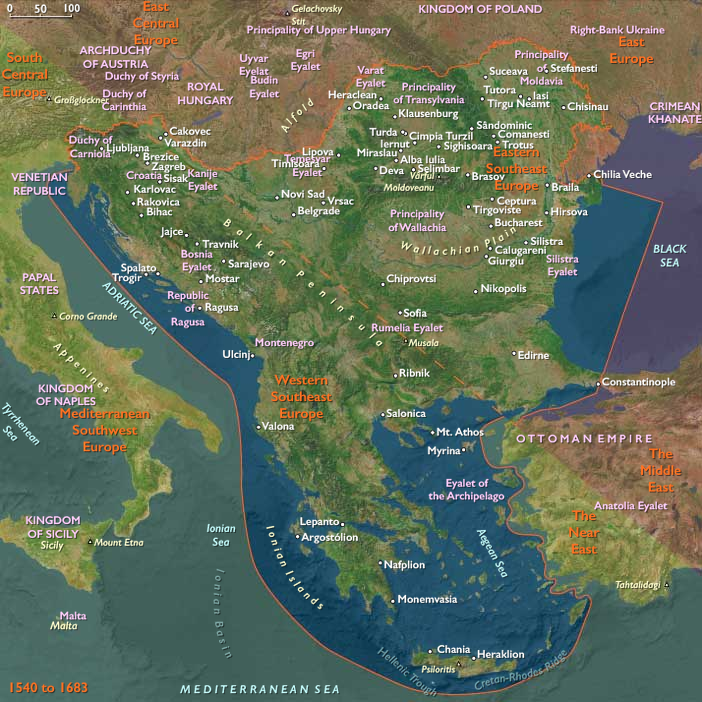
Subregions
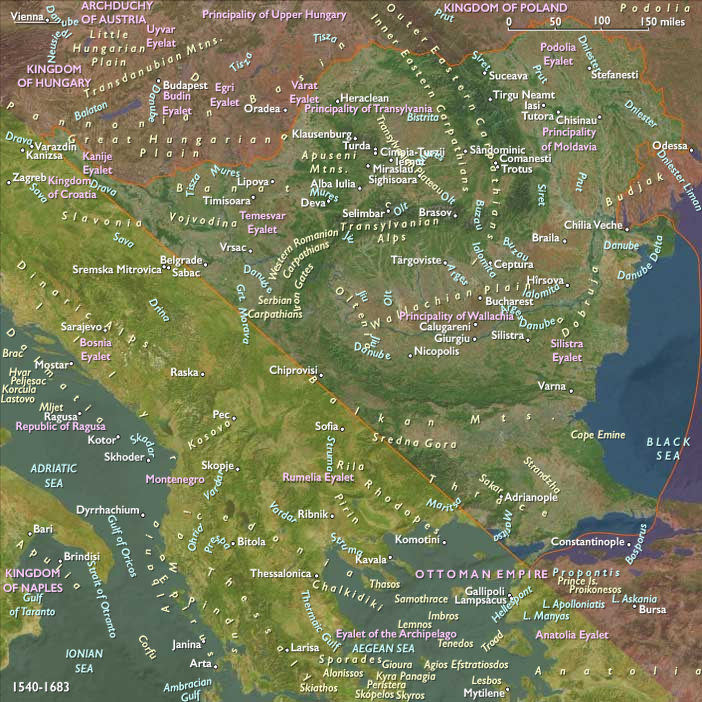
Related Events
Showing 1 events out of 1 total
Years: 1550 - 1550
Locations
People
Groups
- Christians, Roman Catholic
- Saxons, Transylvanian
- Ottoman Empire
- Unity of the Brethren (Moravians)
- Lutheranism
- Calvinists
- Hungary (Transylvania), Ottoman vassal Kingdom of
Topics
Commodoties
Subjects
Regions
Subregions