
The fourteenth century saw significant population movements …
Years: 1252 - 1395
The fourteenth century saw significant population movements and cultural changes among Native American peoples across North America, though these occurred within distinct regional and linguistic contexts rather than as part of a unified migration.
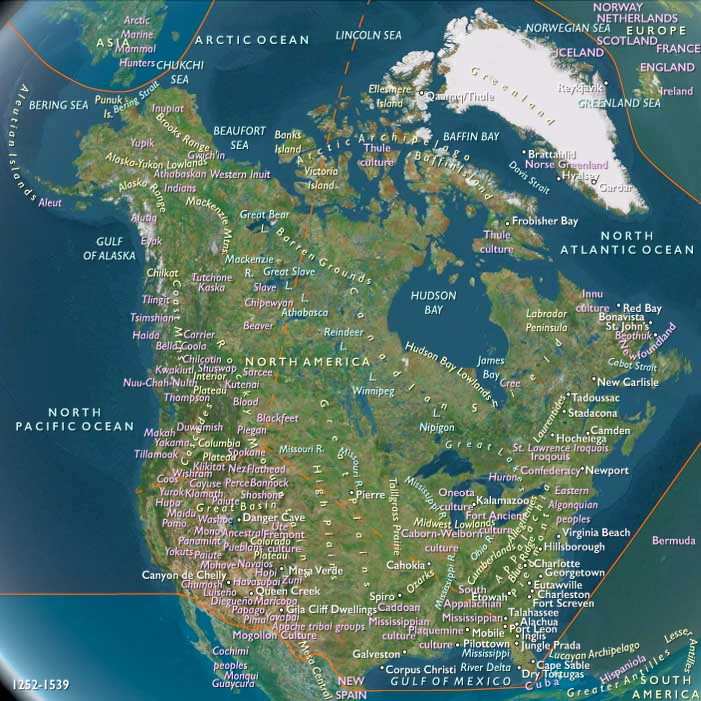
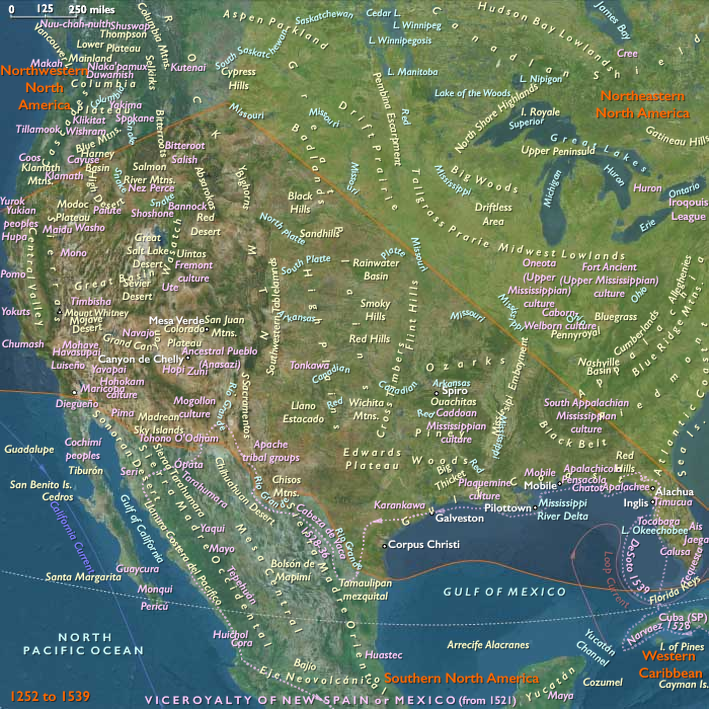
Southwestern Pueblo Peoples The Keres people settled along the upper Rio Grande valley in what is now New Mexico. Along with their Tanoan-speaking neighbors and the Zuni and Hopi peoples to the west, these agricultural communities maintained their pueblo settlements during a period when many other Southwestern agricultural societies experienced decline or abandonment. The fourteenth century marked important transitions for Ancestral Pueblo peoples, with many groups migrating from the Four Corners region to areas with more reliable water sources.
Siouan Language Family The Siouan language family encompasses numerous distinct tribal groups across a vast geographic area. While some linguists have proposed connections between Siouan and other language families, including the isolated Yuchi language, these relationships remain unproven and controversial among specialists.
Siouan-speaking peoples include the Catawba of South Carolina and numerous other groups. The Missouri River branch includes the Mandan of the northern Great Plains (primarily in present-day North Dakota), the Absaroke (Crow) and Hidatsa, who share close linguistic and cultural ties. The Mississippi Valley Siouan speakers include the Dakota, Lakota, and Nakota (collectively known as the Sioux), the Dhegiha groups (Omaha, Osage, Kansa, Ponca, and Quapaw), and the Chiwere-speaking peoples (including the Ho-Chunk/Winnebago). The southeastern branch included the now-extinct Tutelo, Ofo, and Biloxi languages.
Yuchi The Yuchi people, historically located in the southeastern United States including parts of present-day Tennessee and Georgia, spoke a language that most linguists classify as an isolate, though some researchers have suggested possible distant relationships to Siouan languages.
Caddoan Language Family The Caddoan language family includes the Caddo of the southern Plains and several northern groups. The Caddo proper inhabited areas of present-day Louisiana, Texas, Arkansas, and Oklahoma. The northern Caddoan groups include the Pawnee of the central Plains, the Arikara of the northern Plains (particularly along the Missouri River in present-day North Dakota), and the Wichita of the southern Plains.
Groups
- Zuni people (Amerind tribe)
- Wichita, or Kitikitish (Amerind tribe)
- Ho-Chunk (Amerind tribe)
- Hopi (Amerind tribe)
- Pueblo IV culture
- Osage Nation (Amerind tribe)
- Pawnee (Amerind tribe)
- Kaw, or Kanza, people (Amerind tribe)
- Caddo (Amerind tribe)
- Arikara people (Amerind tribe)
- Mandan (Amerind tribe)
- Hidatsa people (Amerind tribe)
- Crow people, aka Absaroka or Apsáalooke (Amerind tribe)
- Yuchi (Amerind tribe)
- Kiowa people (Amerind tribe)
- Dakota, aka Santee Sioux (Amerind tribe)
- Lakota, aka Teton Sioux (Amerind tribe)
- Biloxi people (Amerind tribe)
- Tutelo (Amerind tribe)
- Catawba people (Amerind tribe)
- Omaha (Amerind tribe)
Topics
Commodoties
- Fish and game
- Weapons
- Hides and feathers
- Gem materials
- Strategic metals
- Slaves
- Sweeteners
- Land
- Tobacco
Subjects
Regions
Subregions
Related Events
Showing 3 events out of 3 total
Years: 1252 - 1395
Groups
- Zuni people (Amerind tribe)
- Wichita, or Kitikitish (Amerind tribe)
- Ho-Chunk (Amerind tribe)
- Hopi (Amerind tribe)
- Pueblo IV culture
- Osage Nation (Amerind tribe)
- Pawnee (Amerind tribe)
- Kaw, or Kanza, people (Amerind tribe)
- Caddo (Amerind tribe)
- Arikara people (Amerind tribe)
- Mandan (Amerind tribe)
- Hidatsa people (Amerind tribe)
- Crow people, aka Absaroka or Apsáalooke (Amerind tribe)
- Yuchi (Amerind tribe)
- Kiowa people (Amerind tribe)
- Dakota, aka Santee Sioux (Amerind tribe)
- Lakota, aka Teton Sioux (Amerind tribe)
- Biloxi people (Amerind tribe)
- Tutelo (Amerind tribe)
- Catawba people (Amerind tribe)
- Omaha (Amerind tribe)
Topics
Commodoties
- Fish and game
- Weapons
- Hides and feathers
- Gem materials
- Strategic metals
- Slaves
- Sweeteners
- Land
- Tobacco
Subjects
Regions
Subregions