
The tribe of the Cananefates lives in …
Years: 69 - 69
August
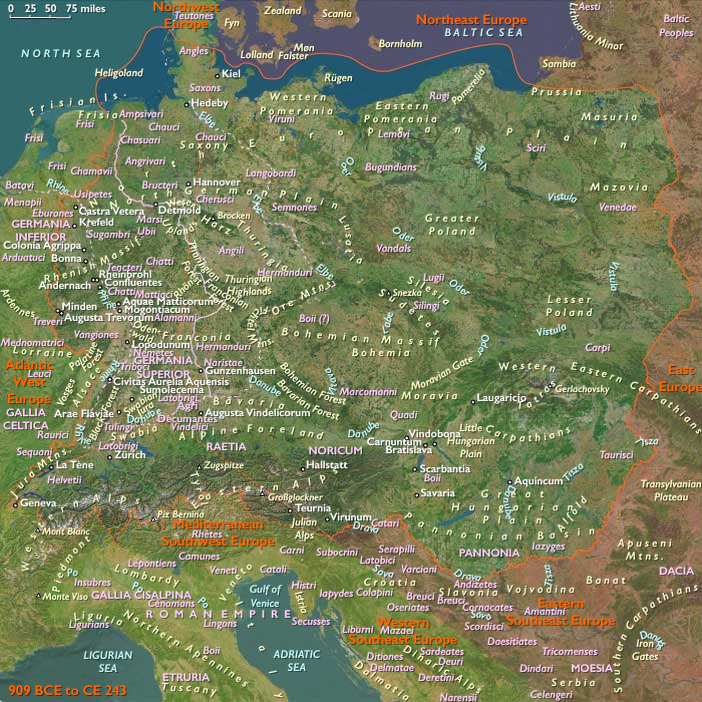
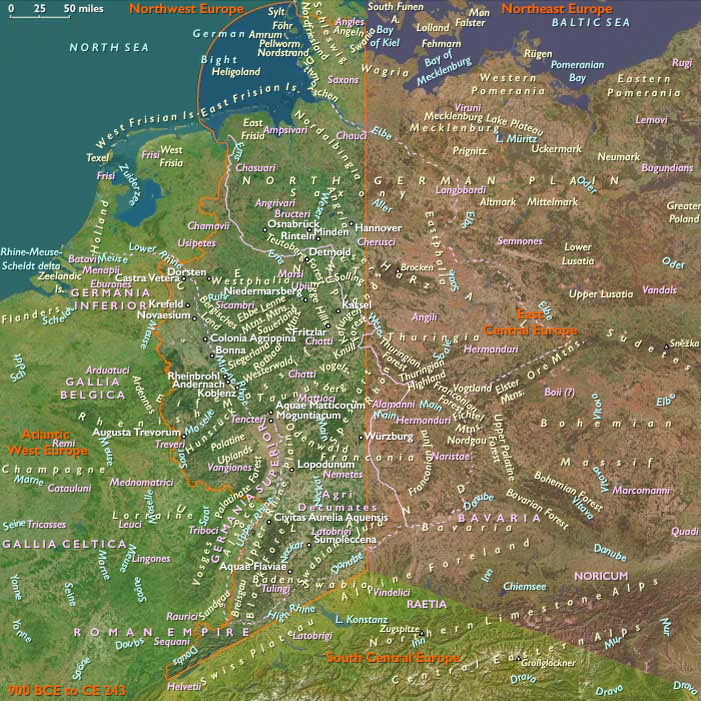
The tribe of the Cananefates lives in lands between the Batavians and the North Sea.
The inducements used by Civilis to instigate rebellion are not known, but the Cananefates, led by their chief Brinno, attack several Roman forts, including Traiectum, modern Utrecht.
With most of the troops in Italy fighting in the civil war, the Romans are caught off guard.
Flaccus, commander of the Rhine legions, sends auxiliary troops to control the situation.
The result is another disaster for the Romans.
Civilis assumes the role of mastermind of the rebellion and defeats the Romans near modern Arnhem.
Flaccus orders the V Alaudae and the XV Primigenia legions to deal with the problem.
Accompanying them are three auxiliary units, including a Batavian cavalry squadron, commanded by Claudius Labeo, a known enemy of Civilis.
The battle takes place near modern Nijmegen.
The Batavian regiment deserts to their countrymen, dealing a blow to the already feeble morale of the Romans.
The result is disastrous: a Roman army is beaten and the legions forced to retreat to their base camp of Castra Vetera (modern Xanten).
Locations
People
Groups
- Lingones (Celtic tribe)
- Cananefates (Germanic tribe)
- Frisii (East Germanic tribe)
- Chatti (Germanic tribe)
- Batavi (Germanic tribe)
- Bructeri (Germanic tribe)
- Roman Empire (Rome): Julio-Claudian dynasty
Topics
- Classical antiquity
- Pre-Roman Iron Age of Northern Europe
- Roman Age Optimum
- Pax Romana
- Year of the Four Emperors, or Roman Civil War of 68-69
- Batavi, Revolt of the
Commodoties
Subjects
Regions
Subregions
Related Events
Showing 1 events out of 1 total
Years: 69 - 69
August
Locations
People
Groups
- Lingones (Celtic tribe)
- Cananefates (Germanic tribe)
- Frisii (East Germanic tribe)
- Chatti (Germanic tribe)
- Batavi (Germanic tribe)
- Bructeri (Germanic tribe)
- Roman Empire (Rome): Julio-Claudian dynasty
Topics
- Classical antiquity
- Pre-Roman Iron Age of Northern Europe
- Roman Age Optimum
- Pax Romana
- Year of the Four Emperors, or Roman Civil War of 68-69
- Batavi, Revolt of the
Commodoties
Subjects
Regions
Subregions